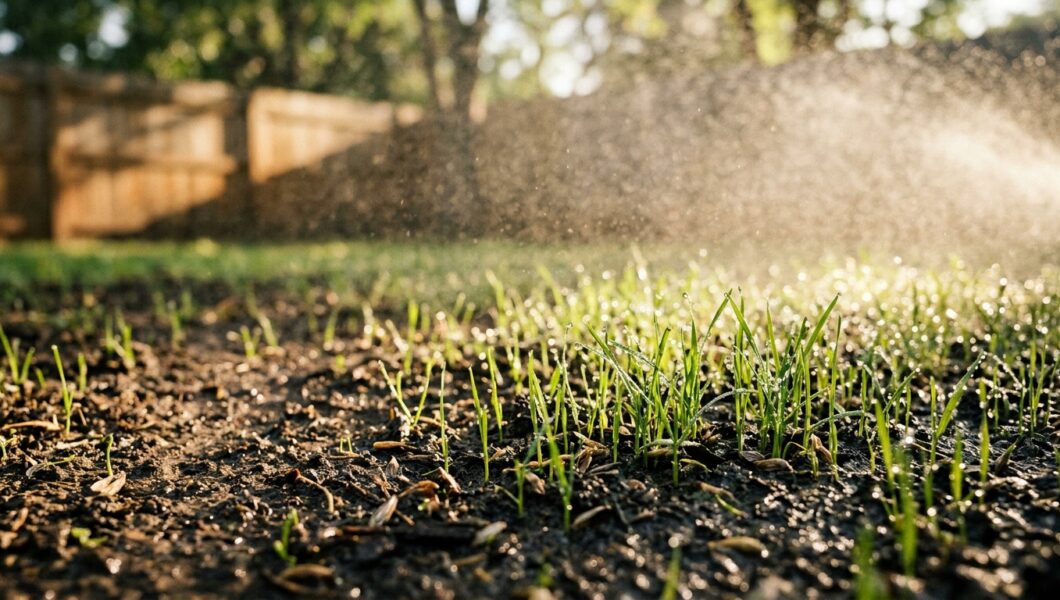
Planting grass seed is the easy part. Keeping it watered correctly is where most new lawns succeed or fail. Water too little and the seeds dry out and die before they sprout. Water too much and they rot, wash away, or invite fungus. The good news is that the right routine is simple once you understand what the seed needs. This guide gives you a clear watering schedule from day one through your first mow, plus fixes for the most common problems.
The Short Answer
Water new grass seed lightly two to three times a day, for about 5 to 10 minutes each time, until the seeds sprout. The goal is to keep the top 1 to 2 inches of soil consistently moist, never soaked and never dry. After the grass sprouts, water less often but for longer.
Why Watering Matters So Much
A grass seed needs steady moisture to soften its outer coat and start growing. Once that process begins, a dry spell can kill the seedling, even if it only lasts a few hours on a hot day. Young grass also has tiny roots that sit near the surface, so it can’t reach water deeper in the soil. That is why new seed needs frequent, shallow watering, while an established lawn does better with deep, infrequent watering.
Watering Schedule by Stage
| Stage | Timeframe | How often | How long |
| Seeding to germination | Days 1–14 or more | 2–3 times daily | 5–10 minutes |
| Seedlings emerging | Weeks 2–4 | Once daily | 10–15 minutes |
| Young grass | Weeks 4–6 | Every 2–3 days | 15–20 minutes |
| Established lawn | After 6–8 weeks | 2–3 times weekly | Deep watering, about 1 inch per week |
Treat these as a starting point, and adjust for weather and soil.
How Long Until Grass Seed Sprouts?
Germination time depends on the type of grass:
- Perennial ryegrass:
About 5 to 10 days
- Tall fescue:
About 7 to 14 days
- Bermuda grass:
About 7 to 14 days in warm soil
- Kentucky bluegrass:
About 14 to 30 days
Keep up the full watering routine for this whole period. Slower seed, like Kentucky bluegrass, needs patience, and skipping water while you wait is a common cause of failure.
Best Times of Day to Water
Early morning is the best time, ideally before 10 a.m. The air is cooler, the wind is usually calm, and moisture has time to soak in.
Midday is useful for a quick light mist, especially in hot weather, to keep the surface from drying out.
Late afternoon or early evening works for a third watering, but avoid watering too close to dark. Wet grass overnight can encourage fungus.
If you can only water twice a day, choose early morning and mid-afternoon.
Step-by-Step: How to Water New Grass Seed
- Water right after seeding
Give the area a gentle, thorough soaking so the seed makes good contact with the soil.
- Use a fine spray
A sprinkler head or a hose nozzle on the mist setting prevents seed from washing away. Avoid a hard stream.
- Check the soil
Push a finger into the soil. The top inch should feel damp. If it’s dry, add water. If it’s muddy, wait.
- Water in short sessions
Aim for 5 to 10 minutes per round, enough to keep the surface moist without creating puddles.
- Stay consistent
Don’t skip days, even if it feels cool. Seed can dry out quickly in wind and sun.
- Adjust for rain
A good rain can replace one or two sessions, but check the soil afterward.
- Reduce gradually
Once most of the seed has sprouted and the grass is about an inch tall, cut back to once a day and water a little longer each time.
- Move to deeper watering
By week four to six, water every few days so the roots grow downward in search of moisture.
Adjusting for Your Conditions
Hot or windy weather
Add a short midday misting. Surface soil dries faster than you expect.
Sandy soil
It drains fast, so you may need three or four short waterings a day.
Clay soil
It holds water longer, so use shorter sessions and give the surface time to dry slightly between them.
Slopes
Water in shorter bursts with breaks in between, so water soaks in rather than running off and carrying seed with it.
Signs You’re Watering Too Little
- Soil looks pale, dry, or cracked
- Seedlings turn tan or look wilted
- Patchy, thin growth
If you spot dry patches, increase the frequency rather than the length of each watering, since the issue is surface moisture.
Signs You’re Watering Too Much
- Puddles or standing water
- Seed washed into piles or down slopes
- Soggy, spongy soil
- Mold, mushrooms, or fungus
If you see these, cut back and let the surface dry slightly between waterings. Fix drainage problems before reseeding.
When to Do the First Mow
Wait until the grass is about 3 to 4 inches tall, and make sure the blade is sharp. Cut no more than one third of the height at once, and avoid mowing wet grass, which can tear seedlings.
Common Mistakes to Avoid
- Letting the seed dry out
Even a short dry spell can kill germinating seed.
- Using a strong spray
It displaces seed and erodes soil.
- Overwatering
Soggy soil breeds fungus and rot.
- Stopping too early
Slow grass types need weeks of care.
- Walking on the lawn
Foot traffic crushes seedlings, so keep people and pets off.
Frequently Asked Questions
How often should I water new grass seed?
Two to three times a day for 5 to 10 minutes until it sprouts.
How long do I need to water twice a day?
Until most of the seed has germinated, usually two to four weeks.
Can I water new grass seed at night?
It’s better to avoid it, since wet grass overnight raises the risk of fungus.
When can I stop frequent watering?
Once the grass is established and about 3 to 4 inches tall, move to deeper, less frequent watering.
The Bottom Line
New grass seed needs light, frequent watering: two to three short sessions a day to keep the top inch of soil moist until it sprouts. After that, water once a day, then every few days with longer sessions as the roots grow. Water in the morning, use a gentle spray, watch the soil, and adjust for weather and soil type. Be patient and consistent, and you’ll end up with a thick, healthy lawn.