
Have you ever wondered whether you are still growing or have already reached your adult height? If so, you may have come across the term growth plates. These small areas of cartilage play an important role in how children’s and teenagers’ bones develop.
Growth plates are responsible for bone growth during childhood and adolescence. As the body matures, these areas gradually harden into solid bone. Once they close completely, the bones can no longer grow longer.
But how can you tell if your growth plates are closed? Does your age provide an answer? Can changes in height or shoe size tell you anything?
The truth is that there is no reliable home test to confirm growth plate closure. However, certain signs can help you understand whether your growth is slowing down. Doctors can also use a bone age X-ray to assess skeletal maturity and estimate how much growth may remain.
Let’s look at what growth plates are, when they usually close, and how doctors check them.
What Are Growth Plates?
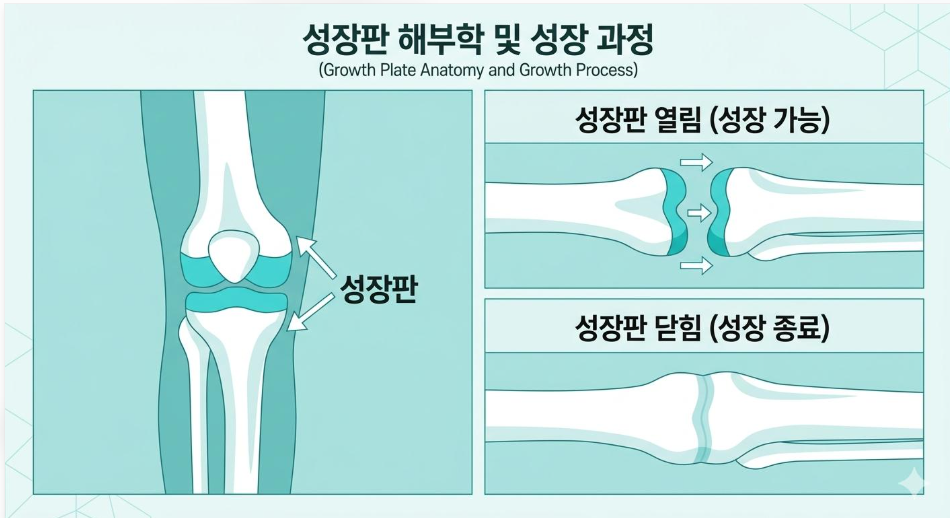
Growth plates, medically known as epiphyseal plates, are areas of cartilage found near the ends of certain bones. They are especially important in long bones, including those in your arms and legs.
During childhood and adolescence, these plates produce new bone tissue. This allows bones to increase in length as the body develops.
Growth plates remain active during childhood and most of puberty. As a person approaches skeletal maturity, hormonal changes cause the cartilage to gradually turn into solid bone.
This process is called growth plate closure.
Once a growth plate has completely closed, that particular bone can no longer grow in length through the normal growth process.
At What Age Do Growth Plates Usually Close?
Growth plate closure does not happen at exactly the same age for everyone. It depends on several factors, including genetics, puberty timing, hormones, and overall development.
In general:
- Girls: Many growth plates close during the mid-to-late teenage years.
- Boys: Closure often happens somewhat later, commonly during the late teenage years.
Some individuals reach skeletal maturity earlier, while others continue developing for longer.
It is also important to understand that different bones can have different closure timelines. For example, growth plates in the hands and wrists may close at a different time from those in the legs.
Therefore, age alone cannot confirm whether your growth plates are open or closed.
Signs That Your Growth May Be Slowing Down
Although you cannot confirm growth plate closure at home, some changes may suggest that you are approaching the end of your growth period.
Here are several common clues.
1. Your Height Has Stopped Increasing
One of the most useful clues is a consistent height measurement over time.
If your height has changed very little over the past year or two, your growth may have slowed significantly.
However, small differences in measurements are normal. Posture, measuring technique, and even the time of day can affect your recorded height.
2. You Are Near the End of Puberty
Growth usually slows as puberty approaches completion.
Other physical changes associated with puberty may also have become more established. However, these changes cannot independently confirm that growth plates have closed.
Everyone develops at a different pace, so comparing your puberty timeline with someone else’s is not a reliable way to estimate remaining growth.
3. Your Shoe Size Has Remained the Same
You may notice that your shoe size has not changed for a long time.
This can happen because foot growth often slows before growth in other parts of the body is complete.
However, shoe size is not a dependable way to determine skeletal maturity. Your feet can stop growing while other bones continue developing.
4. Your Clothes Fit the Same
If your clothes have remained the same size for an extended period, you may have experienced slower overall growth.
This is only an observation, not a medical measurement. Clothing size can also change because of body composition, clothing brands, and fit.
5. Your Family Members Stopped Growing at a Similar Age
Genetics plays an important role in determining growth patterns.
You may find it helpful to ask your parents about their growth experiences during adolescence.
However, family history only provides general context. It cannot tell you exactly when your growth plates will close.
How to Check Whether Your Growth Plates Are Closed
If you want to understand your growth pattern, you can start by tracking your height. However, confirming growth plate closure requires medical assessment.
Here are the steps to follow.
Step 1: Record Your Current Height
Measure your height using a flat wall, a measuring tape, and a hard-covered book.
Stand barefoot on a level floor with your body upright. Look straight ahead and place the book flat on your head.
Mark the wall where the bottom of the book meets it, then measure the distance from the floor.
Try to use the same measuring method each time.
Step 2: Track Your Height Over Time
Record your height periodically rather than checking it every day.
Measurements taken several months apart can help show whether your growth is continuing or slowing down.
Remember that small differences may come from measurement errors or normal daily height changes.
Step 3: Review Your Growth History
Your previous height measurements can provide useful information about your development.
Doctors often use growth charts to compare a person’s height with expected patterns for their age and sex.
A consistent growth pattern is generally more informative than a single measurement.
Step 4: Discuss Your Development With a Doctor
If you are concerned about your growth, speak with a healthcare professional.
A doctor can review your growth history, development, family background, and any other relevant health information.
They can decide whether further assessment is necessary.
Step 5: Ask Whether a Bone Age X-ray Is Appropriate
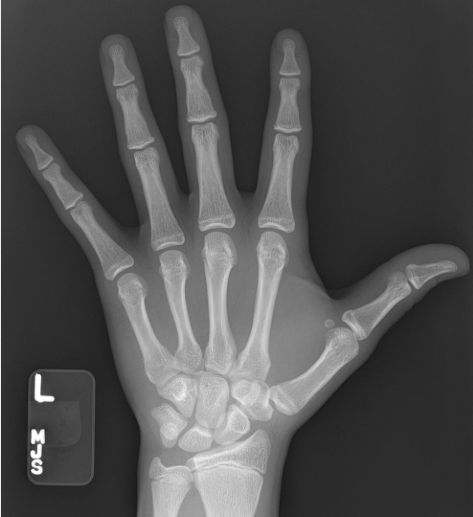
A bone age X-ray is a commonly used medical method for assessing skeletal maturity.
Doctors often examine an X-ray of the left hand and wrist to compare bone development with standard reference images.
The results can help estimate whether someone has significant growth potential remaining.
Step 6: Understand the Results With Your Doctor
A healthcare professional examines the X-ray to assess the development and maturity of the bones.
Open growth plates generally appear as visible spaces or lines between developing bone areas. As the plates mature and fuse, these spaces gradually disappear.
The results help doctors assess skeletal maturity, but they cannot predict your exact final height with complete certainty.
Home Clues vs. Medical Tests
Not every method provides the same level of information. Here is how common observations compare with medical assessments.
| Method | What it tells you | Reliability |
|---|---|---|
| Height tracking | Changes in height over time | Useful for trends |
| Shoe size | Possible foot growth changes | Low |
| Puberty development | General maturity clues | Limited |
| Family history | Genetic growth patterns | Limited |
| Growth chart review | Overall growth pattern | Clinically useful |
| Bone age X-ray | Skeletal maturity | Established medical method |
A bone age X-ray is particularly useful because it allows doctors to examine bone development directly rather than relying only on physical observations.
Can You Grow Taller After Growth Plates Close?
Once the growth plates in the relevant bones have completely fused, those bones cannot naturally increase in length.
This means that exercises, stretching routines, hanging from bars, and height-increasing supplements cannot reopen closed growth plates.
However, if someone is still growing, healthy habits can support normal physical development.
These include:
- Getting enough sleep.
- Eating a balanced and nutritious diet.
- Getting sufficient calcium and vitamin D.
- Staying physically active.
- Following appropriate healthcare advice.
These habits support general health and normal development. They cannot guarantee additional height or change your genetic growth potential.
It is also worth remembering that good posture can help you stand comfortably and maintain a natural upright position, but it does not lengthen your bones.
Common Myths About Growth Plates
There is a lot of misleading information online about height and bone development. Understanding a few common myths can help you avoid unnecessary confusion.
Myth 1: You can check growth plates using a mobile app.
No. Mobile applications cannot examine your bones or determine whether your growth plates have closed.
Myth 2: Hanging from a bar makes you taller.
Hanging may temporarily change how your spine feels, but it cannot lengthen bones or reopen closed growth plates.
Myth 3: Everyone’s growth plates close at 18.
No. Growth plate closure varies between individuals and different bones.
Myth 4: Height supplements can reopen growth plates.
There is no reliable evidence that ordinary supplements can reopen fully fused growth plates. Products making such promises should be treated with caution.
Myth 5: Weight training automatically stops growth.
Appropriately designed, supervised resistance exercise is generally considered safe for young people. Proper technique, suitable loads, and qualified supervision are important.
When Should You See a Doctor?
Most differences in growth timing are part of normal human development. However, certain situations deserve professional attention.
Consider speaking with a doctor if:
- Your growth seems unusually slow compared with your previous growth pattern.
- Puberty appears significantly earlier or later than expected.
- You have concerns about your overall development.
- You experience persistent bone or joint pain.
- You have a medical condition that may affect growth.
If a child or teenager experiences a significant injury to an arm or leg, especially with swelling, severe pain, or difficulty moving the affected area, seek prompt medical evaluation.
Growth plate injuries sometimes require special attention because they can affect normal bone development.
A doctor can determine whether an examination or imaging test is necessary. X-rays involve a small amount of radiation, so they should be ordered when medically appropriate.
Frequently Asked Questions
1. Can I tell if my growth plates are closed without an X-ray?
You can observe changes in height and other aspects of development, but these cannot confirm growth plate closure. A doctor may recommend a bone age X-ray when there is a medical reason to assess skeletal maturity.
2. What age do growth plates close?
There is no single age for everyone. Many growth plates close during the teenage years, with timing generally varying between girls and boys. Different bones also mature at different times.
3. Do growth plates reopen after closing?
No. Once growth plates have completely fused, they do not naturally reopen.
4. Can someone still grow after age 18?
Some individuals may still have limited growth remaining after 18, depending on their skeletal maturity and development. Age alone cannot confirm whether growth has finished.
5. Does sleep affect height growth?
Yes. Sleep is important for normal growth and development. Growth hormone is released in pulses, including during sleep. Getting sufficient sleep supports healthy development, particularly during childhood and adolescence.
6. Does exercise help you grow taller?
Regular physical activity supports bone health, muscle development, and overall fitness. However, no particular exercise can guarantee additional height or reopen closed growth plates.
7. What is a bone age X-ray?
A bone age X-ray is an imaging test that helps doctors assess skeletal maturity. It commonly examines the left hand and wrist to estimate how developed the bones are compared with standard age references.
Final Thoughts
Understanding whether your growth plates are closed can help answer questions about your physical development. However, age, shoe size, puberty changes, and height measurements are only clues. None of them can confirm growth plate closure on their own.
A bone age X-ray, when recommended by a healthcare professional, is an established way to assess skeletal maturity and estimate remaining growth potential.
If you are still developing, focus on healthy habits, including proper nutrition, sufficient sleep, and regular physical activity. Avoid products or online methods that promise guaranteed height increases.
Most importantly, remember that everyone develops at a different pace. If you have concerns about your growth, a qualified healthcare professional can help you understand your individual development.