Packing cubes might seem like an unnecessary travel accessory until you use them for the first time. These simple organizers can make packing easier, keep your suitcase tidy, and help you find clothes without searching through your entire bag.
Whether you’re preparing for a weekend getaway, a family vacation, or a longer trip, packing cubes offer a practical way to organize your belongings.
However, using them correctly makes a difference. Overfilling cubes or choosing the wrong sizes can waste valuable luggage space rather than save it.
In this guide, you’ll learn how to use packing cubes, choose the right types, organize your clothes, and avoid common packing mistakes.
What Are Packing Cubes?
Packing cubes are lightweight, zippered fabric containers designed to organize items inside suitcases, backpacks, and other travel bags.
They’re usually made from nylon or polyester and come in different shapes and sizes. Each cube can hold a specific category of belongings, such as shirts, trousers, underwear, or accessories.
The main purpose of packing cubes is organization. They help keep similar items together, make unpacking easier, and allow you to use your luggage space more efficiently.
Some compression models can also reduce the volume of soft clothing. However, regular packing cubes mainly organize your belongings rather than reduce their actual volume.
Different Types of Packing Cubes
Before choosing a set, it’s helpful to understand the main types available.
1. Standard Packing Cubes
Standard packing cubes have a simple zippered design and are available in small, medium, and large sizes. They’re suitable for organizing everyday clothing and travel essentials.
2. Compression Packing Cubes
Compression cubes feature an additional zipper that squeezes the contents into a smaller space. They’re particularly useful for bulky clothing, such as sweaters and jackets.
However, excessive compression can wrinkle clothes and make your luggage heavier if you pack too many items.
3. Slim and Shoe Cubes
These cubes are designed for shoes, accessories, and flat items. Shoe cubes are especially useful because they help prevent dirt from transferring onto clean clothing.
4. Garment Folders
Garment folders are flat organizers designed for dress shirts, trousers, and other clothing that needs to remain relatively wrinkle-free.
5. Mesh Packing Cubes
Mesh cubes feature breathable panels that make it easier to identify their contents. They’re useful for everyday clothing and items that benefit from some airflow.
6. Laundry Bags
Although laundry bags aren’t technically packing cubes, they’re useful travel organizers. They provide a separate space for worn clothing and help keep dirty items away from clean ones.
What Do You Need to Use Packing Cubes?
You don’t need many accessories to get started. A few basic items are enough:
- A set of packing cubes in different sizes
- Your suitcase, travel bag, or backpack
- Clean clothes, ready to fold or roll
- A separate toiletry or liquids bag
- A shoe bag or shoe cube
- A laundry bag (optional)
- A packing list
- A clean, flat surface for organizing everything
Once you have these essentials, you can start organizing your luggage.
How to Use Packing Cubes: Step-by-Step Guide
Using packing cubes is simple when you follow a clear packing system. Here’s how to organize your belongings efficiently.
1. Plan Your Outfits First
Before putting anything inside your cubes, lay out the clothes you plan to take.
Consider your destination, trip duration, weather conditions, and planned activities. Choose outfits that can work together so you don’t carry unnecessary clothing.
Packing cubes can make it tempting to bring extra items because everything looks organized. Creating a packing list helps prevent overpacking.
2. Choose a Sorting System
Decide how you want to organize your belongings.
You can sort items by clothing category, individual outfits, travel days, or family members.
For solo trips, organizing by category is usually convenient. For family vacations, assigning different colors to each person can make finding clothes much easier.
The important thing is to choose one system and use it consistently.
3. Select the Right Cube Sizes
Different clothing items require different amounts of space.
A simple arrangement looks like this:
- Large cubes: Trousers, sweaters, jackets, and bulky clothing.
- Medium cubes: T-shirts, casual shirts, and lightweight tops.
- Small cubes: Socks, underwear, swimwear, and accessories.
- Slim cubes: Shoes, belts, and flat items.
You don’t need a separate cube for every item. Choose sizes that fit your luggage and the amount of clothing you’re carrying.
4. Fold or Roll Your Clothes
Both folding and rolling can work well inside packing cubes.
Rolling is convenient for casual clothing such as T-shirts, jeans, and activewear. It can make items easier to arrange in rows.
Flat folding is generally better for dress shirts, blouses, and wrinkle-prone fabrics.
For most trips, combining both methods gives you flexibility.
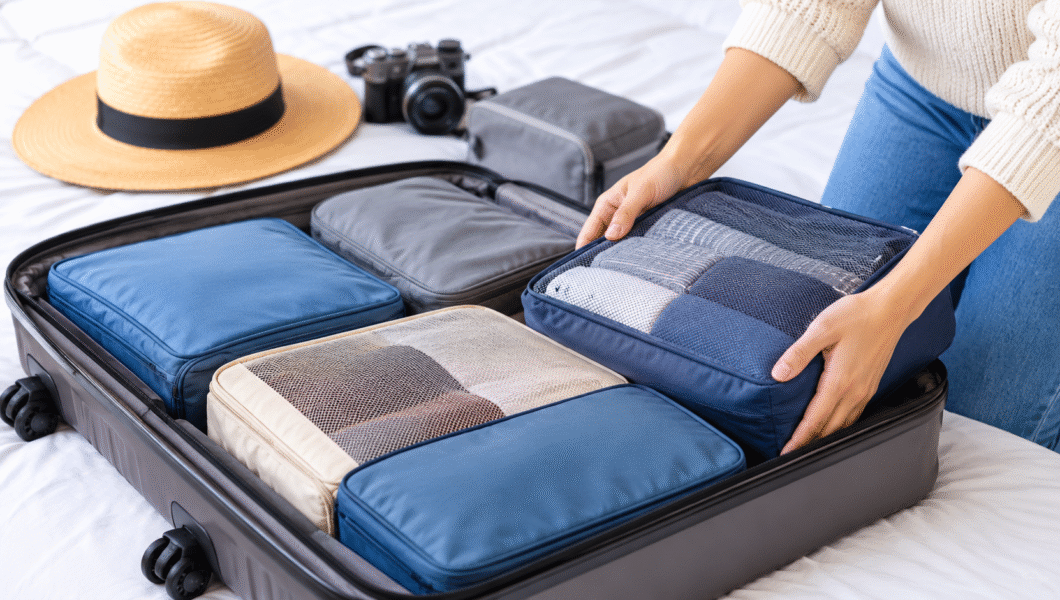
5. Arrange Clothes Neatly Inside Each Cube
Place folded clothes in flat stacks or arrange rolled items in neat rows.
Try to distribute the clothing evenly rather than pushing everything into one corner.
Keep frequently used items near the top so you can access them without unpacking the entire cube.
Leave enough room for the zipper to close comfortably.
6. Avoid Overstuffing
One of the most common packing mistakes is filling every cube until it becomes difficult to close.
Overstuffed cubes can bulge, strain their zippers, and become harder to arrange inside your suitcase.
If a cube feels too tight, remove a few items or use a larger size.
A properly packed cube should feel firm without being excessively compressed.
7. Zip and Check Each Cube
Once everything is arranged, close the zipper and check the cube’s shape.
It should sit reasonably flat and fit comfortably alongside your other luggage.
If it becomes unusually bulky or difficult to close, rearrange its contents before placing it inside your suitcase.
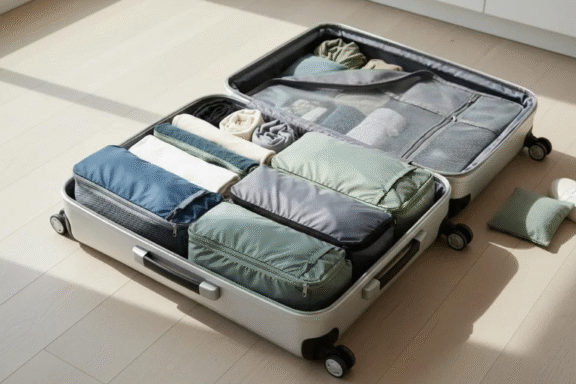
8. Load Your Suitcase Strategically
Now arrange the cubes inside your luggage.
Place heavier items close to the suitcase’s wheel end when appropriate, and distribute weight evenly. Position larger cubes first, then use smaller cubes to fill available spaces.
Avoid leaving large gaps between cubes, but don’t force them into spaces where they could damage the luggage or clothing.
9. Create a Grab-and-Go Cube
Consider keeping one small cube for items you may need quickly during your journey.
It could contain a spare shirt, underwear, socks, or other non-restricted travel essentials.
Keep important documents, medications, valuables, and essential electronics in an easily accessible carry-on compartment rather than burying them inside checked luggage.
10. Separate Dirty Clothes
After wearing your clothes, place them in a separate laundry bag or designated cube.
This keeps used clothing away from clean items and makes laundry easier when you return home.
A waterproof or washable laundry bag can be particularly useful for longer trips.
Make sure damp clothing is dried before storing it for an extended period.
11. Unpack by Cube at Your Destination
One of the biggest advantages of packing cubes is how easy they make unpacking.
Instead of removing every item from your suitcase, take out the cubes you need.
You can place them directly into hotel drawers or keep them inside your luggage and access individual items as required.
When it’s time to leave, simply put the cubes back into your suitcase.
Packing Methods Compared
Different packing methods work better for different types of clothing. Here’s a quick comparison.
| Packing Method | Best For | Advantages | Disadvantages |
|---|---|---|---|
| Rolling | T-shirts, jeans, casual wear | Easy to arrange and organize | May crease some fabrics |
| Flat folding | Dress shirts and blouses | Helps maintain garment shape | Can take more space |
| Bundle wrapping | Formal outfits | Can reduce some creasing | Takes practice |
| Compression cubes | Bulky clothing | Reduces packed volume | Can increase wrinkles |
| Outfit cubes | Short trips | Makes daily dressing easier | Less flexible for outfit changes |
| Category cubes | Longer trips | Keeps similar items together | May require opening several cubes |
For everyday travel, a combination of rolling and flat folding is usually a practical choice.
How Packing Cubes Help With Different Types of Travel
Packing cubes aren’t limited to one type of journey. You can adjust your organization system depending on your travel needs.
Weekend Trips
One or two small or medium cubes can hold enough clothing for a short getaway. They keep your travel bag organized without taking up unnecessary space.
Carry-On Travel
Packing cubes help arrange clothes neatly inside cabin luggage. However, they don’t guarantee that your bag will meet airline size or weight restrictions. Always check your airline’s requirements.
Family Vacations
Assigning a different color to each family member makes it easier to identify belongings. It also reduces the chances of mixing everyone’s clothes.
Business Trips
Garment folders can help organize dress shirts, trousers, and professional clothing. Combining them with smaller cubes for everyday essentials keeps everything separate.
Long-Term Travel
For longer journeys, packing cubes make it easier to organize clothing and repack when moving between hotels or destinations.
Backpacking
Lightweight cubes can separate clothing, accessories, and other essentials inside a backpack. Smaller cubes are particularly useful when working with limited luggage space.
Tips for Getting the Most Out of Packing Cubes
A few simple habits can make your packing system more effective.
- Use labels or different colors: Identify each cube quickly without opening it.
- Compress carefully: Use compression cubes for suitable clothing rather than squeezing everything.
- Check luggage weight: Packing cubes organize belongings but don’t reduce their total weight.
- Leave extra room: Keep some space available for souvenirs and items purchased during your trip.
- Separate shoes: Use dedicated shoe bags or cubes to protect clean clothing.
- Store toiletries separately: Keep liquids in sealed, leakproof toiletry bags to prevent spills.
- Clean your cubes regularly: Follow the manufacturer’s washing instructions.
- Choose lightweight materials: Lightweight cubes add less unnecessary weight to your luggage.
Common Packing Cube Mistakes to Avoid
Even useful travel accessories can become inconvenient when they’re used incorrectly.
Here are some mistakes worth avoiding.
1. Overpacking Because You Have More Containers
Having extra cubes doesn’t mean you need to fill all of them. Organizers can make it easier to carry unnecessary clothing, so stick to your packing list.
2. Stuffing Cubes Until They Bulge
Overfilled cubes are difficult to arrange inside luggage and can put unnecessary pressure on their zippers and seams.
3. Compressing Delicate Clothing
Silk, linen, and other wrinkle-prone fabrics may need more careful handling. Avoid excessive compression when packing these materials.
4. Using Too Many Small Cubes
Several tiny cubes can create awkward gaps and make it difficult to use your suitcase efficiently. Choose a practical combination of sizes.
5. Ignoring Luggage Weight Limits
Packing cubes don’t make your belongings lighter. Always weigh your suitcase before leaving, especially when travelling by air.
6. Packing Damp Clothing
Storing wet or damp clothes in closed cubes can lead to unpleasant odors and mildew. Allow clothing to dry completely before packing it away.
7. Forgetting About Dirty Laundry
Without a separate place for worn clothes, clean and dirty items can quickly become mixed together.
Safety and Care Precautions
Packing cubes are simple accessories, but a few precautions can help protect your belongings.
- Check airline and destination-country restrictions before packing restricted items.
- Keep important documents, medications, and valuables in your carry-on luggage.
- Use sealed, leakproof bags for toiletries and other liquids.
- Handle heavy suitcases carefully and ask for assistance when needed.
- Keep sharp objects away from cube fabric to prevent tears.
- Follow the manufacturer’s washing instructions.
- Allow wet or damp cubes to dry completely before storing them.
These small precautions can help keep your travel accessories and belongings in good condition.
Frequently Asked Questions
Do packing cubes really save space?
Standard packing cubes mainly organize clothing and make luggage easier to manage. Compression cubes can reduce the volume of some soft items, but neither type reduces the actual weight of your belongings.
Should I roll or fold clothes in packing cubes?
Rolling works well for casual clothing such as T-shirts and jeans, while flat folding is often better for dress shirts and delicate fabrics. Combining both methods is a practical approach.
How many packing cubes do I need?
Three to five cubes are a reasonable starting point for many travelers. The ideal number depends on your luggage size, trip duration, and packing habits.
Can packing cubes be machine-washed?
Some packing cubes are machine-washable, while others require hand washing. Always check the manufacturer’s care instructions before cleaning them.
Do packing cubes help with carry-on bags?
Yes. They help organize clothing and use available luggage space more efficiently. However, you must still follow your airline’s carry-on size and weight limits.
Are compression packing cubes better than regular packing cubes?
Neither option is best for every traveler. Standard cubes are useful for everyday organization, while compression cubes are helpful when you need to reduce the volume of bulky clothing.
Can I use packing cubes for shoes?
Yes. Shoe cubes or dedicated shoe bags help separate footwear from clean clothing and keep dirt contained.
The Bottom Line
Packing cubes can make travelling easier by keeping your clothes organized, making items easier to find, and simplifying the packing and unpacking process.
To get the best results, plan your outfits, choose suitable cube sizes, combine rolling and folding, and avoid overfilling your organizers. Use separate bags for shoes and dirty laundry, and check your luggage weight before travelling.
Remember, packing cubes won’t magically make your suitcase lighter or increase its official baggage allowance. Their real benefit is helping you use your available space more efficiently.
If you’re new to packing cubes, start with a small set and see which sizes and organization methods work best for your next trip.