Packing for a trip can quickly become frustrating when clothes take up too much space or your suitcase turns into a mess. Packing cubes offer a simple way to keep everything organized, make better use of your luggage space, and find what you need without unpacking your entire bag.
However, using packing cubes effectively takes more than putting clothes into small bags. Choosing the right sizes, organizing your clothes, and knowing when to use compression cubes can make a big difference.
In this guide, you’ll learn how to use packing cubes step by step, which types are worth considering, and how to avoid common packing mistakes. Whether you’re preparing for a weekend getaway, a business trip, or a longer vacation, these tips will help you pack more efficiently.
What Are Packing Cubes?
Packing cubes are lightweight, zippered fabric organizers designed to fit inside suitcases, travel backpacks, and carry-on luggage. They usually come in different sizes and help separate your belongings into categories.
For example, you can use one cube for T-shirts, another for pants, and a smaller one for socks and underwear.
Most packing cubes are made from nylon or polyester. Some feature mesh panels that make it easier to identify their contents, while compression versions include an additional zipper to reduce the space occupied by packed clothes.
Packing cubes don’t automatically make your luggage lighter. Instead, they help you organize clothes, use available space more efficiently, and make packing and unpacking easier.
Different Types of Packing Cubes
Before packing, it’s helpful to understand the main types available.
1. Standard Packing Cubes
Best for everyday clothing organization
These are simple zippered containers available in small, medium, and large sizes. They’re suitable for separating shirts, trousers, underwear, and other travel essentials.
2. Compression Packing Cubes
Best for bulky clothing
Compression cubes have an additional zipper that squeezes the packed contents into a smaller volume. They’re useful for sweaters, jackets, and other bulky items. However, excessive compression can increase wrinkles.
3. Slim and Shoe Cubes
Best for footwear and small accessories
These narrow organizers are designed for shoes, belts, and other accessories. They also help prevent dirt from transferring onto clean clothes.
4. Garment Folders
Best for formal clothing
Garment folders help keep dress shirts, blouses, and other wrinkle-prone clothing neatly folded during travel.
5. Mesh Packing Cubes
Best for easy identification
Mesh panels allow you to see what’s inside without opening every cube. They also provide some ventilation.
6. Laundry Bags
Best for separating dirty clothes
Although they’re not technically packing cubes, laundry bags are useful for keeping worn clothes separate from clean items.
What You Need Before Packing
You don’t need an expensive travel organization system to get started. A few basic items are enough:
- A set of packing cubes in different sizes
- A suitcase or travel backpack
- Clean clothes, folded or rolled
- A separate toiletries bag
- A shoe bag or shoe cube
- A laundry bag for dirty clothes
- A packing list
- A flat surface for organizing everything
Once you have these items ready, you can start organizing your luggage.
How to Use Packing Cubes: Step-by-Step Guide
Follow these steps to get the most out of your packing cubes.
1. Plan Your Outfits First
Start by checking your travel dates, destination, planned activities, and weather conditions.
Choose the clothes you’ll actually need instead of packing extra outfits just because you have available space.
Planning ahead helps prevent unnecessary items from taking up valuable luggage space.
2. Choose an Organization System
Decide how you want to organize your belongings before filling the cubes.
You can organize them by:
- Clothing type: Shirts, trousers, underwear, and socks.
- Outfit: Complete clothing combinations for each day.
- Person: Separate cubes for each family member.
- Activity: Different cubes for casual wear, formal clothes, and sportswear.
For individual trips, organizing by clothing type is usually convenient. For family vacations, assigning different colors to each person makes things easier.
3. Select the Right Cube Sizes
Choose cube sizes according to the clothing you’re packing.
A practical arrangement looks like this:
- Large cubes: Pants, jeans, sweaters, and jackets.
- Medium cubes: T-shirts, shirts, and casual clothing.
- Small cubes: Socks, underwear, and accessories.
- Slim cubes: Shoes, belts, and smaller items.
Avoid using too many small cubes. Several tiny containers can leave awkward gaps inside your suitcase.
4. Roll or Fold Your Clothes
Both rolling and folding work well, depending on the type of clothing.
Rolling is useful for T-shirts, jeans, casual clothing, and activewear. It can make items easier to arrange in rows inside a cube.
Flat folding is generally better for dress shirts, blouses, and fabrics that wrinkle easily.
You don’t have to follow just one method. Combining both gives you more flexibility.
5. Arrange Clothes Neatly Inside Each Cube
Place folded clothes in flat stacks or arrange rolled items side by side.
Try to distribute the contents evenly instead of placing everything in one corner.
A properly filled cube should maintain its shape and close easily without putting excessive pressure on the zipper.
6. Avoid Overstuffing
One of the most common packing mistakes is filling every cube until it becomes difficult to close.
Overstuffing can strain zippers, damage seams, and create bulky shapes that are difficult to arrange inside your suitcase.
If the zipper requires too much force, remove a few items and reorganize the contents.
7. Check the Shape Before Packing
Once you’ve closed each cube, check whether it sits reasonably flat.
Avoid irregular bulges because they can make it harder to arrange other items around the cubes.
Keeping a consistent shape helps you use the available suitcase space more effectively.
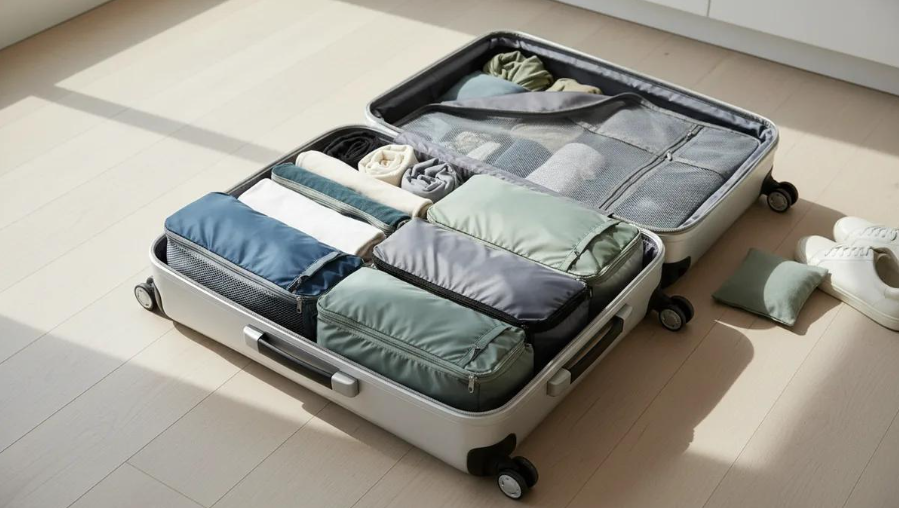
8. Arrange the Cubes Inside Your Suitcase
Place larger and heavier cubes near the bottom of your suitcase, usually close to the wheels.
Arrange smaller cubes around them and use remaining gaps for lightweight items such as socks or accessories.
Keep frequently needed items somewhere accessible so you don’t have to unpack everything during your journey.
9. Create an Essentials Cube
Prepare one small cube containing items you may need quickly.
For example, you can include:
- One spare shirt
- A change of underwear
- Socks
- Basic personal essentials
Keep electronic accessories and chargers in an appropriate separate organizer.
This arrangement is particularly useful during long journeys and hotel transfers.
10. Separate Dirty Clothes
Always plan where you’ll put worn clothes.
An empty packing cube or a dedicated laundry bag works well for this purpose.
Keeping dirty clothes separate prevents odors and helps you maintain an organized suitcase throughout your trip.
Make sure damp clothing is completely dry before storing it with other belongings.
11. Unpack Using the Cubes
One of the biggest advantages of packing cubes becomes clear when you reach your destination.
Instead of unpacking individual clothing items, you can place the cubes directly into hotel drawers or shelves.
You can also leave them inside your suitcase and simply remove the cube you need.
This makes unpacking quicker and helps you maintain organization throughout your stay.
Packing Methods Compared
Different packing methods work better for different types of clothing. Here’s a quick comparison:
| Packing Method | Best For | Main Advantage | Possible Disadvantage |
|---|---|---|---|
| Rolling | T-shirts, jeans, casual wear | Easy organization and space use | May crease some fabrics |
| Flat folding | Dress shirts and blouses | Keeps clothing structured | Can take more space |
| Bundle wrapping | Formal outfits | Can reduce creasing | Requires practice |
| Compression cubes | Bulky clothing | Reduces packed volume | Can cause wrinkles |
| Outfit cubes | Short trips | Easy daily outfit selection | Less flexible |
| Category cubes | Longer trips | Easy item identification | Requires opening multiple cubes |
How to Use Packing Cubes for Different Types of Trips
Packing requirements change depending on your destination and travel plans.
Here’s how to adjust your organization system.
Weekend Trips
One or two medium-sized packing cubes are usually enough for a short getaway. Keep everyday clothing together and use a small pouch for accessories.
Carry-On-Only Travel
Choose lightweight cubes that fit your carry-on dimensions. Avoid unnecessary compression and remember that packing cubes don’t change airline size or weight restrictions.
Family Vacations
Assign a different color to each family member. This makes it easier to identify belongings and prevents clothes from getting mixed up.
Business Trips
Use garment folders for dress shirts, formal clothing, and other items that need to remain presentable.
Long-Term Travel
Organize your belongings by clothing category. This makes it easier to repack when moving between hotels or destinations.
Backpacking
Choose lightweight, compact packing cubes that fit the shape of your backpack. Avoid bulky organizers that add unnecessary weight.
7 Practical Tips for Better Packing
A few simple habits can make your packing system even more effective.
- Label your cubes: Use small tags or different colors to identify their contents quickly.
- Use compression carefully: Compress bulky clothes rather than squeezing everything.
- Check luggage weight: Weigh your suitcase before leaving home to avoid airline baggage issues.
- Leave some extra space: Keep room for souvenirs and items you may purchase during your trip.
- Separate footwear: Use shoe bags to prevent dirt from reaching clean clothes.
- Keep toiletries separate: Store liquids in sealed, leakproof bags to protect your belongings.
- Clean your cubes regularly: Follow the manufacturer’s care instructions and allow them to dry completely before storage.
Common Packing Cube Mistakes to Avoid
Even though packing cubes are easy to use, a few mistakes can reduce their usefulness.
Packing More Because You Have Extra Space
Having additional organizers doesn’t mean you need additional clothes. Stick to your packing list and avoid unnecessary items.
Overfilling Every Cube
Bulging cubes are difficult to arrange and can damage zippers. Leave enough room for easy closing.
Compressing Delicate Clothing
Silk, linen, and other wrinkle-prone fabrics may need careful folding rather than aggressive compression.
Using Too Many Small Cubes
Too many organizers can create unnecessary gaps and make your suitcase harder to arrange.
Ignoring Luggage Weight
Packing cubes help organize your belongings, but they don’t reduce the actual weight of your clothes.
Packing Wet or Damp Clothes
Moisture trapped inside a closed cube can create unpleasant odors and encourage mildew growth.
Forgetting About Dirty Laundry
Without a separate laundry bag, worn clothes can quickly mix with clean clothing.
Safety and Care Precautions
Packing cubes are simple travel accessories, but a few precautions help protect your belongings.
- Keep medications, valuables, and important travel documents in your carry-on luggage.
- Follow airline and destination-country restrictions for prohibited items.
- Place toiletries in sealed, leakproof bags.
- Avoid exposing packing cubes to sharp objects that could damage their fabric.
- Follow the manufacturer’s washing instructions.
- Allow wet or damp cubes to dry completely before storing them.
- Lift heavy luggage carefully and ask for assistance when necessary.
Frequently Asked Questions
1. Do packing cubes really save space?
Regular packing cubes mainly improve organization and help you arrange clothes efficiently. Compression cubes can reduce the volume of bulky clothing, but neither type reduces the actual weight of your luggage.
2. Should I roll or fold clothes in packing cubes?
Rolling works well for casual clothing, T-shirts, and jeans. Folding is generally better for dress shirts and wrinkle-prone fabrics. Combining both methods is a practical approach.
3. How many packing cubes do I need?
Three to five cubes are a useful starting point for many travelers. The ideal number depends on your luggage size, trip duration, and clothing requirements.
4. Can packing cubes be machine-washed?
Some packing cubes are machine-washable, but others require hand washing. Always check the manufacturer’s care instructions before cleaning them.
5. Are packing cubes useful for carry-on luggage?
Yes. Packing cubes help organize clothing and make better use of available space in carry-on bags. However, you must still follow your airline’s baggage size and weight restrictions.
6. Are compression packing cubes better than regular packing cubes?
Neither is universally better. Regular cubes are suitable for everyday organization, while compression cubes are useful when you need to reduce the volume of bulky clothing.
7. Can I use packing cubes for shoes?
Yes. However, dedicated shoe bags or shoe cubes are better because they help prevent dirt from transferring onto your clothes.
Final Thoughts
Packing cubes are a practical way to make travel organization easier. They help separate clothing, keep your suitcase tidy, and make finding everyday essentials much simpler.
The best results come from choosing suitable cube sizes, planning your outfits, combining rolling and folding methods, and avoiding overpacking. You should also keep dirty clothes separate and use compression only when necessary.
You don’t need a large collection to get started. A small set of three to five packing cubes is often enough to improve your packing routine.
Try using them on your next trip, and you’ll have a much easier time organizing your suitcase from departure to arrival.