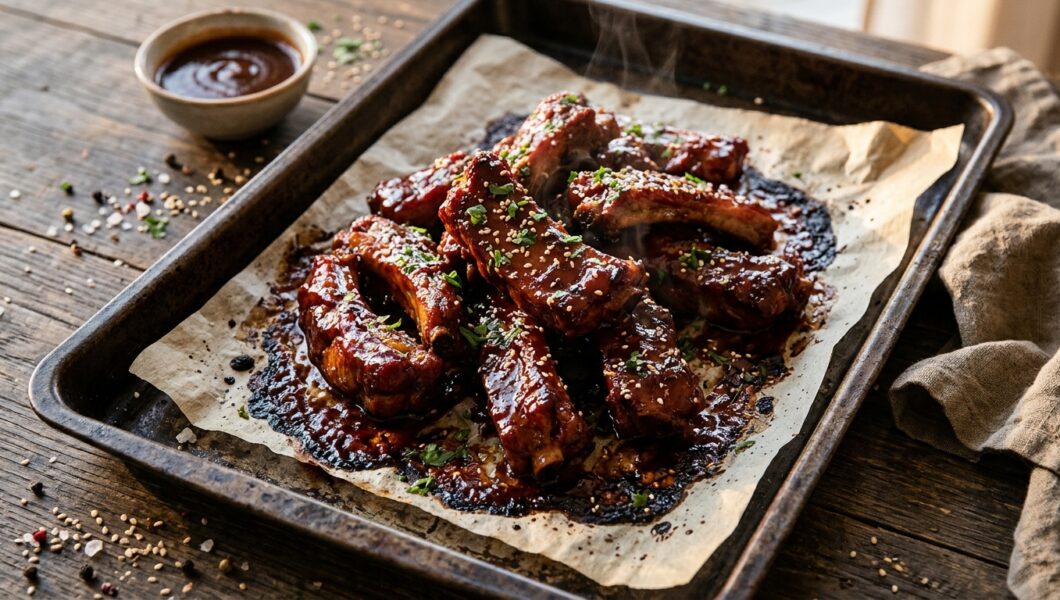
Pork riblets are one of the best deals at the meat counter. They have the same rich flavor as spare ribs, they cost less, and they cook up sticky, tender, and perfect for sharing. The only question most people have is timing. Cook them too fast and they turn chewy. Cook them too long uncovered and they dry out. This guide gives you exact oven times, the right temperatures, and a simple method that works every time.
The Short Answer
Pork riblets take about 1.5 to 2.5 hours in the oven, depending on temperature. At 300°F (150°C), plan on roughly 2 hours wrapped in foil, plus 15 to 20 minutes uncovered to glaze with sauce. At 350°F (175°C), they take about 1.5 hours. Low and slow gives the most tender result.
What Are Pork Riblets?
Riblets are short pieces of pork rib, usually cut from the end of the spare rib section or from the lower portion of the rib cage. They are meaty but contain more bone, cartilage, and connective tissue than a rack of baby back ribs. That connective tissue is why riblets need longer cooking at a moderate temperature: it has to break down into gelatin before the meat turns tender.
Oven Times by Temperature
| Oven temperature | Method | Approximate time |
| 275°F (135°C) | Foil-wrapped | 2.5–3 hours |
| 300°F (150°C) | Foil-wrapped | 2–2.5 hours |
| 325°F (165°C) | Foil-wrapped | 1.75–2 hours |
| 350°F (175°C) | Foil-wrapped | 1.5–1.75 hours |
| 400°F (205°C) | Uncovered, to finish and glaze | 15–25 minutes |
Add 15 to 20 minutes at the end of any of these to caramelize the sauce. Thicker riblets may need an extra 15 to 30 minutes.
How to Tell When Riblets Are Done
The USDA says pork is safe at 145°F (63°C) with a three-minute rest, and riblets reach that early. But safe is not the same as tender. Because of the connective tissue, riblets are best when the internal temperature reaches about 190°F to 203°F (88°C to 95°C).
Use an instant-read thermometer in the meatiest part, away from bone. You can also check by touch:
- The bend test:
Lift a piece with tongs. If it bends and the surface cracks slightly, it’s ready.
- The bone test:
The meat should have pulled back from the ends of the bones.
- The bite test:
The meat should pull cleanly from the bone without a fight, but still hold together.
Simple Dry Rub
Mix these together for a rub that suits most sauces:
- 2 tablespoons brown sugar
- 1 tablespoon paprika
- 1 tablespoon salt
- 2 teaspoons garlic powder
- 2 teaspoons onion powder
- 1 teaspoon black pepper
- 1/2 teaspoon cayenne (optional)
Use about 2 to 3 tablespoons per pound of riblets, or just enough to coat all sides.
Step-by-Step: How to Cook Pork Riblets in the Oven
- Preheat the oven
Set it to 300°F (150°C) and place a rack in the middle.
- Prep the riblets
Pat them dry with paper towels. If there is a thin membrane on the bone side, peel it off, since it can turn tough.
- Season generously
Rub the spice mix over every side, pressing it into the meat.
- Rest if you have time
Letting the seasoned riblets sit 30 minutes at room temperature, or overnight in the fridge, deepens the flavor.
- Wrap them up
Arrange the riblets in a single layer on a baking sheet and cover tightly with foil, or place them in a baking dish and seal it. Trapped steam keeps them moist.
- Bake covered
Cook for about 2 hours at 300°F.
- Check for tenderness
Carefully open a corner of the foil and test with a fork or thermometer. Mind the hot steam.
- Sauce them
Remove the foil, pour off excess liquid, and brush the riblets with barbecue sauce.
- Glaze uncovered
Raise the oven to 400°F (205°C) and bake 15 to 20 minutes, brushing on another coat halfway through, until the sauce is sticky and bubbling.
- Rest before serving
Let them sit 5 to 10 minutes so the juices settle.
Covered vs. Uncovered: Which Is Better?
Covering the riblets for the first part of cooking traps steam, which softens connective tissue and keeps the meat juicy. Uncovering them at the end lets the sauce thicken and brown. Skipping the cover means a drier, chewier result and a longer cook.
Sauce and Flavor Ideas
- Classic barbecue:
Sweet, smoky, and the most popular choice.
- Honey garlic:
Mix honey, soy sauce, minced garlic, and a splash of vinegar.
- Spicy Asian glaze:
Combine hoisin, soy sauce, ginger, and chili paste.
Apply sugary sauces near the end of cooking, since sugar burns if left in the oven too long.
Storing and Reheating
Cool leftover riblets and refrigerate them within two hours. They keep for 3 to 4 days in an airtight container. To freeze, wrap tightly and store for up to 3 months. Reheat in a covered dish at 300°F with a splash of water or broth until hot throughout, reaching 165°F (74°C) for safety.
Common Mistakes to Avoid
- Cooking at too high a heat
It leads to tough, dry riblets.
- Skipping the foil
Without it, moisture escapes quickly.
- Saucing too early
The sugar can burn.
- Cooking by time alone
Thickness varies, so test for tenderness.
- Cutting the rest short
Serving immediately lets juices run out.
Safety Precautions
Wash your hands after handling raw pork, and keep raw meat away from ready-to-eat foods. Open foil away from your face because escaping steam can burn. Use oven mitts when moving hot pans, and don’t leave cooked riblets out for more than two hours.
Frequently Asked Questions
How long do pork riblets take in the oven at 350°F?
About 1.5 to 1.75 hours, covered, plus a short uncovered glaze.
Should I cover riblets with foil?
Yes, for most of the cooking time, so they stay moist and tender.
What temperature should riblets reach?
They’re safe at 145°F, but are most tender at 190°F to 203°F.
Can I cook riblets from frozen?
It’s best to thaw them first in the refrigerator for even cooking.
The Bottom Line
For tender, flavorful pork riblets, bake them at 300°F wrapped in foil for about 2 hours, then uncover, brush with sauce, and finish at 400°F for 15 to 20 minutes. Look for an internal temperature near 190°F or higher, and trust the bend and bone tests as much as the clock. Keep the heat moderate, hold the sauce until the end, and let the meat rest before serving.