Merino wool is one of the most comfortable fabrics you can own. It’s soft, warm, breathable, and naturally odor-resistant, making it a popular choice for sweaters, base layers, socks, and travel clothing.
However, many people hesitate to wash merino wool because they’re worried about shrinking, stretching, or damaging the delicate fibers. The good news is that merino wool isn’t as difficult to care for as it might seem.
With the right detergent, cool water, and gentle handling, you can keep your merino clothing clean, soft, and in good condition for years.
In this guide, you’ll learn how to wash merino wool by hand or in a washing machine, how to dry it properly, and which common mistakes to avoid.
Why Does Merino Wool Need Special Care?
Merino wool comes from Merino sheep and has particularly fine, soft fibers. Like other types of wool, these fibers have tiny overlapping scales on their surfaces.
Heat, moisture, agitation, and friction can cause the scales to interlock. This process is known as felting, and it can make wool garments shrink and lose their original shape.
Harsh detergents and unsuitable washing methods can also damage wool fibers over time.
Fortunately, you can prevent most washing problems by following a few simple rules:
- Use cool or lukewarm water.
- Choose a wool-safe detergent.
- Avoid excessive rubbing and twisting.
- Use a gentle washing cycle when machine washing is permitted.
- Dry sweaters flat instead of hanging them while wet.
Different Types of Merino Wool Clothing
Before washing your garments, it’s important to understand that not every merino wool item requires exactly the same care.
1. Base Layers and Activewear
Merino base layers are lightweight garments designed for everyday comfort, outdoor activities, and exercise. They often contain nylon or elastane for additional durability and stretch.
2. Sweaters and Knitwear
Merino sweaters are usually thicker and more delicate. They can stretch under their own weight when wet, so flat drying is generally the safest option.
3. Merino Wool Socks
Merino socks are commonly blended with synthetic fibers to improve durability. Many can be machine washed on a gentle cycle, depending on their care labels.
4. Superwash Merino Wool
Superwash merino has undergone special treatment to make it more resistant to shrinking and felting. It’s generally easier to machine wash, but you should still follow the manufacturer’s instructions.
5. Merino Wool Blends
Some garments combine merino with cotton, polyester, silk, or elastane. Their washing requirements depend on the fiber combination and construction.
6. Tailored or Lined Wool Garments
Merino coats, blazers, and structured garments may contain linings or internal materials that require professional cleaning.
Always check the care label before washing. If it says “dry clean only,” follow that instruction.
What You’ll Need to Wash Merino Wool
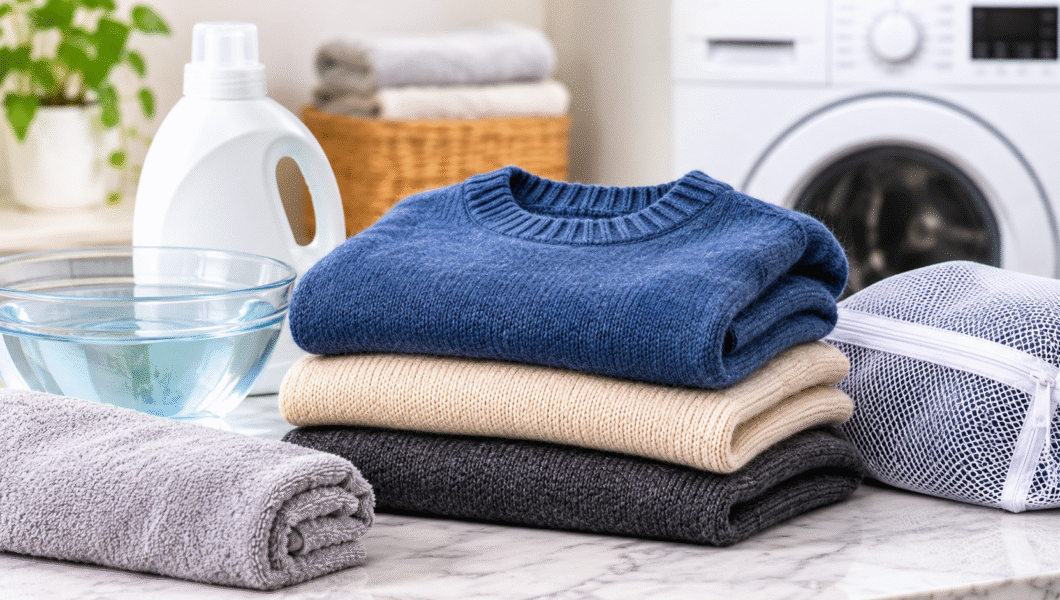
Gather these supplies before starting:
- Wool-safe liquid detergent
- Cool or lukewarm water
- A clean sink, basin, or washing tub
- A mesh laundry bag for machine washing
- Two or three clean, absorbent towels
- A flat drying rack or sweater drying mesh
- A sweater comb or fabric shaver for occasional pilling
Avoid regular detergents containing harsh bleaching agents or enzymes that may damage wool.
How to Wash Merino Wool by Hand: Step-by-Step
Hand washing is one of the gentlest ways to clean delicate merino sweaters and other wool garments.
Follow these steps for better results.
Step 1: Check the Care Label
Start by checking the manufacturer’s washing instructions.
Separate dark and light garments to reduce the risk of color transfer. Keep merino away from rough fabrics such as jeans and towels.
Step 2: Treat Stains Gently
If your garment has a visible stain, apply a small amount of wool-safe detergent to the affected area.
Gently dab the fabric instead of rubbing or scrubbing it. Excessive friction can damage the wool fibers.
Step 3: Fill a Basin With Cool Water
Fill a clean sink or basin with cool to lukewarm water.
A temperature of around 30°C (86°F) or lower is a useful guideline, unless the care label specifies something different.
Avoid sudden temperature changes between washing and rinsing.
Step 4: Add Wool-Safe Detergent
Add a small amount of wool detergent according to the product instructions.
Mix it into the water before placing your garment inside.
You don’t need excessive detergent. Too much can leave residue in the fibers and make rinsing difficult.
Step 5: Gently Soak the Garment
Turn your merino garment inside out and place it in the water.
Press it gently beneath the surface and allow it to soak for approximately 10–15 minutes.
Move it carefully through the water to loosen dirt. Avoid vigorous squeezing, twisting, or scrubbing.
Step 6: Rinse With Clean Water
Drain the soapy water and refill the basin with clean, cool water.
Gently press the garment to remove detergent. Repeat until the water is clear and no noticeable soap residue remains.
Step 7: Remove Excess Water Without Wringing
Lift the garment carefully, supporting its full weight with both hands.
Press it gently against the side of the basin to remove excess water.
Never twist or wring merino wool. This can stretch the fibers and distort the garment’s shape.
Step 8: Use a Towel to Absorb Moisture
Place the garment flat on a clean, dry towel.
Roll the towel and garment together, pressing gently to absorb extra moisture.
If the towel becomes very wet, repeat the process with another dry towel.
Step 9: Reshape and Dry Flat
Place the garment on a flat drying rack or a clean, dry towel.
Gently reshape the sleeves, neckline, and body to their original dimensions.
Allow it to air-dry naturally away from direct sunlight, radiators, and other heat sources.
Drying time depends on the garment’s thickness and room conditions. Thicker sweaters may need 24 hours or longer.
How to Wash Merino Wool in a Washing Machine
Hand washing isn’t always necessary. Many merino wool garments can be safely machine washed when their care labels allow it.
Here’s how to reduce the risk of damage.
- Check the care label: Confirm that machine washing is permitted.
- Turn garments inside out: This helps protect the outer surface.
- Use a mesh laundry bag: It reduces friction and protects delicate knitwear.
- Choose the correct cycle: Select the wool or delicate cycle.
- Use cool water: Keep the temperature at 30°C or lower, following the garment’s instructions.
- Add wool-safe detergent: Use the recommended amount and avoid fabric softener.
- Select a gentle spin: Follow the garment and machine instructions for spin speed.
- Remove garments promptly: Don’t leave wet wool sitting in the washing machine.
- Dry carefully: Reshape the garment and dry it flat when appropriate.
Avoid mixing merino clothing with heavy items such as jeans, towels, or rough garments.
Merino Wool Washing Settings at a Glance
| Garment | Recommended Washing Method | Water Temperature | Drying Method |
|---|---|---|---|
| Base layers | Wool or delicate cycle if permitted | Cold to 30°C | Flat drying |
| Sweaters | Hand wash or approved wool cycle | Cold to 30°C | Flat drying |
| Socks | Gentle machine cycle if permitted | Cold to 30°C | Air-dry |
| Superwash merino | Machine wash if label permits | Cold to 30°C | As directed on label |
| Wool blends | Follow garment label | As directed | As directed |
| Tailored garments | Professional cleaning if required | N/A | Professional care |
How Often Should You Wash Merino Wool?
One of the biggest advantages of merino wool is its natural odor resistance.
Unlike many synthetic fabrics, merino can often be worn more than once before washing. This makes it especially useful for travel, outdoor activities, and everyday clothing.
However, washing frequency depends on how you use each garment.
Merino sweaters: Air them out between wears. Wash when visibly dirty or when they develop noticeable odors. They may need washing after several wears rather than every time.
Base layers: These sit directly against your skin and absorb sweat. Wash them after each workout or whenever they become noticeably sweaty or dirty.
Merino socks: Wash them regularly, especially after exercise or extended wear.
Travel clothing: Air out garments between uses when appropriate, but wash them whenever hygiene or visible dirt requires it.
The key is to avoid unnecessary washing without allowing sweat, dirt, or stains to build up.
8 Tips to Keep Merino Wool Soft and Lasting Longer
Proper washing is only part of wool care. Your everyday habits also affect how long your garments last.
1. Always Use Wool-Safe Detergent
Choose a detergent specifically formulated for wool and delicate fabrics. Avoid harsh cleaning products that can damage the fibers.
2. Avoid Hot Water
Heat increases the risk of shrinking and felting. Cool water is generally the safest choice.
3. Handle Garments Gently
Press and squeeze gently instead of scrubbing, twisting, or wringing.
4. Avoid Fabric Softener
Fabric softeners can leave a coating on fibers and affect their moisture-management properties.
5. Keep Wool Away From Direct Heat
Avoid radiators, hair dryers, and other strong heat sources when drying merino clothing.
6. Air Out Between Wears
Allow garments to breathe between uses. This helps refresh them and reduces unnecessary washing.
7. Store Sweaters Folded
Fold sweaters instead of hanging them for long periods. Hangers can stretch the shoulders and change their shape.
8. Protect Wool From Moths
Store clean, completely dry wool garments in breathable storage bags or containers. Cedar products can help discourage moths, although they aren’t a substitute for proper cleaning and storage.
Common Merino Wool Washing Mistakes to Avoid
Even a good-quality merino garment can lose its shape if you use the wrong washing method.
Here are some common mistakes to avoid.
Using Hot Water: High temperatures can increase the risk of shrinking and felting.
Wringing or Twisting: This can stretch delicate fibers and distort the garment.
Using Harsh Detergents: Regular detergents with unsuitable ingredients may damage wool fibers.
Adding Fabric Softener: It can leave residue and affect the fabric’s moisture-management properties.
Using a Tumble Dryer: Heat and mechanical movement can cause shrinkage and felting. Only use a dryer if the care label specifically permits it.
Hanging a Wet Sweater: The weight of absorbed water can stretch the garment.
Washing With Heavy Fabrics: Jeans, towels, and rough materials can create unnecessary friction.
Ignoring Stains: Allowing stains to sit for too long can make them harder to remove.
Safety and Care Precautions
A few additional precautions can help protect both your clothing and your washing equipment.
- Keep merino wool away from open flames and excessive heat. Although wool has natural flame-resistant properties, it can still scorch or burn.
- Test any stain-removal product on a hidden area first, if the care label permits its use.
- Never mix cleaning products, particularly bleach-containing products.
- Use professional cleaning services for valuable, vintage, structured, or dry-clean-only garments.
- Store wool clothing only after it is completely clean and dry.
- If wool causes skin irritation, stop wearing the garment and consider whether the fabric or another material in the garment is responsible.
Frequently Asked Questions About Washing Merino Wool
Can I machine wash merino wool?
Yes. Many merino wool garments are machine washable. Use a wool or delicate cycle with cool water and wool-safe detergent, but always check the care label first.
Can I put merino wool in the dryer?
It’s generally best to avoid tumble drying merino wool. Heat and movement can cause shrinkage and felting. Air-drying flat is usually the safer option unless the manufacturer specifically permits tumble drying.
What detergent is best for merino wool?
A liquid detergent specifically designed for wool and delicate fabrics is the best choice. Follow its recommended dosage and avoid harsh cleaning products.
Does merino wool shrink after washing?
It can. Excessive heat, friction, and agitation can cause wool fibers to felt and shrink. Following the recommended washing and drying instructions helps reduce this risk.
How do I remove wrinkles from merino wool?
Try hanging the garment in a steamy bathroom to relax minor wrinkles. You can also use a garment steamer carefully, keeping it at a suitable distance and following the manufacturer’s instructions.
How do I remove pilling from merino wool?
Use a sweater comb or fabric shaver designed for knitwear. Work gently on a flat surface and avoid applying excessive pressure.
Can I wash merino wool with regular clothes?
It’s better to wash merino separately or with similar lightweight, delicate fabrics. Avoid washing it alongside jeans, towels, and other rough materials.
Should I wash merino wool after every wear?
Not necessarily. Sweaters can often be worn several times between washes if they’re aired out properly. Base layers and socks usually need more frequent washing because they come into direct contact with sweat and skin.
Final Thoughts
Merino wool doesn’t require complicated cleaning routines, but it does need gentle treatment.
Use cool water, a wool-safe detergent, and minimal agitation. Hand wash delicate garments or use a machine’s wool cycle when the care label allows it. Remove excess water with a towel, reshape your clothing, and let it dry naturally.
Most importantly, avoid hot water, harsh detergents, unnecessary friction, and tumble drying unless specifically permitted.
With these simple habits, you can keep your merino wool sweaters, base layers, and socks clean, comfortable, and in good condition for years.