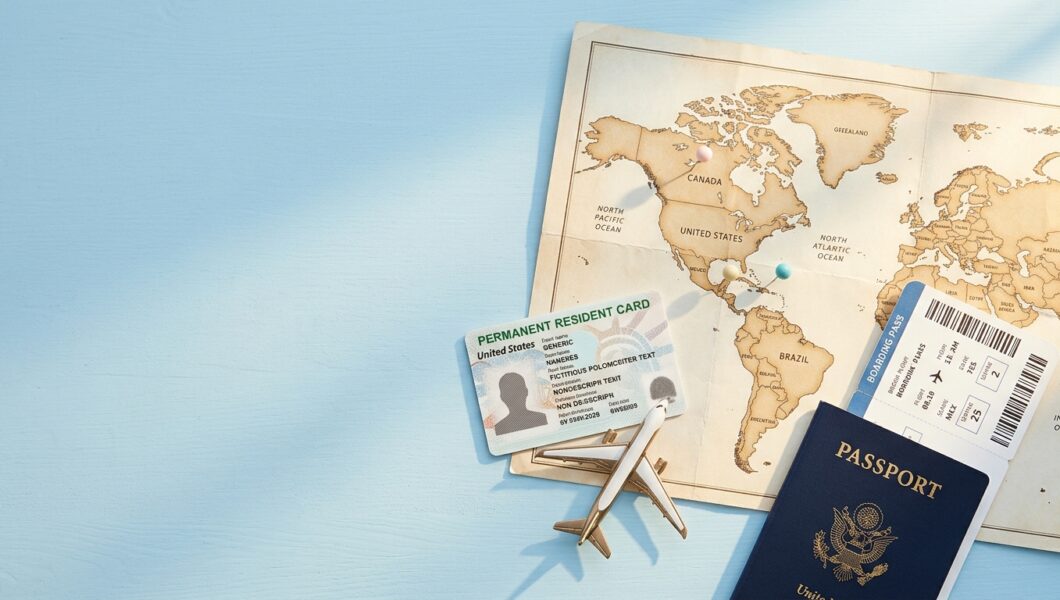
A US green card gives you the right to live in the United States, but many holders also wonder how far it takes them abroad. The answer is better than most people expect. Dozens of countries and territories let permanent residents enter without a visa, or with a quick visa on arrival or online e-visa. The catch is that the rules depend on your passport, your destination, and the date. This guide explains which countries are commonly open to green card holders, how long you can stay, what documents you need, and the mistakes that cause problems at the border.
Quick Answer: How Many Countries Are Visa-Free?
Estimates vary. Some travel sites list about 38 countries, while others count around 51 once visa-on-arrival and e-visa options are included. The difference comes down to what each site counts as visa-free. The safest approach is to treat any list as a starting point and confirm with the destination’s embassy or official immigration site before you book.
Key point: a green card does not replace your passport. You normally need both, and many countries expect your passport to be valid for at least six months.
Countries Open to Green Card Holders of Any Nationality
These destinations are widely reported to accept green card holders regardless of the passport they hold:
| Region | Countries and territories |
| North America | Canada, Mexico, US territories such as Puerto Rico, Guam, and the US Virgin Islands |
| Central America | Belize, Costa Rica, Panama, Guatemala |
| Caribbean | Bahamas, Dominican Republic, Jamaica, Aruba, Bermuda, Anguilla, Curaçao, Bonaire, Sint Maarten, Turks and Caicos, British Virgin Islands, Cayman Islands |
Stay lengths vary from about 30 days in places like Belize, the Bahamas, Panama, and the Dominican Republic to as long as 180 days in Canada and Mexico. Costa Rica’s allowed stay is reported differently across sources, so check before you go. American Samoa has its own immigration rules and does not honor a green card.
Europe and the Caucasus
Several non-EU countries in Europe and nearby regions allow permanent residents of the US to visit without a visa. Commonly listed destinations include Albania, Bosnia and Herzegovina, Montenegro, Serbia, and Georgia. Stays are often up to 90 days, although Montenegro is sometimes listed at 30 days, so verify the limit.
The big exception is the Schengen Area. A green card does not give you visa-free access to countries like France, Germany, Spain, or Italy. Whether you need a visa depends on your own passport. The same is true for the United Kingdom, which requires a visa for green card holders unless their nationality is already visa-exempt there.
Asia, the Middle East, and Other Regions
This is where your nationality matters most. Some destinations extend benefits only to certain passport holders, and some offer an easy electronic visa instead of true visa-free entry. Reported examples include:
- Several Gulf countries offer visa on arrival or e-visa options to visa-required nationals with a US green card, including Bahrain, Kuwait, Qatar, and Saudi Arabia.
- Jordan has offered an e-visa for eligible nationalities.
- Oman has offered visa-free entry for a limited list of nationalities.
- Turkey has allowed green card holders to apply for an e-visa online.
- Malaysia, the Philippines, Singapore, South Korea, Taiwan, and Thailand appear in some lists, but conditions differ by passport.
In South America, benefits are narrower. Argentina, Chile, and Peru are reported as visa-free only for certain nationalities, such as Indian and Chinese passport holders, and Colombia is limited to a short list of nationalities.
Why Your Passport Matters
Visa-free access for green card holders is not one rule. Each country writes its own policy, and many tie the benefit to specific nationalities. Two people with green cards can have very different options. An Indian passport holder, for example, may qualify in places where another passport holder would need a visa. Always look up the rule for your own nationality, not just a general list.
Documents You Should Carry
- Passport valid for at least six months beyond your arrival
- Valid, unexpired green card
- Return or onward ticket
- Proof of accommodation and funds, if asked
- Travel insurance, especially for destinations with limited healthcare
- Printed copies of e-visa approvals, where required
Protecting Your Permanent Resident Status
A trip abroad is easy, but staying away too long can create trouble when you return to the US. Short trips are generally fine. Longer absences may lead border officers to question whether you still live in the United States. Trips of more than a year without a reentry permit can put your status at risk. If you plan an extended stay abroad, speak with an immigration attorney first. This article is general information and not legal advice.
Tips for Planning Your Trip
- Check the destination government’s official site, not only blogs.
- Confirm the rule for your nationality and the length of stay.
- Look for transit rules if your flight has a layover.
- Apply for e-visas early, because processing times vary.
- Recheck the rules a week before departure.
Common Mistakes to Avoid
- Assuming a green card works like a US passport.
- Relying on an old list. Policies change, and some countries have recently dropped or added green card access.
- Forgetting passport validity rules.
- Ignoring transit visas for connecting flights.
- Staying abroad too long and risking your residence status.
Frequently Asked Questions
Can I travel to Europe with only a green card?
Usually no. You need to check the Schengen rules for your own passport.
Can I enter Canada with a green card?
Yes. Canada is widely listed as visa-free for US permanent residents, with stays of up to six months.
Can I enter Mexico with a green card?
Yes. Mexico is commonly listed as visa-free for permanent residents.
Is the list the same for every nationality?
No. Many destinations depend on your passport.
Do I need my passport too?
Yes. Carry your passport and your green card together.
The Bottom Line
A US green card opens the door to dozens of destinations, especially across North America, Central America, the Caribbean, and parts of the Balkans and Caucasus. It does not work like a US passport, and your nationality shapes what you can do. Use any list as a guide, confirm with official sources, carry both your passport and green card, and keep your residence in the United States secure. A little research before you book can save you money, time, and a stressful airport surprise.