If you’ve ever scooped a forkful of quinoa and wondered why anyone eats it on purpose, you’re not alone. Cooked carelessly, quinoa can taste bland, bitter, or oddly earthy, with a texture somewhere between wet sand and porridge. But it doesn’t have to be that way. Quinoa is packed with protein, fiber, and minerals, and with a few small changes it turns nutty, fluffy, and genuinely delicious.
In this guide, you’ll learn why quinoa so often disappoints, ten easy tricks to fix it, and some flavor combinations and meal prep tips to keep it interesting.
Why Quinoa Can Taste Bad (Quick Diagnosis)
Before fixing the problem, it helps to know where it comes from. Most bad quinoa comes down to three things.
Saponins. Quinoa seeds are coated in natural compounds called saponins, which protect the plant from pests. They taste bitter and soapy, and they’re the main reason people say quinoa tastes “off.”
Plain water and no seasoning. Quinoa has a mild flavor of its own, so cooking it in unsalted water leaves it tasting flat.
Poor texture. Too much water gives you mush, and too little leaves hard, undercooked centers. Neither is pleasant.
The good news is that every one of these is easy to fix.
Trick 1: Rinse Your Quinoa Thoroughly
Rinsing is the single most important step. Many packages say the quinoa is “pre-rinsed,” but a quick rinse at home still helps and costs you nothing.
Place the quinoa in a fine-mesh strainer and run cool water over it for 30 to 60 seconds, stirring with your hand. Keep going until the water runs clear and the foamy look disappears. A regular colander won’t work because the seeds will slip through the holes. If you only do one thing from this list, do this one.
Trick 2: Toast It Before Cooking
Toasting brings out quinoa’s natural nuttiness and gives it a deeper, more savory flavor.
After rinsing, drain the quinoa well. Add it to a dry pan over medium heat and stir for 3 to 5 minutes, until it smells nutty and the grains look dry and slightly golden. For even more flavor, toast it in a teaspoon of olive oil or butter instead. Then add your cooking liquid right to the same pan, carefully, since it will steam and sputter.
Trick 3: Cook It in Broth Instead of Water
Swapping water for broth is the easiest way to add flavor from the inside out. Chicken broth gives a classic savory taste, vegetable broth keeps things plant-based and light, and mushroom broth adds a rich, earthy depth that works well in grain bowls.
Use the same ratio you would for water (see Trick 5). If your broth is salty, skip extra salt until the end. Low-sodium broth gives you more control.
Trick 4: Season the Cooking Liquid
Quinoa absorbs whatever it cooks in, so this is your chance to build flavor. Add a generous pinch of salt to the liquid before it comes to a boil. Then add aromatics: a smashed garlic clove, a bay leaf, a sprig of thyme, or a strip of lemon peel all work well.
Season at the start, not the end. Salt added to the cooking liquid flavors every grain, while salt sprinkled on top only sits on the surface. Remove the bay leaf and any whole herbs before serving.
Trick 5: Use the Right Water Ratio
Texture matters as much as taste. The standard ratio is 1 part quinoa to 2 parts liquid. Bring the liquid to a boil, add the quinoa, reduce the heat to low, cover, and simmer for about 15 minutes, until the liquid is absorbed and you can see tiny spiral “tails” on the grains.
If your quinoa turns out mushy, cut the liquid slightly next time, to about 1¾ cups per cup of quinoa. If it’s crunchy or hard in the center, add a splash more liquid, cover it again, and cook for a few more minutes. Different brands vary, so adjust once and write down what works.
Trick 6: Let It Steam and Fluff It
Many people skip this step, and it makes a real difference. When the timer goes off, take the pot off the heat and leave the lid on for 5 to 10 minutes. The residual steam finishes cooking the grains and dries out any excess moisture, so you get separate, fluffy seeds instead of clumps.
After resting, fluff the quinoa gently with a fork. Don’t stir hard or press down with a spoon, because that crushes the grains and makes them gummy.
Trick 7: Add Fat and Richness
Plain quinoa is quite lean, and a little fat makes it taste more satisfying. Stir in a drizzle of olive oil, a pat of butter, or a spoonful of ghee while the quinoa is still warm.
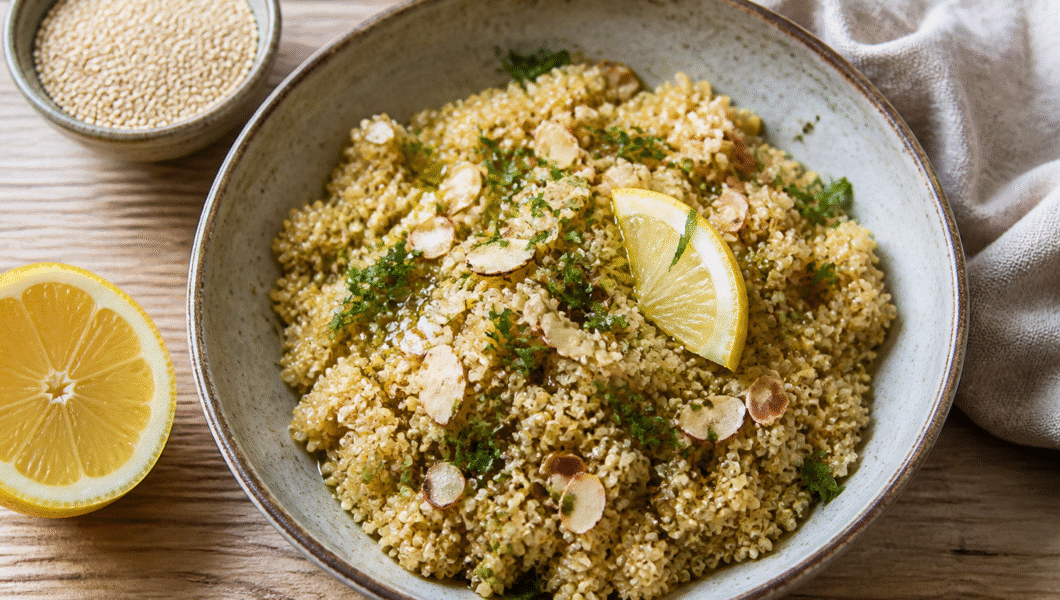
For texture and extra richness, top it with toasted nuts or seeds, such as almonds, pine nuts, pumpkin seeds, or sesame seeds. Crumbled feta, grated Parmesan, or goat cheese also turn a simple side into something you actually look forward to.
Trick 8: Brighten It with Acid and Fresh Herbs
If your quinoa tastes heavy or flat, it probably needs acid. A squeeze of lemon or lime juice, or a splash of red wine vinegar or apple cider vinegar, wakes everything up and cuts through any lingering earthiness.
Fresh herbs do the same job. Chopped cilantro, parsley, mint, or basil adds freshness and color. Stir them in at the end, after the quinoa has cooled slightly, so they stay bright and green.
Trick 9: Mix In Bold Flavors
Quinoa is a blank canvas, so don’t be shy. Spices and spice blends transform it quickly. Try cumin and smoked paprika, curry powder, za’atar, or chili flakes, stirred in when you toast the grains or sprinkled in once it’s cooked.
You can also fold in sautéed onions and garlic, roasted vegetables like sweet potato, zucchini, or bell peppers, sun-dried tomatoes, olives, or a spoonful of pesto. Anything with a strong flavor will work, because quinoa soaks it up well.
Trick 10: Pair It with the Right Dishes
Sometimes the trick isn’t how you cook quinoa but what you serve it with. It works best as part of a dish rather than on its own. Some ideas:
- Bowls and salads: Top it with roasted vegetables, a protein, and a punchy dressing like tahini-lemon or a vinaigrette.
- Breakfast quinoa: Cook it in milk with cinnamon and a little honey, then top it with fruit and nuts.
- Stuffed peppers: Mix it with beans, tomatoes, and cheese, then bake it inside the peppers.
- Fried quinoa: Treat it like fried rice, with eggs, soy sauce, and vegetables. Day-old quinoa works especially well.
Common Mistakes to Avoid
- Skipping the rinse. This is the top cause of bitter quinoa.
- Using too much water. It leads to mushy, waterlogged grains. Measure carefully.
- Under-salting. Unsalted quinoa tastes bland no matter what you add later.
- Lifting the lid too often. You let the steam escape and cook it unevenly.
- Skipping the rest. Fluffing right away gives you wetter, stickier quinoa.
Quick Flavor Combinations to Try
Not sure where to start? These combinations are easy and reliable.
- Mediterranean: Lemon juice, olive oil, cucumber, tomato, olives, feta, and parsley.
- Mexican-inspired: Lime, cilantro, black beans, corn, cumin, and avocado.
- Asian-inspired: Toasted sesame oil, soy sauce, ginger, scallions, and edamame.
- Indian-inspired: Curry powder or garam masala, chickpeas, spinach, and a spoonful of yogurt.
Storage and Meal Prep Tips
Quinoa is great for meal prep. Let it cool completely, then store it in an airtight container in the fridge for up to 5 days. You can also freeze it in flat portions for up to 3 months.
To reheat, add a splash of water or broth, cover it, and microwave it for 1 to 2 minutes, or warm it in a pan over low heat. The added moisture keeps it from drying out. For salads, you can use it cold straight from the fridge.
Frequently Asked Questions
Why does my quinoa taste bitter?
Almost always because of saponins that weren’t rinsed off. Rinse it in a fine-mesh strainer until the water runs clear, and toast it afterward for a milder, nuttier taste.
Can you cook quinoa in a rice cooker?
Yes. Use the same 1:2 ratio of quinoa to liquid, rinse first, and use the white rice setting. Let it rest for 5 to 10 minutes before fluffing.
Which quinoa color tastes best?
It’s a matter of preference. White quinoa is the mildest and fluffiest, red is slightly nuttier and holds its shape well in salads, and black has a more earthy, crunchy bite. If you’re new to quinoa, start with white.
How do you make quinoa taste less earthy?
Rinse well, toast it, cook it in broth, and finish it with acid like lemon juice and fresh herbs. These steps balance the earthy notes.
Conclusion
Quinoa doesn’t have to be boring or bitter. Rinse it well, toast it, cook it in seasoned broth, use the right ratio, and let it rest before fluffing. Then finish it with fat, acid, fresh herbs, and bold flavors, and serve it in dishes that suit it. You don’t need to use all ten tricks every time. Even two or three will noticeably improve your results.
Start with one or two changes the next time you cook it, see what you like, and keep experimenting. Once you find your favorite combination, quinoa may become a staple in your kitchen.