A jammed finger is one of the most common hand injuries. It usually happens when a ball hits the tip of your finger, or when you catch it in a door. The force pushes the finger back toward the hand and strains the ligaments around the joint. Most jammed fingers heal well at home, but recovery time depends on how badly the finger was hurt. This guide covers healing timelines, home care, and the signs that mean you need a doctor.
A mild jammed finger usually heals in 1 to 2 weeks, and a moderate one can take 3 to 6 weeks. Swelling and stiffness can linger for several months, especially in the middle joint. If the injury includes a fracture, torn tendon, or dislocation, recovery can take 6 to 8 weeks or longer.
What Is a Jammed Finger?
“Jammed finger” is a general term, not a specific diagnosis. It usually means a sprain, which is a stretch or tear in the ligaments that hold a finger joint together. The most commonly injured spot is the middle knuckle, known as the PIP joint.
Because the same force can cause different injuries, a “jam” can also be a small fracture, a dislocation, or a tendon injury. That is why recovery times vary so much.
Healing Time by Severity
| Injury | Typical symptoms | Estimated recovery |
| Mild sprain | Mild pain, slight swelling, normal movement | 1–2 weeks |
| Moderate sprain | Swelling, bruising, pain with movement | 3–6 weeks |
| Severe sprain or tear | Major swelling, instability, weak grip | 6–8 weeks or more |
| Fracture | Strong pain, deformity, trouble moving | 4–8 weeks |
| Dislocation (after reduction) | Visibly bent finger, severe pain | 3–6 weeks |
| Tendon injury (mallet finger) | Fingertip droops and can’t straighten | 6–8 weeks of splinting |
These are general estimates. Age, overall health, and how well you protect the finger all affect healing.
Why Swelling Lasts So Long
Many people are surprised that a finger can look swollen for weeks or months after a minor injury. The middle joint is slow to settle because the tissue around it is thin and holds fluid easily. A larger, rounder knuckle can remain for two to six months, and sometimes it never fully returns to its original size. If the swelling is slowly shrinking and you can move the finger, this is usually normal.
The First 48 Hours: What to Do
Early care makes a real difference. Use the RICE approach:
- Rest
Stop the activity that caused the injury and avoid gripping or heavy tasks.
- Ice
Apply a cold pack wrapped in a cloth for 10 to 15 minutes at a time, several times a day.
- Compression
A light wrap limits swelling, but it should never cause throbbing, numbness, or color change.
- Elevation
Keep your hand above heart level, especially when resting or sleeping.
Over-the-counter pain relievers such as ibuprofen or acetaminophen can ease discomfort when taken as directed on the label.
Buddy Taping
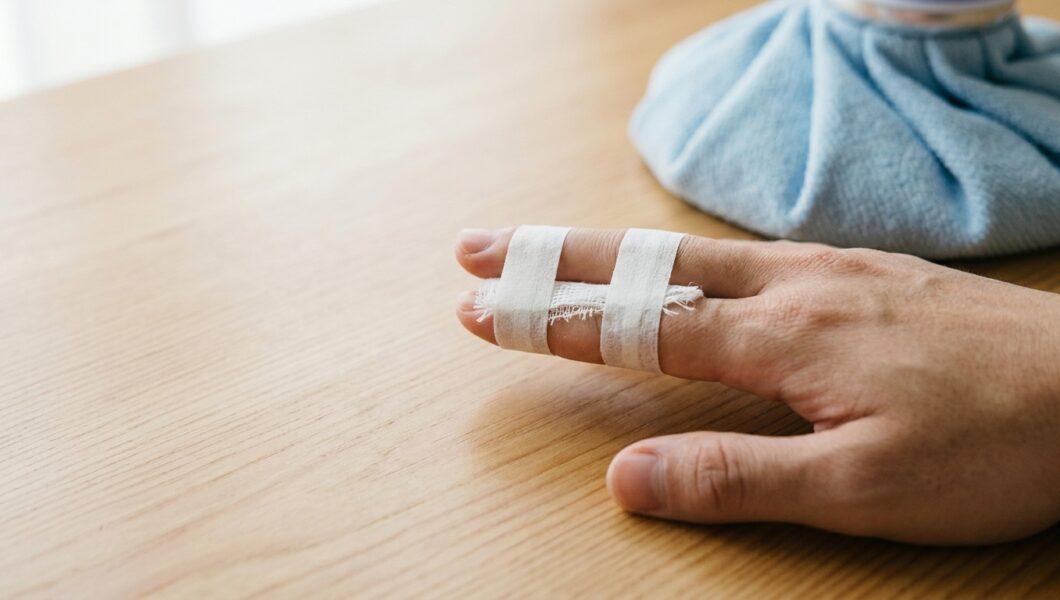
Buddy taping means taping the injured finger to the healthy finger beside it, which acts as a splint. It supports the joint while still allowing gentle movement.
- Place a small piece of gauze between the two fingers to protect the skin.
- Wrap medical tape loosely above and below the injured joint, not over the joint itself.
- Check that the tape isn’t too tight and your fingertips stay pink and warm.
- Replace the tape if it gets wet or dirty.
Buddy tape suits minor sprains, but it isn’t right for every injury, so see a doctor if you’re unsure of the severity.
Gentle Movement and Recovery
After the first few days, gentle movement helps prevent stiffness, as long as pain allows.
- Finger bends:
Slowly bend and straighten the finger within a comfortable range.
- Fist squeezes:
Gently make a loose fist, then open your hand.
- Soft ball squeeze:
Lightly squeeze a sponge or stress ball once pain eases.
Stop any exercise that causes sharp pain, and return to sports only when the finger moves fully and feels strong.
When to See a Doctor
Not every jammed finger is minor. Seek medical care if:
- The finger looks bent, crooked, or out of place
- You can’t straighten or bend it fully
- The fingertip droops and won’t lift
- There is severe pain, major swelling, or large bruising
- The finger feels numb or tingly, or turns pale or blue
- There is an open wound over the joint
- Pain or swelling isn’t improving after a week or two
A doctor may order an X-ray to check for a fracture and may recommend a splint or hand therapy. Untreated fractures and tendon injuries can leave a finger permanently stiff or crooked.
Factors That Affect Healing Speed
Severity
Tears and fractures take far longer than simple strains.
Early treatment
Prompt rest, ice, and support speed recovery.
Age and health
Older adults and people with conditions such as diabetes may heal more slowly.
Re-injury
Returning to sports too soon is a common cause of setbacks.
Common Mistakes to Avoid
- Pulling on the finger
This old habit can worsen the injury.
- Ignoring a crooked finger
A visible deformity needs medical care.
- Skipping movement entirely
Too much rest leads to stiffness.
- Returning to sports too early
Wait until the finger is pain-free and strong.
- Wrapping too tightly
It can cut off circulation.
Frequently Asked Questions
How long does a jammed finger take to heal?
Mild cases take 1 to 2 weeks, moderate ones 3 to 6 weeks, and severe injuries 6 to 8 weeks or more.
How do I know if my jammed finger is broken?
Severe pain, deformity, major swelling, or trouble moving the finger are warning signs. Only an X-ray can confirm a fracture.
Should I tape a jammed finger?
Buddy taping can help with minor sprains, but see a doctor if you suspect something more serious.
Why is my finger still swollen after weeks?
Swelling around the middle joint is common and can last for months.
Can I play sports with a jammed finger?
Only once the finger moves fully and feels strong, otherwise you risk re-injury.
The Bottom Line
Most jammed fingers heal within one to six weeks with rest, ice, gentle movement, and sometimes buddy taping, though swelling and stiffness can last longer. The key is telling a minor sprain from something more serious. If your finger looks crooked, can’t move properly, or isn’t improving, get it checked, because early treatment protects long-term hand function.