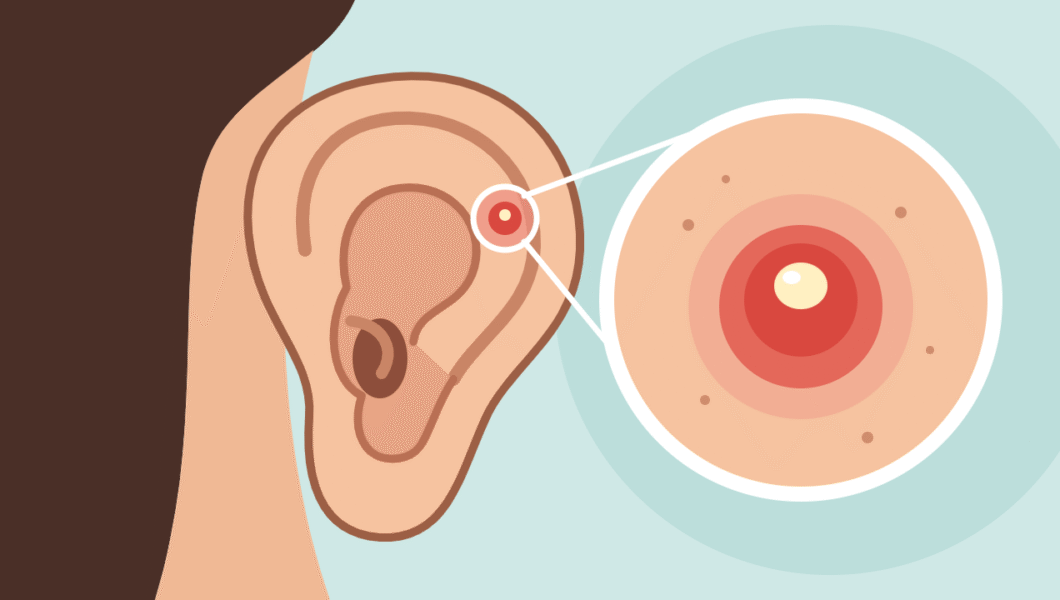
A pimple in your ear is a small bump that can be surprisingly painful. The skin there is thin and sensitive, and there’s very little room for swelling. The good news is that most ear pimples are harmless and clear up with simple care. This guide covers what causes them, how to treat them safely, and when to see a doctor.
What Is a Pimple in the Ear?
An ear pimple is a clogged pore that has become inflamed. Oil and dead skin cells build up in the ear canal or cartilage, which lets acne-causing bacteria (C. acnes) multiply and triggers inflammation. Ear pimples can appear in several places:
- The outer ear and ear folds, which are the easiest to see and treat
- The earlobe, often near a piercing
- Behind the ear, where sweat and hair products collect
- Inside the ear canal, which is harder to reach and needs more caution
Not every bump on the ear is a pimple. Cysts, boils, keloids (raised scars, common around piercings), and other growths can look similar. A dermatologist may need to rule out sebaceous cysts, boils, keloid scars, and other conditions that resemble pimples.
What Causes Pimples in the Ear?
- Clogged pores and excess oil. The ear has oil glands like the rest of your skin, so it can break out just like your face.
- Dirty earphones, earbuds, or hearing aids. They trap sweat and bacteria against your skin. Sharing earbuds is also a common cause of ear acne.
- Sweat and bacteria buildup. This is common after workouts or in hot, humid weather.
- Hair products and cosmetics. Sprays, gels, oils, and makeup can drift onto the ear and block pores.
- Piercings and skin irritation. New or unclean piercings invite bacteria and inflammation.
- Hormonal changes. Puberty, menstrual cycles, and stress can increase oil production.
Symptoms to Look For
An ear pimple usually shows up as:
- A small red or skin-colored bump, sometimes with a white or yellow head
- Tenderness or pain, especially when you touch the ear or lie on it
- Swelling and redness around the bump
- Itching, or a blocked feeling if the pimple is near the canal opening
7 Safe and Effective Remedies to Get Rid of a Pimple in Your Ear
Important: Apply the treatments below only to the outer ear (the visible skin, folds, and lobe). Don’t put products deep into the ear canal. If the pimple is inside the canal, see a doctor rather than treating it yourself.
1. Apply a Warm Compress
Soak a clean cloth in warm (not hot) water and hold it against the pimple for 5 to 10 minutes, a few times a day. Heat can soothe pain and help the pimple come to a head and drain naturally.
2. Use Diluted Tea Tree Oil
Tea tree oil has antibacterial properties, but it’s potent. Mix 1 to 2 drops with a teaspoon of carrier oil such as coconut or jojoba oil, and dab it on the pimple with a clean cotton bud. Never use it undiluted, and do a patch test first to check for allergic reactions.
3. Try a Salicylic Acid Cleanser or Spot Treatment
Salicylic acid unclogs pores and removes dead skin cells. A gentle cleanser or a small amount of spot treatment on the outer ear is enough. Keep it out of the ear canal, since the skin there is delicate and can be damaged by chemicals.
4. Apply Over-the-Counter Benzoyl Peroxide
A low-strength gel (2.5% to 5%) can kill acne bacteria and reduce inflammation. Apply a thin layer only to the pimple. It can dry out and irritate the skin, so don’t overuse it, and keep it away from the eyes.
5. Use Diluted Apple Cider Vinegar
Mix one part apple cider vinegar with two to three parts water, dab it on the pimple with a cotton ball, and rinse after a few minutes. It has mild antimicrobial properties, but evidence is limited, and it can irritate, so stop if you feel stinging or redness.
6. Apply Aloe Vera Gel
Pure aloe vera gel is calming and can reduce redness and irritation. Apply a thin layer once or twice a day. It’s a gentle option if other treatments dry out your skin.
7. Use an Antibiotic Ointment
An over-the-counter antibiotic ointment can help protect a pimple that has opened or become irritated, and it lowers the chance of infection. Use a small amount on the outer ear only.
A simple routine: wash the area gently, apply a warm compress, then use one treatment from the list. Using several at once tends to irritate the skin and slow healing.
What NOT to Do: Common Mistakes to Avoid
- Don’t pop or squeeze it. The ear is sensitive, and a burst pimple that becomes infected can cause further problems and leave a scar. Squeezing can also push bacteria deeper.
- Don’t use cotton swabs or sharp objects inside the ear. They can damage the canal and push wax further in.
- Avoid harsh chemicals and undiluted essential oils. They can cause burns, dryness, and allergic reactions.
- Skip earbuds until the pimple heals. Wearing them over a pimple on the outer ear will aggravate it.
- Avoid touching it repeatedly. Touching a pimple can worsen it, cause more breakouts, or prolong healing.
How Long Does It Take for an Ear Pimple to Heal?
Most ear pimples improve within a few days and clear up within about a week. Deeper, more inflamed pimples can take longer. If a bump hasn’t resolved after seven to 10 days, or if it’s painful, growing, infected, or affecting your hearing, see a doctor.
When to See a Doctor
Ear pimples aren’t usually serious, but get medical advice if you notice:
- Signs of infection: increasing redness, warmth, swelling, pus or discharge
- Severe pain or swelling, especially if it spreads or affects your hearing
- Recurring or non-healing bumps. See a doctor about a bump that is tender, itchy, bleeds easily, or doesn’t go away on its own.
- A bump that may not be a pimple. Although rare, bumps on the ear can occasionally be malignant growths such as basal cell carcinoma. Any bump that grows, changes, or won’t heal needs checking.
A doctor or dermatologist can safely drain a stubborn pimple, prescribe stronger topical medication or antibiotics if needed, and confirm that it really is a pimple and not a cyst, boil, or something else.
How to Prevent Pimples in the Ear
- Clean earphones and hearing aids regularly with an alcohol wipe or as the manufacturer recommends.
- Wash your ears gently during showers, paying attention to the folds and the area behind the ear.
- Keep hair products away from your ears, and rinse shampoo and conditioner thoroughly.
- Maintain good piercing hygiene. Clean new piercings as instructed and avoid touching them with unwashed hands.
- Don’t share earbuds or headphones.
- Change pillowcases weekly to reduce oil and bacteria transfer.
Frequently Asked Questions (FAQs)
Is it safe to pop a pimple in the ear?
No. Popping can cause infection, scarring, and deeper inflammation. Let it resolve on its own if it isn’t causing much discomfort, and have a healthcare provider extract it if needed.
Can a pimple in the ear cause hearing loss?
Rarely. A pimple on the outer ear won’t affect hearing. A large or infected pimple inside the canal could swell enough to block it temporarily, which is a reason to see a doctor.
Why do I keep getting pimples in the same ear?
Common reasons include sleeping on one side, using one earbud or phone ear more often, a piercing on that side, or hair products that settle there. If it keeps coming back, a doctor can check for an underlying cause.
Can stress cause ear pimples?
Indirectly. Stress can raise hormone levels that increase oil production, which can lead to clogged pores anywhere on your body, including your ears.
Conclusion
Most pimples in the ear heal with patience and gentle care. Keep the area clean, use a warm compress and one mild treatment on the outer ear, and resist the urge to squeeze or dig. Prevention is mostly about hygiene: clean your earbuds, wash your ears, and keep products away from them. If the pimple is very painful, inside the canal, infected, or lasts more than a week or so, see a doctor to be safe.