Leather sofas and chairs are built to last, but daily use leaves its mark. Pets scratch them, sunlight dries them, and sharp objects can tear them. The good news is that most damage is fixable at home with inexpensive supplies and a little patience. This guide shows how to identify your leather type, repair scratches, cracks, and small tears, and keep the surface looking good for years.
Why Leather Gets Damaged
Leather is a natural material that needs moisture and gentle care. Sun, heat from vents, body oils, and friction slowly dry it out. Dry leather cracks, peels, and loses its color. Small scratches and scuffs are mostly surface issues, while tears and holes go through the material and need more work.
Know Your Leather Type
Aniline leather:
Soft and natural-looking with no protective coating. It stains easily and shows every mark.
Semi-aniline leather:
Has a light protective finish and is a bit more forgiving.
Pigmented (protected) leather:
The most common type, with a durable colored coating. Most repair kits are made for it.
Bonded or faux leather:
Made from leather scraps or plastic coatings. It tends to peel instead of crack, and repairs are different.
Suede or nubuck:
Has a brushed surface and needs specialty products.
To test your leather, place a drop of water in a hidden spot. If it soaks in and darkens the area, it is likely aniline. If the drop beads up, the leather is coated.
What You Need
- Mild leather cleaner or a gentle soap and water
- Soft, lint-free cloths
- Leather conditioner
- Leather repair kit, including filler, color compound, and grain paper
- Leather glue or flexible adhesive
- A palette knife or small spatula
- Fine sandpaper (600 to 1000 grit)
- Scissors and a thin piece of backing fabric
- Rubbing alcohol
- A hair dryer (optional)
Step-by-Step: How to Repair Leather Furniture
- Clean the area
Wipe the damaged spot with a damp cloth and a little leather cleaner. Remove dirt and oils, then let it dry fully. - Test products first
Try any cleaner, dye, or conditioner on a hidden area, such as under a cushion, to check for color changes. - Trim loose edges
Snip away any frayed threads or peeling bits with small scissors. Keep the cut clean and neat. - Fix light scratches
Rub the scratch gently with your fingertip to warm the leather and redistribute the oils. Then apply a small amount of leather conditioner and buff with a soft cloth. Many shallow scratches vanish this way. - Fill deeper scratches and cracks
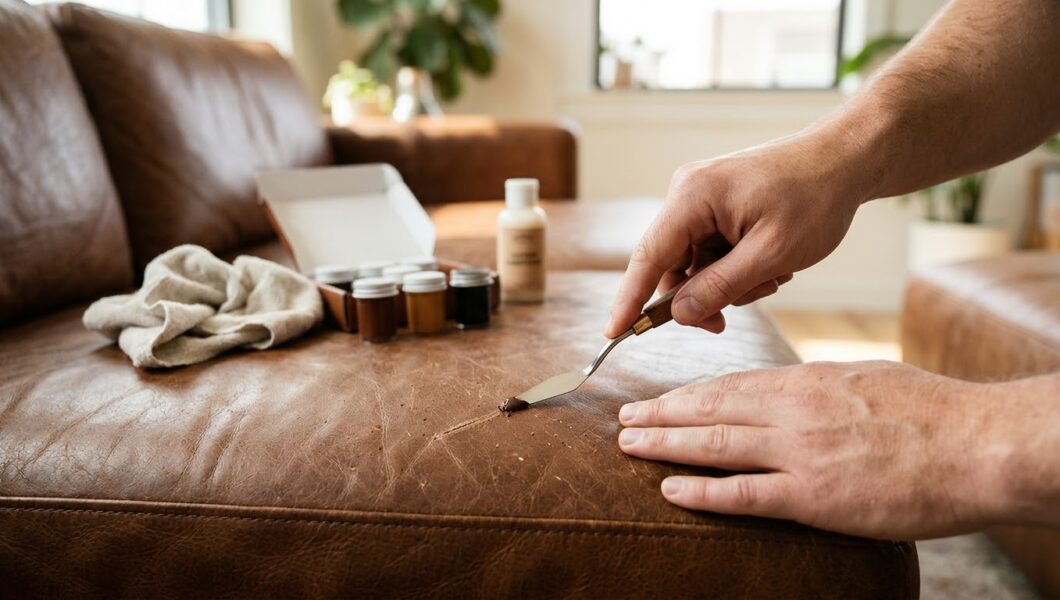
Lightly sand rough edges. Apply a thin layer of leather filler with a palette knife, smooth it flat, and let it dry. Repeat in thin coats until the area is level. Thick layers crack. - Repair small tears
Cut a piece of backing fabric slightly larger than the tear. Slide it under the leather with tweezers or a knife. Apply leather glue to the backing, press the edges together, and wipe off any excess. Let it dry according to the product directions. - Fill the seam
After the glue dries, apply filler over the repair in thin layers, sanding lightly between coats once dry. - Add texture
For a natural look, press grain paper onto the wet filler and warm it with a hair dryer on low. Peel it away to leave a leather-like texture. - Color the repair
Apply the color compound with a sponge in thin, even layers. Match the shade carefully and let each coat dry before adding another. - Seal the surface
Apply a protective finish or sealant if your kit includes one. This helps the color last. - Condition the whole piece
Apply conditioner to the entire cushion or panel, not just the repair, so the sheen and feel match.
Which Fix Matches Which Damage?
| Damage | Best fix | Difficulty |
| Light scratches | Conditioner and buffing | Easy |
| Scuffs and color wear | Color balm or dye | Easy to medium |
| Deep scratches | Filler and color | Medium |
| Cracks | Flexible filler, color, and sealant | Medium |
| Small tears | Backing patch, glue, and filler | Medium |
| Large tears or sagging seams | Professional upholstery repair | Hard |
| Peeling faux leather | Patch kit or re-covering | Medium to hard |
Fixing Faux or Bonded Leather
Bonded and faux leather peel when the top layer separates from the backing. You cannot restore the peeled coating, so repairs are cosmetic. Trim loose flakes, sand the edges smooth, and apply a flexible filler and color made for synthetic leather. For large peeled areas, replacing the cover or upholstering the piece usually works better than patching.
Tips for Better Repairs
Work in good light:
You can match color more accurately in daylight.
Use thin layers:
Several light coats look better than one thick coat.
Be patient with drying:
Rushing leads to sticky, uneven spots.
Keep the area flexible:
Furniture moves, so use flexible products.
Match the sheen:
Compare the repaired area with a nearby spot as you go.
Take photos:
Take a clear picture before and after to track progress.
Common Mistakes to Avoid
Using household cleaners:
Bleach, ammonia, and strong detergents damage leather.
Skipping the patch test:
Dyes and conditioners can darken or stain.
Applying filler too thickly:
It cracks and peels over time.
Using super glue:
It dries hard and brittle and will crack.
Over-wetting the leather:
Too much water can stain and warp it.
Ignoring the backing:
Tears without a patch will open again.
Skipping conditioning:
Dry leather will crack elsewhere.
Safety Precautions
Work in a well-ventilated room, because glues, dyes, and solvents give off fumes. Wear gloves to protect your skin and avoid getting products in your eyes. Keep children and pets away while you work, and store repair supplies out of reach. Do not use a heat gun or very high heat near leather, which can shrink and scorch it. Check labels for flammable ingredients, and keep products away from open flames. If your furniture is an antique or high-value piece, talk to a professional before attempting repairs.
Frequently Asked Questions
Can I repair a cat scratch on leather?
Yes. Light scratches can be buffed out with conditioner, and deeper ones may need filler and color.
How do I fix a tear in a leather couch?
Add a backing patch under the tear, glue the edges, then fill, texture, and color the repair.
Can cracked leather be restored?
Minor cracks can be filled and recolored. Severe cracking may need professional help.
How often should I condition leather?
Every six to twelve months is common, depending on use and climate.
When should I call a professional?
For large tears, structural damage, delicate aniline leather, or valuable furniture.
The Bottom Line
Leather furniture can be repaired at home if you match the fix to the damage. Clean the area, treat light scratches with conditioner, fill deeper marks and cracks with thin layers of filler, and patch tears from behind. Color the repair, seal it, and condition the whole surface so everything blends. Avoid harsh cleaners and super glue, and test every product first. For big tears, delicate leather, or valuable pieces, a professional upholsterer is worth the cost.