Stainless steel has a reputation for being rust-proof, so spotting orange stains on your sink, pan, or grill can be a surprise. The good news is that surface rust on stainless steel is usually easy to remove with ingredients you already have at home. This guide explains why it happens, walks through seven proven methods, and shows you how to keep the rust from returning.
Why Does Stainless Steel Rust?
Stainless steel contains chromium, which reacts with oxygen to form a thin, invisible protective layer called the chromium oxide layer. This layer is what keeps the metal from corroding. The name “stainless” means stain-resistant, not stain-proof.
That protective layer can be damaged by:
- Prolonged moisture, such as water sitting in a sink or on a damp surface
- Salt, including seawater and de-icing salt
- Harsh chemicals, especially bleach and chlorine-based cleaners
- Scratches from steel wool or abrasive pads
- Contact with iron or regular steel, which leaves behind particles that rust and stain the surface
It helps to know the difference between a rust stain and true corrosion. A stain sits on the surface and wipes away with the right cleaner. Corrosion, such as deep pitting, eats into the metal itself and is much harder to reverse.
What You’ll Need Before You Start
Gather a few basics before trying any method:
- Soft cloths or microfiber towels
- A soft-bristled brush or non-scratch sponge
- Rubber gloves
- Clean water and a dry towel
- Your chosen cleaner (listed below)
Always test your cleaner on a small, hidden spot first. Avoid steel wool, wire brushes, and abrasive scouring pads, since they scratch the surface and invite more rust. When scrubbing, move in the direction of the metal’s grain, the faint lines you can see on the surface.
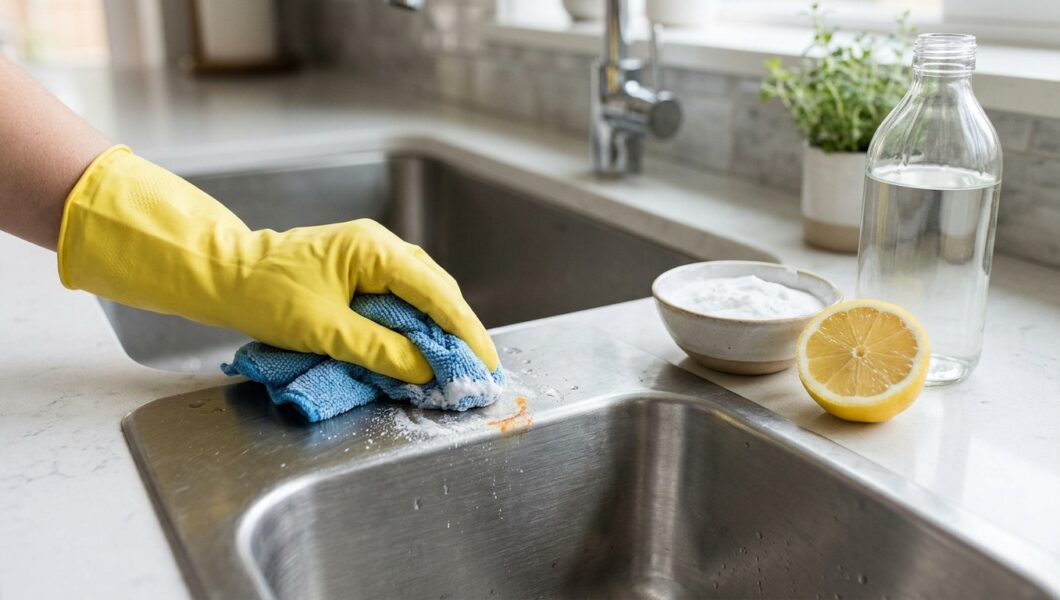
Method 1: Baking Soda Paste
Best for: light surface rust and sinks
Baking soda is mildly abrasive and gentle enough for most stainless steel.
- Mix three parts baking soda with one part water to form a thick paste.
- Spread the paste over the rusty area.
- Let it sit for 15 to 60 minutes.
- Scrub gently with a soft brush or cloth, following the grain.
- Rinse with clean water and dry completely.
Method 2: White Vinegar
Best for: small items and light rust
The mild acid in white vinegar helps dissolve rust.
- Pour white vinegar into a bowl or soak a cloth in it.
- Submerge small items, or lay the soaked cloth over the rusty area.
- Leave for 10 to 30 minutes. Don’t leave it much longer, as extended contact can dull the finish.
- Wipe away the rust with a soft cloth.
- Rinse thoroughly with water and dry right away.
Method 3: Lemon Juice and Salt
Best for: knives, cookware, and small stains
Citric acid in lemon juice loosens rust, while salt adds light scrubbing power.
- Sprinkle salt over the rust spot.
- Squeeze fresh lemon juice on top until the salt is damp.
- Wait about 2 to 3 hours.
- Scrub gently with a soft cloth or the used lemon rind.
- Rinse and dry well.
Go easy on the salt scrubbing, since too much pressure can scratch delicate finishes.
Method 4: Baking Soda and Vinegar Combination
Best for: stubborn spots
The fizzing action can help lift rust from tight areas.
- Sprinkle baking soda over the rusty area.
- Spray or pour a little white vinegar on top and let it fizz.
- Wait 10 to 15 minutes.
- Scrub gently with a soft brush.
- Rinse and dry.
Method 5: Cream of Tartar Paste
Best for: sinks and cookware
Cream of tartar is a mild acid that works well on rust and discoloration.
- Mix cream of tartar with a few drops of water or hydrogen peroxide until it forms a paste.
- Apply it to the rust stain.
- Let it sit for about 1 hour.
- Scrub lightly with a soft cloth.
- Rinse thoroughly and dry.
Method 6: Commercial Rust Removers and Stainless Steel Cleaners
Best for: heavy rust and large surfaces
When home remedies aren’t enough, a product made for stainless steel can save time. Look for cleaners labeled safe for stainless steel, and check the ingredients: oxalic acid-based formulas are especially effective on rust. Avoid anything containing chlorine or bleach.
Always follow the label directions, wear gloves, and ventilate the room. Rinse the surface well afterward so no residue stays on the metal.
Method 7: Oxalic Acid or Bar Keepers Friend
Best for: tough stains and discoloration
Oxalic acid is the active ingredient in Bar Keepers Friend, a popular cleaner for stainless steel.
- Wet the surface and sprinkle on the powder, or mix it into a paste with water.
- Rub gently with a damp cloth or soft sponge, following the grain.
- Don’t let it sit for more than a minute or two.
- Rinse very thoroughly with water.
- Dry with a clean towel.
Wear gloves and avoid prolonged skin contact. Never mix it with bleach or other cleaners.
Quick Comparison: Which Method Should You Use?
| Method | Best For | Rust Level | Time Needed | Difficulty |
| Baking soda paste | Sinks, flat surfaces | Light | 15–60 min | Easy |
| White vinegar | Small items | Light | 10–30 min | Easy |
| Lemon and salt | Knives, cookware | Light | 2–3 hours | Easy |
| Baking soda + vinegar | Stubborn spots | Light to moderate | 10–15 min | Easy |
| Cream of tartar | Sinks, pots | Light to moderate | About 1 hour | Easy |
| Commercial cleaner | Large or heavy rust | Moderate to heavy | 5–30 min | Medium |
| Oxalic acid / Bar Keepers Friend | Tough stains | Moderate to heavy | A few minutes | Medium |
For most households, start with baking soda paste. If that doesn’t work, move up to Bar Keepers Friend.
How to Clean Rust Off Specific Stainless Steel Items
Sinks and appliances: Baking soda paste or Bar Keepers Friend works well. Rinse thoroughly and dry the basin, since standing water causes new stains. Also remove any steel pots or cans that may have been sitting in the sink.
Pots, pans, and cookware: Use cream of tartar or lemon and salt, then wash with warm soapy water before cooking again.
Knives and cutlery: Try a quick vinegar soak or lemon and salt. Dry immediately after washing and avoid the dishwasher’s long wet cycles for good knives.
Grills and outdoor furniture: These face weather and moisture, so use a commercial stainless steel cleaner or Bar Keepers Friend, then apply a protective polish.
Mistakes to Avoid When Removing Rust
- Using steel wool or abrasive scrubbers. They scratch the surface and can leave behind iron particles that rust.
- Using bleach or chlorine-based cleaners. Chlorine attacks the protective layer and can cause pitting.
- Scrubbing against the grain. This leaves visible scratches.
- Leaving cleaners on too long. Acidic cleaners can dull or etch the finish if left on the surface.
- Skipping the rinse. Cleaning residue can cause fresh spots.
How to Prevent Rust From Coming Back
- Dry surfaces after washing. Standing water is a leading cause of rust.
- Clean regularly with mild soap and water. Dirt and grime can trap moisture.
- Limit contact with salt and iron objects. Don’t leave cast iron pans, steel cans, or metal scrubbers on stainless surfaces.
- Use a stainless steel polish. A thin protective coat helps repel moisture.
- Wipe with the grain. It keeps the finish smooth and helps the protective layer stay intact.
When to Call a Professional or Replace the Item
If you see deep pitting, flaking metal, or rust that returns quickly after cleaning, the damage may go beyond the surface. In these cases, cleaning won’t fix the problem. Consider professional restoration for expensive or built-in items, or replace worn cookware and cutlery, since corroded pits can harbor bacteria.
Frequently Asked Questions
Can you remove rust from stainless steel permanently? You can remove existing surface rust, but it can return if the cause isn’t addressed. Keep the surface dry and clean to prevent it.
Is it safe to use vinegar on stainless steel? Yes, in moderation. Short contact times are fine, but rinse well and don’t let vinegar sit for hours.
Does WD-40 remove rust from stainless steel? WD-40 can loosen light rust and displace moisture, but it isn’t a true rust remover. Clean the area afterward, especially on cookware or food-contact surfaces.
Why is my stainless steel rusting after cleaning? Common causes include leftover moisture, residue from cleaners, scratches from abrasive tools, or contact with iron particles. Rinse well, dry completely, and avoid scouring pads.
Conclusion
Rust on stainless steel looks alarming, but it’s usually a surface issue you can fix in minutes. Start with gentle options like baking soda paste or vinegar, and step up to oxalic acid-based cleaners for stubborn stains. Use soft tools, rinse thoroughly, and dry everything afterward. With a little regular care, your stainless steel will stay clean and rust-free for years.