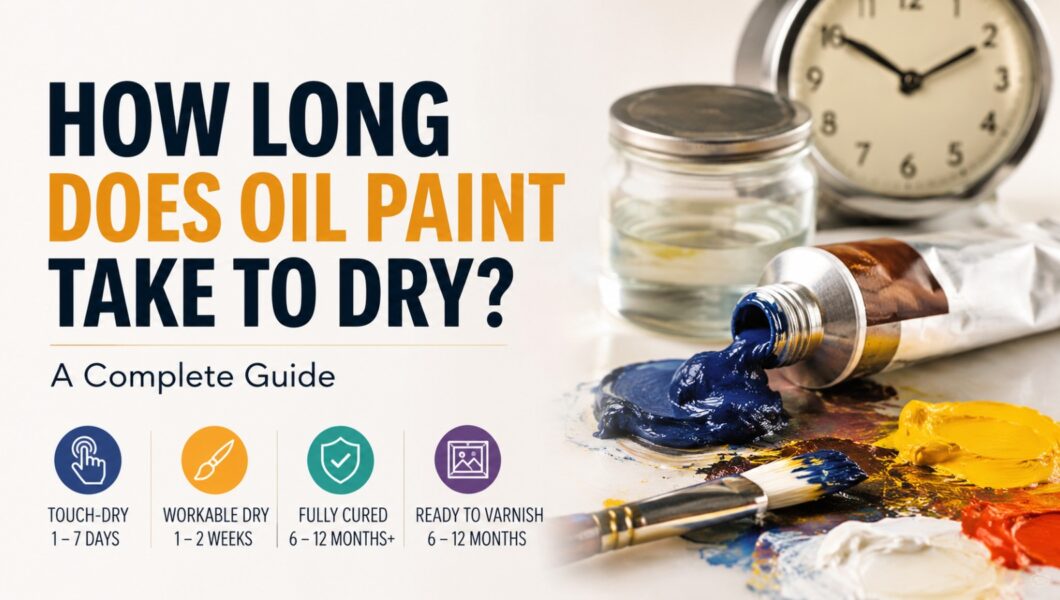
If you are new to oil painting, the slow drying time is probably the first thing you notice. A watercolor or acrylic piece can be finished in an afternoon, but an oil painting can stay wet for days and take many months to fully harden. So, how long does oil paint take to dry, and what can you do about it?
The short answer is that a thin layer of oil paint is usually touch-dry in 1 to 7 days, while a full cure takes 6 months to a year or more. The details depend on several factors, which this guide covers.
Why Oil Paint Dries So Slowly
Water-based paints dry when their water evaporates. Oil paint works differently. It dries through oxidation: the drying oil in the paint (usually linseed, safflower, or poppy oil) reacts with oxygen in the air and gradually forms a solid, flexible film.
Because this happens from the surface inward, the top of a thick stroke can feel dry while the paint beneath is still soft. This is why drying time matters so much for layering, varnishing, and storing or shipping finished work.
Oil Paint Drying Stages
1. Touch-Dry: 1 to 7 Days
Touch-dry means the surface no longer feels sticky and you can lightly touch it without leaving a mark. For a thin layer, this typically takes between one and seven days, depending on the pigment and conditions. Thick paint can take two weeks or more.
2. Workable Dry: About 1 to 2 Weeks
At this stage you can safely paint another layer on top. Many artists wait until the layer is firm and no longer tacky before continuing.
3. Fully Cured: 6 Months to 1 Year or More
A painting is fully cured when the oil has completely oxidized through the whole paint film. Thin paintings may get there in around six months, while heavy impasto work can take a year or longer.
4. Ready to Varnish: 6 to 12 Months
Conservators generally recommend waiting six to twelve months before applying a final varnish. Varnishing too early can trap solvents and moisture in the paint and cause problems later. If you need a finished look sooner, you can apply a temporary “retouching” varnish and replace it with the final varnish once the painting has cured.
Oil Paint Drying Time by Color
Pigments affect drying speed more than most beginners expect. Some act as natural driers, while others slow the process down.
Fast-drying colors (touch-dry in about 1 to 3 days):
- Burnt umber and raw umber
- Burnt sienna and raw sienna
- Cobalt blue
- Lead white (where available and used safely)
Medium-drying colors (about 3 to 5 days):
- Cadmium yellow and cadmium red
- Ultramarine blue
- Yellow ochre
Slow-drying colors (5 to 7 days or longer):
- Titanium white
- Ivory black and mars black
- Alizarin crimson
- Phthalo colors in heavy applications
Exact times vary by brand and by how much oil the manufacturer uses, so check the tube or the manufacturer’s website.
Factors That Affect Oil Paint Drying Time
Paint thickness. This is the biggest factor. Thin glazes dry far faster than thick impasto strokes.
Type of oil. Linseed oil dries fastest among common oils. Safflower and poppy oils dry more slowly and are often used in whites and pale colors because they yellow less.
Temperature. Warm rooms speed up oxidation, and cold rooms slow it. A studio around 70 to 77°F (21 to 25°C) is a good target.
Humidity and airflow. High humidity and stagnant air slow drying. A well-ventilated, moderately dry room helps, but avoid strong direct drafts or heat that could cause uneven drying.
Surface and ground. An absorbent ground, such as traditional gesso, pulls some oil into the support and can speed up the surface drying slightly. A non-absorbent surface keeps the paint wetter for longer.
Mediums and additives. What you mix into the paint matters. Alkyd mediums like Liquin speed drying, while extra oil or slow-drying mediums extend it.
How to Make Oil Paint Dry Faster
If you want to shorten drying time, these methods are safe and effective:
- Paint in thin layers. This is the simplest and most reliable approach.
- Use an alkyd medium. Products such as Liquin can make layers touch-dry in about a day.
- Choose fast-drying pigments. Underpaint with umbers and siennas.
- Try alkyd oil paints. Alkyd-based oil colors typically dry to the touch in 24 hours or so.
- Use water-mixable oil paints. They dry in a similar range to traditional oils, with the benefit of easy water cleanup.
- Keep the studio warm and ventilated. Good airflow and moderate warmth help oxidation.
- Limit the oil. Use solvent or a lean medium in early layers to reduce the amount of oil that has to dry.
Be careful with heavy use of chemical driers such as cobalt drier. Overuse can make paint films brittle and prone to cracking.
The Fat Over Lean Rule
When layering oil paint, always follow the fat over lean rule. “Fat” means paint with more oil, and “lean” means paint with less oil (or more solvent). Each new layer should be fatter than the one below it.
The reason is that lean layers dry faster and more rigidly. If a lean layer sits on top of a fat, slow-drying layer, the top film will crack as the lower layer continues to shift while drying. Start with thin, lean underpaintings and gradually add more oil to each layer.
How to Speed Up Drying Safely (and What to Avoid)
- Don’t use a hairdryer or heater directly on the painting. Uneven heat can cause cracking or wrinkling.
- Don’t store wet paintings in sealed boxes. Oil needs oxygen to dry.
- Don’t put wet oil paintings in a dark closet for long periods. Prolonged darkness can cause yellowing in some oils. Moderate light helps.
- Don’t varnish early. Patience protects the painting for decades.
How to Tell If an Oil Painting Is Dry
Try these simple checks:
- Touch test: Gently press a hidden corner. If it feels tacky or leaves a mark, it is not ready.
- Thumbnail test: On a thick area, a dry surface resists denting.
- Smell: A strong oily or solvent smell often means the paint is still curing.
- Sheen: Some oil paints develop an uneven glossy or matte look as they dry, which can be a sign of different drying rates.
If you are unsure, wait longer. Extra time rarely hurts an oil painting.
Frequently Asked Questions
How long does oil paint take to dry on canvas?
A thin layer on canvas is usually touch-dry in 1 to 7 days, with full curing taking 6 to 12 months.
How long does thick oil paint take to dry?
Thick impasto can take two to four weeks to become touch-dry and more than a year to cure fully.
Can you paint over oil paint that is not fully dry?
Yes, as long as the lower layer is touch-dry and you follow the fat over lean rule.
Does oil paint dry faster in the sun?
Warmth and light help, but direct hot sun can cause uneven drying and cracking. Moderate, indirect light is better.
How long should I wait before framing an oil painting?
You can frame it once it is touch-dry, but leave space for air if the painting is still curing, and avoid sealing the back.
Does oil paint ever dry completely?
Yes. Oil paint eventually cures into a solid film, though some chemical changes continue slowly for years.
Final Thoughts
So, how long does oil paint take to dry? Expect a few days for thin layers to become touch-dry, a couple of weeks for heavier work to be safe to paint over, and six months to a year before the painting is fully cured and ready for varnish. By choosing your pigments carefully, painting in thin layers, using suitable mediums, and following the fat over lean rule, you can work at a comfortable pace and create paintings that last.