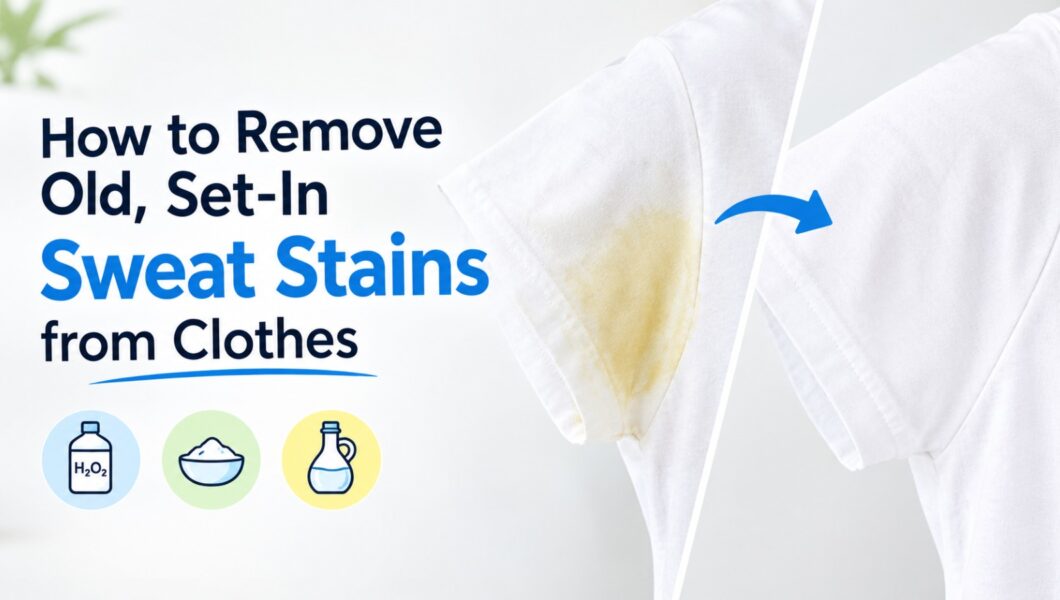
You pull a favorite white shirt from the closet, and there they are: stiff, yellow patches under the arms that have survived every wash. It’s one of the most common laundry complaints, and one of the most misunderstood.
The good news: most old sweat stains can be lifted, even ones that have been there for months. The key is using the right treatment for the right kind of stain, and avoiding a few habits that quietly lock stains in.
Quick answer: For old yellow stains on white cotton, brush in a paste of 3% hydrogen peroxide, baking soda, and a little dish soap, let it sit for 1 to 2 hours, rinse with cool water, and wash. For colored fabrics, use an enzyme stain remover or a diluted white vinegar soak instead. Never use chlorine bleach, and never dry the garment until the stain is gone.
Why Sweat Stains Set In (and Why Washing Doesn’t Fix Them)
Sweat itself is mostly water and salt, and it’s nearly colorless. The yellow stain comes from what sweat mixes with:
- Aluminum compounds in antiperspirants, which react with sweat and bond to fibers
- Body oils and skin proteins, which cling to fabric and oxidize over time
- Detergent and deodorant residue, which builds up wash after wash
Each wear adds another layer. Because normal washing removes only part of it, the remainder oxidizes and hardens. That’s why old stains look yellow or brown and feel crunchy.
Heat makes it worse. Sweat contains proteins, and hot water or a hot dryer cooks them into the fabric, much like an egg firming up in a pan. This is the most common reason a stain that could have been removed becomes “permanent.”
Fabric matters too. White and light cotton show stains most. Polyester traps oils and odor. Silk stains easily and is fragile to treat. Linen discolors readily.
Before You Start
1. Identify what you’re dealing with
| What you see | Likely cause | Best starting point |
| Yellow patches | Sweat + antiperspirant reaction | Peroxide paste or enzyme soak |
| White, chalky marks | Deodorant buildup | Vinegar solution |
| Stiff, crusty areas | Heavy layered residue | Loosen first, then enzyme or oxygen bleach soak |
| Lingering odor, little visible stain | Bacteria and oils in fibers | Enzyme soak or vinegar soak |
2. Check the care label and spot test
Some items are dry-clean only, and some fabrics can’t handle peroxide or soaking. Test any treatment on a hidden spot, such as an inside seam. Wait a few minutes, blot with a white cloth, and look for color transfer or fading.
3. Gather your supplies
- Baking soda
- White vinegar
- 3% hydrogen peroxide
- Dish soap (a plain, clear one works best)
- Uncoated aspirin (optional)
- Soft brush or old toothbrush
- Bowl or basin
- Enzyme stain remover or oxygen bleach (optional)
The Best Methods for Old Sweat Stains
Start with the gentlest method that suits your stain. If it doesn’t work, move to a stronger one. Old stains often need two or three rounds, so don’t be discouraged by a partial result.
Method 1: Hydrogen Peroxide, Baking Soda, and Dish Soap (Strongest Home Option)
Best for: heavy, old yellow stains on white cotton and other sturdy whites.
- Mix 2 tablespoons of 3% hydrogen peroxide, 2 tablespoons of baking soda, and about half a teaspoon of dish soap.
- Spread the mixture over the dry or slightly damp stain and work it in with a soft brush.
- Let it sit for 1 to 2 hours. Keep it out of direct sunlight if the fabric has any color.
- Rinse with cool water and check the stain.
- Repeat if needed, then wash normally.
Mix a fresh batch each time. Peroxide loses strength quickly, and the mixture shouldn’t be stored in a sealed container.
Method 2: Enzyme Stain Remover (Best for Colors and Odor)
Best for: colored clothes, synthetics, and stains that come with lingering smell.
Enzyme cleaners are designed to break down the proteins in sweat, so they’re one of the most effective options for old stains, and they’re gentle on most colors.
- Apply the enzyme cleaner directly to the stain, or dissolve it in cool water for a soak.
- Leave it for at least 30 minutes. For old stains, an overnight soak often works far better.
- Rinse and launder in cool or lukewarm water.
Method 3: White Vinegar Solution (Best for Deodorant Buildup)
Best for: white chalky marks, stiff residue, and odor.
Vinegar’s acidity helps dissolve the aluminum-based residue from antiperspirants.
- Mix equal parts white vinegar and cool water.
- Sponge it onto the stain or soak the area for 30 to 60 minutes.
- Scrub lightly, rinse, and wash.
Don’t mix vinegar with peroxide in one container. The combination forms peracetic acid, which can irritate skin and damage fabric. Use them on separate days, with a thorough rinse in between.
Method 4: Baking Soda Paste (Gentle First Attempt)
Best for: lighter yellowing and colored fabrics.
- Mix 3 tablespoons of baking soda with 1 tablespoon of water to make a thick paste.
- Brush it over the stain and let it sit for 30 minutes to a few hours.
- Rinse with cool water and wash.
Baking soda works mostly as a mild abrasive and deodorizer. It’s a solid first step but usually isn’t enough alone for very old stains.
Method 5: Oxygen Bleach Soak (For Big Jobs)
Best for: multiple stained garments and sturdy fabrics you want to brighten overall.
Oxygen bleach (sold under names like OxiClean or as “color-safe bleach”) is far gentler than chlorine bleach and safe for most washable fabrics.
- Dissolve it in warm (not hot) water, following the package directions.
- Submerge the garment and soak for 4 to 8 hours or overnight.
- Rinse and wash as usual.
Method 6: Aspirin Paste (Optional Booster)
Some people find that the salicylic acid in aspirin helps loosen stubborn residue. Results vary, so treat it as an extra rather than a first choice.
- Crush 2 to 3 uncoated aspirin tablets into a fine powder.
- Mix with a little warm water to form a paste.
- Apply to the stain and leave for 2 to 3 hours.
- Rinse and wash.
A Note on Lemon Juice and Salt
Lemon juice and sunlight are often recommended as a natural brightener for whites. It can help with light staining, but it’s inconsistent on old stains and can weaken or discolor some fabrics, so use it only on sturdy white cotton and rinse thoroughly.
Step-by-Step: The Full Deep-Cleaning Process
When a stain has survived several washes, follow this sequence.
Step 1: Loosen the residue. Wet the area with cool water and gently brush to break up crusty buildup. This lets your treatment actually reach the fibers.
Step 2: Apply your treatment. Choose from the methods above based on fabric and stain type.
Step 3: Give it time. Thirty minutes is a minimum. Heavily set stains often need several hours, or an overnight soak for sturdy fabrics.
Step 4: Rinse with cool water. Heat can set whatever is left behind.
Step 5: Repeat if needed. Two or three rounds are normal for old stains. Progress is usually gradual.
Step 6: Wash, then inspect while damp. Launder using the coolest setting the fabric allows, then check the underarm area before drying. If any stain remains, treat it again. Air-dry until you’re sure it’s gone.
How to Treat Sweat Stains by Fabric Type
White cotton shirts. These handle the strongest treatments: peroxide paste, enzyme soaks, and oxygen bleach.
Colored clothing. Stick to enzyme cleaners, vinegar solution, or baking soda paste. Skip lemon juice and use peroxide only after a successful spot test.
Silk and delicates. Use a very diluted vinegar solution (1 part vinegar to 4 parts cool water), dab gently without rubbing, and avoid long soaks. For valuable pieces, a professional cleaner is the safer route.
Polyester and athletic wear. Synthetics hold onto oils and odor. Enzyme cleaners and vinegar soaks work well, followed by a cool or lukewarm wash.
Wool and knitwear. Use cool water and mild treatments only. Avoid scrubbing hard or wringing, and dry flat.
Suits, jackets, and dry-clean-only items. Don’t soak them. Spot-treat lightly with diluted vinegar only if the label allows, or point out the stains to your dry cleaner so they can pre-treat them.
What to Do When the Stain Won’t Budge
- Combine methods safely. For example, try an enzyme soak one day, and a peroxide paste the next. Rinse thoroughly between them and never mix products in the same container.
- Extend the soak. An overnight oxygen bleach or enzyme soak can loosen stains that shorter treatments miss.
- Get professional help. For valuable, delicate, or sentimental items, a dry cleaner has stronger tools and experience.
- Accept partial results. Stains that have been through years of hot washes and dryers may leave a faint shadow. At that point, consider wearing the garment under a jacket or as an undershirt.
Mistakes That Make Sweat Stains Worse
- Using chlorine bleach. It reacts with sweat proteins and residue and can turn stains more yellow rather than removing them.
- Washing in hot water first. Heat sets protein-based stains.
- Using the dryer too soon. Dryer heat bakes leftover residue in.
- Mixing cleaners. Never combine bleach with vinegar (toxic fumes) or peroxide with vinegar (corrosive acid).
- Using too much detergent. Excess detergent leaves residue that traps sweat and odor.
- Waiting too long to wash. The longer sweat sits, the deeper it bonds.
How to Prevent Sweat Stains from Coming Back
Prevention is far easier than removal, and a few small changes make a big difference.
- Rethink your antiperspirant. Aluminum-based formulas are the main cause of yellow stains. If stains keep returning, try an aluminum-free deodorant or a clear-gel formula.
- Let it dry before dressing. Give the product a minute or two to dry completely before putting on your shirt.
- Apply less. A thin layer works as well as a thick one and leaves less residue on fabric.
- Wear an undershirt or sweat pads. A thin cotton layer absorbs sweat before it reaches your outer shirt.
- Choose breathable fabrics. Cotton, linen, and moisture-wicking blends let sweat evaporate rather than soak in.
- Wash promptly. Don’t leave sweaty clothes balled up in a hamper for days. If you can’t wash right away, rinse the underarm area and let it air out.
- Deep-clean white shirts monthly. An oxygen bleach soak or a baking soda pre-treatment stops buildup before it turns into a stain.
Frequently Asked Questions
Can old sweat stains be removed completely? Often, yes. Most fade dramatically or disappear with repeated treatment. Stains that have been heat-set many times may leave a faint shadow.
Which works better on sweat stains: vinegar or baking soda? They do different jobs. Vinegar is better for deodorant buildup and odor, while baking soda helps with scrubbing and deodorizing. For heavy yellowing on whites, a peroxide and baking soda mix usually outperforms either alone.
Why do my clothes still smell after washing? Bacteria and oily residue can remain in the fibers, especially in polyester. An enzyme soak or vinegar soak usually solves it. Using the right amount of detergent, rather than too much, also helps.
Is hydrogen peroxide safe on colored clothes? It can lighten or spot some dyes. Always spot test first, and choose enzyme cleaners or oxygen bleach for colors.
Why did the stain get worse after I used bleach? Chlorine bleach can react with the proteins and aluminum compounds in sweat residue, producing deeper yellow discoloration. Oxygen bleach is the safer choice.
Final Thoughts
Old sweat stains are stubborn, but they’re rarely unbeatable. For white cotton, a peroxide, baking soda, and dish soap paste is your strongest home option. For colors and lingering odor, enzyme cleaners and diluted vinegar are safer and very effective. Whatever you choose, remember the three golden rules: use cool water, avoid chlorine bleach, and keep the garment out of the dryer until the stain is gone.
Add a few prevention habits, like letting deodorant dry and washing shirts promptly, and you’ll spend far less time fighting yellow underarms in the future.