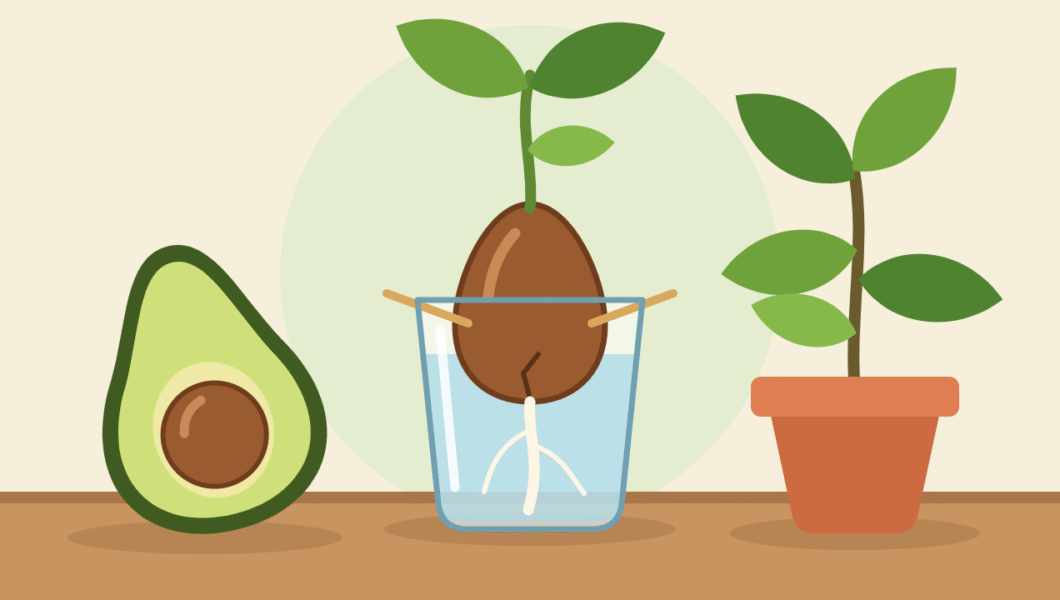
Most of us toss the avocado pit without a second thought, but that smooth brown seed can become a leafy, glossy houseplant. Growing one is slow, simple, and surprisingly satisfying. I tried it expecting a quick win and learned fast that patience is the main ingredient. This guide covers how to clean and sprout the pit, how to pot it, and how to care for the young tree, plus what to realistically expect, including whether it will ever bear fruit.
What to Expect
Avocado seeds can take two to six weeks, sometimes longer, to crack and sprout. A seedling grows into a tall, attractive plant, but trees grown from store-bought avocados often take 5 to 13 years to fruit, and some never do. Think of it as a decorative houseplant first and a fruit tree second. Fruit also usually needs a warm climate, and the fruit may differ from the avocado the seed came from.
What You Need
- A ripe avocado
- Three or four toothpicks
- A clear glass or jar
- Water
- A pot with drainage holes, about 8 to 10 inches wide
- Well-draining potting mix
- A bright, warm spot
Step-by-Step: How to Grow an Avocado Seed
Remove the pit
Cut the avocado open and carefully take out the seed. Use a spoon to lift it out, not the knife blade.
Clean the seed
Rinse off any flesh under lukewarm water. Rub gently, since scrubbing can damage the thin brown skin. I used to peel that skin off, but it’s best to leave it on unless it comes away on its own.
Find the top and bottom
The broader, flatter end is the bottom, where roots will grow. The slightly pointed end is the top, where the stem will emerge.
Insert the toothpicks
Push three or four toothpicks into the seed about halfway up, spaced evenly around it. Go in at a slight downward angle so they can support the seed.
Place it in water
Rest the toothpicks on the rim of the glass so the bottom third of the seed sits in water. Add enough water to cover that part.
Wait in a warm spot
Place the glass in a warm place with bright, indirect light. Direct sun can overheat the water.
Change the water often
Replace the water every week, or sooner if it turns cloudy. Clean water prevents mold and rot.
What the Sprouting Process Looks Like
First, the seed’s skin dries and peels. Then a crack appears at the bottom, followed by a taproot that grows downward. Later a shoot emerges from the top and pushes up toward the light.
I was tempted to give up after three weeks of nothing. In my case it took nearly six weeks before I saw a crack. If your seed shows no change after eight weeks, or turns black and slimy, it is probably time to start over with a fresh pit.
Pot the Seedling
When the stem is 6 to 7 inches tall and the roots are healthy, plant it in a pot. Fill the pot with potting mix, set the seed with the top half above the soil line, and water it. Leaving the top exposed helps prevent rot.
Avocado Growing Conditions at a Glance
| Factor | What avocado needs |
| Light | Bright, indirect to direct sun |
| Temperature | 60°F to 85°F |
| Water | Moist soil, never soggy |
| Soil | Loose and well-draining |
| Pot | Drainage holes are essential |
| Sprouting time | 2 to 6 weeks, sometimes more |
Care for Your Avocado Plant
Light:
Place it in a sunny window that gets at least six hours of light.
Water:
Water when the top inch of soil feels dry. Avocados dislike wet roots, and drainage matters more than frequency.
Temperature:
Keep it away from cold drafts, heaters, and frost.
Feeding:
Use a balanced fertilizer every month or two during spring and summer, and ease off in winter.
Humidity:
Occasional misting or a humidity tray helps if your air is dry.
Pruning for a Fuller Tree
Avocado seedlings tend to grow tall with few branches. When the plant reaches about 12 inches, pinch off the top two sets of leaves. This encourages side branches and a bushier shape. Repeat the process once the new growth gets tall again. The first time I pinched mine, I worried I had hurt it, but it recovered quickly and grew fuller.
Common Mistakes to Avoid
Letting the water get dirty
Cloudy water invites mold. Change it weekly.
Submerging the whole seed
Only the bottom third should touch water. Too much can drown it.
Giving up too soon
Some pits take two months. Be patient before you decide it has failed.
Overwatering the pot
Soggy soil causes root rot and leaf drop. Let the top inch dry out.
Safety Notes
Avocado leaves, bark, and seed can be harmful to some pets, including dogs, cats, birds, and horses. Keep the plant out of reach of animals that chew on leaves, and talk to a veterinarian if you suspect your pet has eaten any part of it. Use toothpicks carefully, since they are sharp, and use a spoon, not a knife, to remove the pit. Wash your hands after handling soil and fertilizer.
Frequently Asked Questions
Will my avocado tree grow fruit?
Possibly, but it can take many years, and some trees never fruit. Grafted trees from nurseries produce fruit much sooner.
Can I plant the seed directly in soil?
Yes. Bury the bottom half in moist potting mix and keep it warm. It may take longer, and you cannot watch the roots grow.
Why are the leaves turning brown at the tips?
Dry air, salt buildup, or overwatering are the usual causes. Check the soil, and flush it with plain water if needed.
The Bottom Line
Growing an avocado from a seed is a slow but rewarding project. Clean the pit, suspend it in water with the bottom third submerged, and wait patiently for the roots and stem to appear. Pot it when it is a few inches tall, give it bright light, water carefully, and pinch it back to encourage a fuller shape. Even if it never makes fruit, you will end up with a lush plant that began as something you almost threw away. In my experience, that alone makes it worth trying.