If you’ve ever run your palm along a barbell, gripped a garden trowel for an afternoon, or practiced guitar for weeks, you’ve probably noticed thick, rough patches forming on your hands. Those are calluses: areas of hardened skin that build up in response to repeated friction and pressure.
Calluses are extremely common. Lifters, gardeners, musicians, tradespeople, rowers, and cyclists all get them. In most cases they’re harmless, but they can become unsightly, uncomfortable, or even painful if they grow too thick or crack. This guide explains why calluses form, how to remove them safely at home, when to get professional help, and how to keep them from coming back.
Understanding Hand Calluses
A callus is your skin’s natural defense. When a spot is rubbed or pressed again and again, the outer layer of skin (the epidermis) produces extra dead skin cells to protect the tissue underneath. The result is a thick, yellowish or grayish patch that feels hard and often looks flat or slightly raised.
Calluses vs. corns vs. blisters
These three are often confused:
- Calluses are broad, flat areas of thickened skin, usually not very painful.
- Corns are smaller, more concentrated, and have a hard center that can hurt when pressed. They’re more common on feet.
- Blisters are fluid-filled pockets caused by sudden friction. They’re often the first step before a callus forms.
What a healthy callus looks like
A healthy callus is firm, evenly thickened, and pain-free. It may be slightly dry or flaky, but the skin isn’t red, swollen, or oozing.
Are calluses ever a good thing?
Yes. A moderate callus acts like built-in padding. Guitarists rely on fingertip calluses to play comfortably, and lifters often use them to protect their palms. The goal isn’t always to eliminate calluses completely, but to keep them thin, smooth, and manageable.
Common Causes of Calluses on Hands
Calluses form wherever friction and pressure repeat. Typical causes include:
- Weightlifting and gym equipment: Barbells, pull-up bars, kettlebells, and rowing handles put constant pressure on the base of the fingers and palms.
- Manual labor and gardening: Shovels, rakes, hammers, and pruning shears create friction points, especially without gloves.
- Playing instruments: Guitar, violin, and bass strings build calluses on fingertips, while drumsticks affect the palms and fingers.
- Sports and tools: Tennis rackets, rowing oars, bike handlebars, and golf clubs all create pressure spots.
- Dry skin and skin conditions: Very dry skin cracks more easily and thickens faster. Conditions such as eczema or psoriasis can also contribute to rough, hardened patches.
When to See a Doctor
Most hand calluses are harmless, but some situations call for medical attention:
- Signs of infection: Redness spreading around the callus, warmth, swelling, pus, or fever.
- Painful, cracked, or bleeding calluses: Deep cracks (fissures) can open the skin to bacteria and may need professional care.
- Diabetes or poor circulation: If you have either condition, avoid treating thick skin yourself. Small wounds can heal slowly and become serious, so see a doctor first.
If a thickened patch appears without an obvious cause, or changes color or shape, have it checked to rule out other skin conditions.
How to Get Rid of Calluses on Hands at Home
For most people, a gentle, consistent routine works well. Be patient: calluses build up over weeks, so they take weeks to fade.
1. Soak your hands in warm water
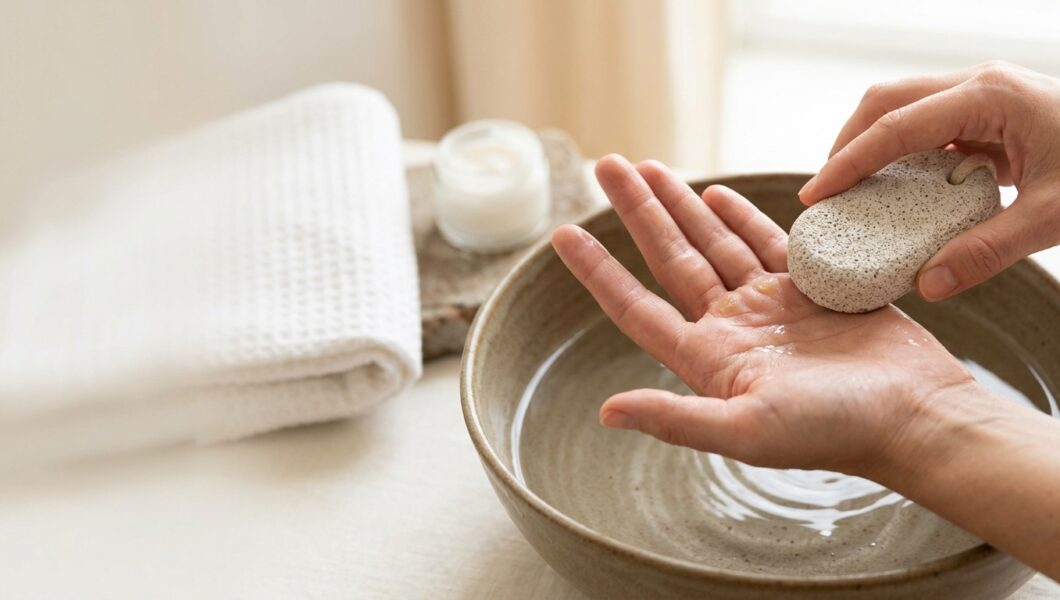
Soak for 10 to 15 minutes to soften the thickened skin. Softer skin is much easier and safer to exfoliate.
2. Exfoliate with a pumice stone or foot file
After soaking, gently rub the callus in small circular motions or one direction. Use light pressure and stop when the skin feels smoother. Never try to remove the whole callus in one session.
3. Use a gentle scrub
Homemade scrubs made from sugar, oatmeal, or baking soda mixed with a little oil or water can help slough off dead skin. Use them two or three times a week at most.
4. Apply moisturizers with urea, salicylic acid, or lactic acid
These ingredients break down thick, dead skin. Look for creams containing 10 to 25 percent urea, or products with salicylic or lactic acid. Apply once or twice daily and follow the label directions.
5. Try an Epsom salt soak
Dissolving Epsom salt in warm water may help soften skin and make exfoliation easier. It’s a pleasant addition to your routine, though it works best alongside moisturizing.
6. Use overnight hand masks and gloves
Apply a thick layer of moisturizer or petroleum jelly before bed, then wear cotton gloves. The skin stays hydrated overnight and softens noticeably over time.
Medical and Professional Treatments
If home care isn’t enough, you have other options.
- Over-the-counter callus removers: Medicated pads, liquids, and gels with salicylic acid soften hardened skin. Avoid them on broken or irritated skin.
- Prescription creams: A doctor may prescribe stronger keratolytic creams, such as higher-strength urea or salicylic acid formulas, for stubborn or thick calluses.
- Professional trimming: A dermatologist or podiatrist can safely pare down thick calluses using sterile tools. This is the safest route for painful or large calluses, or for anyone with diabetes or circulation problems.
What Not to Do
Well-meaning shortcuts often make things worse.
- Don’t cut or shave calluses with blades or scissors. It’s easy to slice too deep, causing bleeding and infection.
- Don’t over-exfoliate. Aggressive scrubbing irritates the skin, and your body may respond by building an even thicker callus.
- Don’t use harsh chemicals on broken skin. Acids and strong products can burn or inflame cracked areas.
- Don’t rip or peel off calluses. Tearing can pull away healthy skin and cause painful wounds.
How to Prevent Calluses from Coming Back
Removal is only half the story. If the cause continues, calluses will return.
- Wear gloves and protective gear: Work gloves, gardening gloves, and lifting gloves reduce friction.
- Use padded grips and proper tool handling: Foam grip covers, tape, or ergonomic handles spread pressure more evenly.
- Moisturize daily: Well-hydrated skin is flexible and less likely to thicken or crack.
- Exfoliate gently and regularly: A quick weekly session keeps calluses from building up.
- Adjust technique or equipment: A looser grip, better form, or properly sized tools can significantly cut down on friction.
Special Tips for Specific Groups
Lifters and gymnasts: File down raised edges after workouts, because ridges can catch and tear, causing painful rips. Keep calluses smooth and flat, and moisturize at night.
Musicians: Fingertip calluses are useful, so maintain them rather than removing them. Focus on keeping them smooth and moisturized to prevent cracking, and trim only if they interfere with playing.
Gardeners and manual workers: Wear well-fitted gloves and take short breaks to reduce constant pressure. Wash and moisturize after work, especially if you handle soil, water, or chemicals.
Frequently Asked Questions
How long does it take for calluses to go away? It varies, but expect roughly two to six weeks of consistent care for noticeable improvement. Thick, long-standing calluses can take longer.
Do calluses go away on their own? Yes, if the friction stops. Without repeated pressure, the extra skin gradually sheds, and the area returns to normal, though this can take a few weeks.
Is it okay to peel off a callus? It’s best not to. Peeling can remove healthy skin and lead to pain or infection. Soften and file the callus gently instead.
Can home remedies completely remove calluses? Often they can reduce or remove them, particularly when the cause is also addressed. For very thick, painful, or recurring calluses, professional treatment may work better.
Conclusion
Hand calluses are a natural response to friction, and in many cases they’re nothing to worry about. When they become uncomfortable or unsightly, a gentle routine can make a big difference.
Key takeaways:
- Calluses form from repeated friction and pressure, and some can be useful.
- Soften first, then exfoliate gently. Never cut or rip calluses.
- Moisturizers with urea, salicylic acid, or lactic acid speed up results.
- See a doctor for signs of infection, severe pain, cracking, or if you have diabetes or poor circulation.
- Prevention through gloves, grips, and moisturizing keeps them from returning.
Quick daily care routine: Moisturize your hands morning and night. Two or three times a week, soak your hands for 10 to 15 minutes, gently file the callus, and finish with a urea-based cream. Consistency, not force, is what delivers smooth, healthy hands.