Composite decking is sold as low-maintenance, and that’s mostly true, but it isn’t no-maintenance. Pollen, dirt, leaves, and food spills build up, and in damp or shady spots that grime can turn into green or black mold. The good news is that Trex is easy to clean when you use the right tools. The bad news is that a wrong move, like a too-powerful pressure washer or a harsh chemical, can damage the boards and even affect your warranty. This guide covers the routine I’d follow, how to handle common stains, and what to avoid.
Why Trex Decking Still Needs Cleaning
Composite boards don’t rot like wood, but they do collect dirt. If pollen and dirt stay on the surface, mold can feed on that biofilm. That’s why mold often appears even on boards that never touch the ground. Cleaning removes the food source, so mold has nothing to grow on. A deck cleaned regularly also looks better and keeps its color longer.
Know Your Trex Product Line
This matters more than most people realize, because the rules differ by generation.
Trex Transcend, Enhance, and Select:
Trex says soap-and-water cleaning or a gentle pressure washing will do the trick for these high-performance lines.
Trex Signature and Refuge:
Some cleaning agents, such as solvents, acids, and degreasers, can damage the surface of Trex Signature decking. Refuge is a PVC line with its own chemical restrictions.
Early-generation composites (Accents, Origins, Contours, Profiles, Brasilia):
Trex recommends a semi-annual cleaning with a composite deck cleaner for these. Trex doesn’t recommend pressure washing them, and doing so can void the warranty for any resulting damage.
If you’re unsure which you have, I’d check your receipt, the installer’s paperwork, or the Trex website before cleaning.
What You Need
- A garden hose with a spray nozzle
- A soft-bristle deck brush (not wire)
- A bucket of warm water
- Mild dish soap or a Trex-approved deck cleaner
- A push broom or leaf blower
- A pressure washer with a wide fan tip (optional, for compatible lines only)
- Oxygen-based cleaner for mold (optional)
- Rubber gloves and safety glasses
- Old towels or rags
Step-by-Step: How I’d Clean a Trex Deck
- Clear the deck
Move furniture, planters, and grills off the surface. Sweep away leaves and loose dirt with a broom or leaf blower. - Check your product line
Look up the right method for your boards before you start. It takes a minute and can save the deck. - Rinse the surface
Spray the area with a hose to remove surface debris. Hosing it down first keeps grit from scratching the boards when you scrub. - Mix a mild soap solution
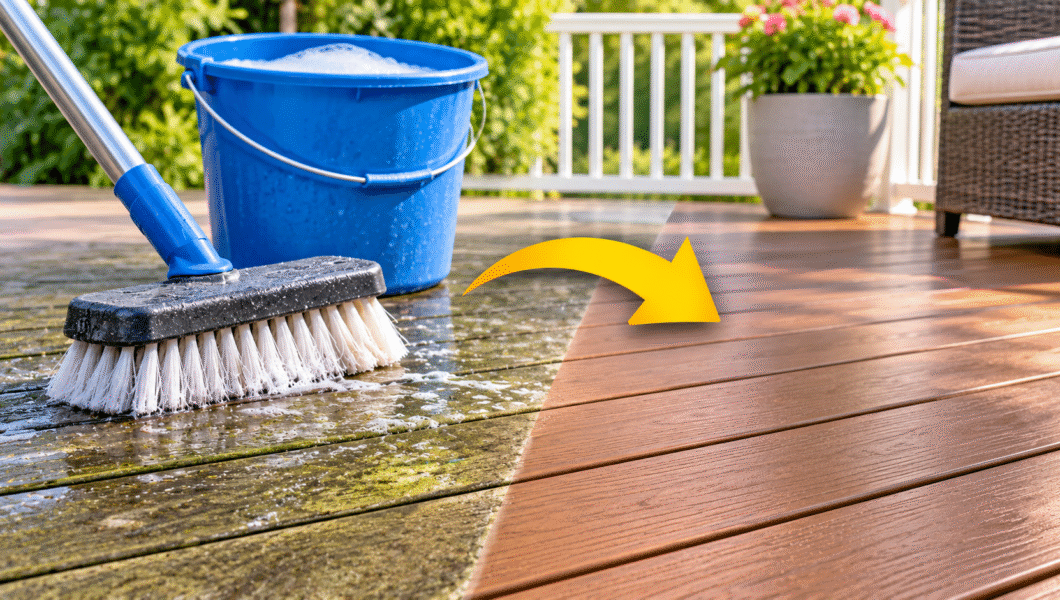
Add a few squirts of dish soap to a bucket of warm water. Trex says warm soapy water and a soft-bristle brush remove dirt from the embossing pattern. - Scrub with the grain
Work in small sections, brushing along the length of the boards. I’d use light pressure and let the soap do the work. - Rinse thoroughly
Hose off all the suds before they dry, since soap residue attracts dirt. - Treat mold if needed
If you see green, black, or fuzzy spots, scrub them with warm soapy water first. For stubborn mold on compatible lines, an oxygen-based cleaner can help. I’d avoid chlorine bleach unless Trex’s guide for your product says it’s okay. - Use a pressure washer carefully (optional)
Trex says a pressure washer no greater than 3100 psi with a wide fan tip and soap dispenser may be used on some lines, spraying soap and then gently scrubbing each board. Using one over 3100 psi could damage the boards and void the warranty. I’d keep the tip at least a foot away, use a wide fan, and keep it moving. - Let it dry
Leave the deck to air dry fully before putting furniture back. - Repeat on a schedule
Trex recommends cleaning twice a year, in spring and fall. I’d add a quick rinse after pollen season or heavy storms.
Stain-by-Stain Guide
| Problem | What I’d try first | Notes |
| Dirt and dust | Hose, soap, soft brush | Works for most lines |
| Mold and mildew | Warm soapy water, then an approved cleaner | Clean early so it can’t spread |
| Grease and food | Dish soap and warm water, quickly | Spills should be cleaned within seven days to keep the stain warranty. |
| Hard water spots | Deck brightener (follow the label) | Test a hidden area |
| Pollen and tree sap | Soap, water, and gentle scrubbing | Don’t scrape |
| Chalk lines | Rinse off soon | Soap and water |
| Scuffs and scratches | Gentle soapy scrubbing | Avoid sanding |
Tips for Easier Cleaning
Clean before problems build up:
A quick wash is far easier than fighting set-in mold.
Brush shaded areas more often:
Damp, shady spots grow mold faster.
Use a plastic shovel for snow:
Trex warns never to use a metal snow shovel, since scratches aren’t covered by the warranty.
Wipe up spills quickly:
Wine, oil, and sauces are much easier to remove fresh.
Rinse sunscreen and bug spray splatter:
Some chemicals can harm certain surfaces.
Keep gutters and nearby plants trimmed:
Less debris means less buildup.
Test any product on a small hidden spot:
It’s the safest habit I know.
Common Mistakes to Avoid
Using a wire brush:
It scratches the surface.
Pressure washing too hard or too close:
Trex doesn’t recommend sanding either, since it changes the surface and voids the warranty.
Using harsh chemicals on Signature or Refuge:
Solvents, acids, and some degreasers can cause damage.
Letting soap dry on the boards:
It leaves streaks and attracts dirt.
Skipping the rinse step:
Grit will scratch the surface when you scrub.
Ignoring small mold spots:
They spread fast in humid weather.
Assuming all Trex products clean the same way:
The line you own sets the rules.
Safety Precautions
Wet composite boards can be slippery, so I’d wear shoes with good grip and work slowly. Keep children and pets off the deck until it’s rinsed and dry. Wear gloves and eye protection when using cleaners, and never mix cleaning products, especially anything containing bleach and ammonia or acids. A pressure washer can cut skin, so don’t point it at people or pets, and keep the cord and outlet dry. Protect nearby plants by rinsing them before and after you clean, since runoff can harm them. If you have a warranty claim in mind, keep a record of what products you used and when.
Frequently Asked Questions
Can I pressure wash Trex decking?
Only on compatible lines, at no more than 3100 psi with a wide fan tip. Early-generation composites shouldn’t be pressure washed.
Does vinegar clean composite decking?
It’s a mild option for light grime, but I’d stick with soap and water or a product Trex approves.
How often should I clean my Trex deck?
Twice a year works for most homes, with extra rinses when needed.
Can I use bleach on Trex?
I’d avoid it unless Trex’s cleaning guide for your specific product says it’s okay.
How do I remove mold from composite decking?
Scrub with warm soapy water and a soft brush, then follow the manufacturer’s recommendations for tougher mold.
The Bottom Line
To clean Trex composite decking, sweep it, rinse it, scrub with warm soapy water and a soft-bristle brush, and rinse again. Use a pressure washer only if your product line allows it, and keep it at or below 3100 psi with a wide fan tip. Avoid wire brushes, sanding, and harsh chemicals, and check your specific Trex line before using anything strong. Clean twice a year, handle spills quickly, and your deck should look good for a long time.