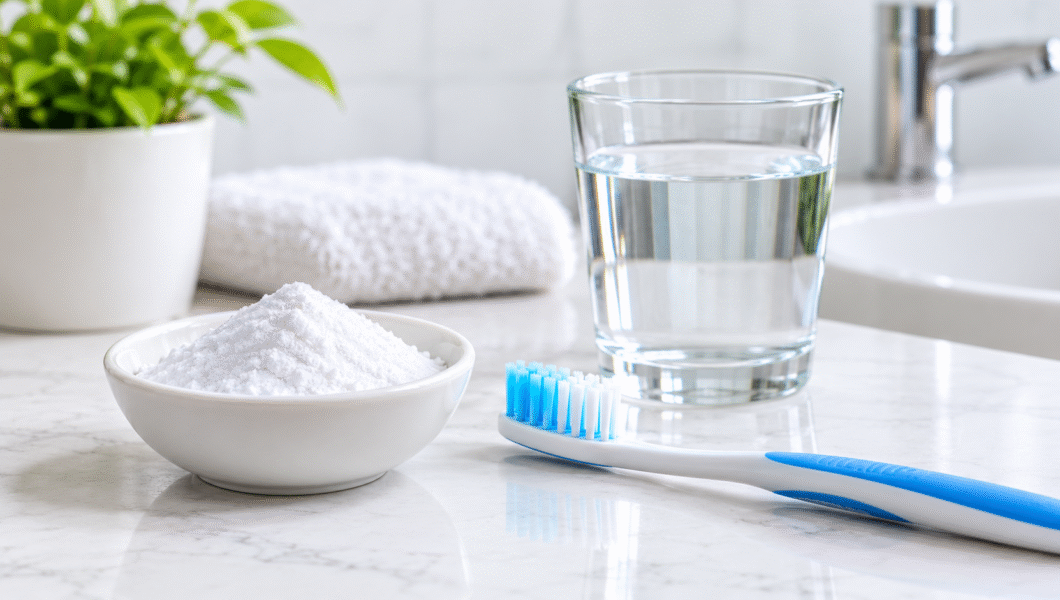
Baking soda is often promoted as a cheap, natural way to clean and whiten teeth. You may already have a box in your kitchen, but does brushing with it actually work? And is it safe for your enamel?
The answer depends on how you use it. Baking soda, also known as sodium bicarbonate, can help remove certain surface stains and is used in some commercially formulated toothpastes. However, plain baking soda does not contain fluoride, which plays an important role in preventing tooth decay.
In this guide, we’ll explain how baking soda works, how to use it cautiously, what dentists’ recommendations mean, and when a regular fluoride toothpaste is the better choice. We’ll also cover common mistakes that can affect your teeth and gums.
Why Do People Brush Their Teeth With Baking Soda?
Baking soda is a mild abrasive that can help remove some surface stains from teeth. It also has alkaline properties, meaning it can help neutralize acids in the mouth.
These properties explain why sodium bicarbonate is included in certain toothpaste formulations.
People commonly use baking soda because it is:
- Affordable: It is inexpensive and widely available.
- Useful for surface stains: It can help remove some discoloration caused by coffee, tea, and other staining substances.
- Alkaline: It can help neutralize acids in the mouth.
- Used in toothpaste: Some commercially manufactured toothpastes combine baking soda with fluoride.
However, baking soda is not a complete replacement for toothpaste. It does not provide fluoride protection against cavities, and its whitening effects are limited to surface stains.
Is Baking Soda Safe for Your Teeth?
Baking soda has a relatively low abrasivity compared with many other abrasive ingredients used in oral-care products.
A 2017 review published in the Journal of the American Dental Association (JADA) examined the safety and effectiveness of baking soda in toothpaste formulations. It discussed its low abrasivity and compatibility with oral tissues.
However, there is an important distinction between a professionally formulated toothpaste and homemade baking soda paste.
Commercial toothpastes are developed with controlled ingredients and formulations. Plain baking soda does not contain fluoride or other ingredients that provide complete daily oral-care protection.
For this reason, fluoride toothpaste should remain your primary choice for everyday brushing.
The NHS recommends brushing twice daily for approximately two minutes with fluoride toothpaste and spitting out the excess without immediately rinsing with water.
Benefits and Limitations of Baking Soda
Before adding baking soda to your oral-care routine, understand what it can and cannot do.
Potential Benefits
1. Helps remove surface stains
Baking soda can help remove some external stains caused by coffee, tea, and similar substances. It does not bleach the internal structure of teeth.
2. Helps neutralize acids
Its alkaline properties can help neutralize acids in the mouth.
3. May help with plaque removal
Research on baking soda-containing toothpastes suggests that these formulations can help remove plaque biofilm.
4. Affordable and accessible
Baking soda is inexpensive and easy to find. However, affordability alone does not make it a better choice than formulated toothpaste.
Important Limitations
1. No fluoride protection
Plain baking soda does not contain fluoride, which helps strengthen tooth enamel and prevent cavities.
2. Limited whitening results
It may improve the appearance of surface stains, but it cannot reliably remove deeper discoloration.
3. Not a tartar remover
Hardened plaque, known as tartar or calculus, requires professional dental cleaning.
4. Homemade mixtures are not professionally formulated
The ingredients, proportions, and abrasivity of homemade mixtures are not controlled in the same way as commercial toothpaste.
What You Need
If your dentist says occasional use of plain baking soda is appropriate, keep the process simple.
You will need:
- Plain baking soda (sodium bicarbonate, not baking powder)
- A small, clean bowl
- A few drops of clean water
- A soft-bristled toothbrush
- Your regular fluoride toothpaste
Avoid adding lemon juice, vinegar, or other acidic ingredients.
How to Brush Teeth With Baking Soda
Plain baking soda should not replace your regular fluoride toothpaste. If your dentist approves occasional use, follow these precautions.
Step 1: Check With Your Dentist
Before using homemade baking soda paste, ask your dentist whether it is suitable for your teeth.
This is particularly important if you have tooth sensitivity, enamel erosion, gum problems, braces, veneers, crowns, or dental implants.
Step 2: Prepare a Small Amount
Place a small amount of plain baking soda in a clean bowl.
Add a few drops of water and mix until it forms a smooth, moist paste.
Avoid using a dry, gritty mixture or adding other household ingredients.
Step 3: Choose a Soft-Bristled Toothbrush
Use a clean, soft-bristled toothbrush.
Hard-bristled brushes and excessive pressure can contribute to enamel wear and gum irritation.
Step 4: Brush Gently
If your dentist has approved the method, apply a small amount of the mixture and use gentle, controlled movements.
Avoid aggressive scrubbing, particularly around the gumline.
Step 5: Clean All Tooth Surfaces
Pay attention to the outer, inner, and chewing surfaces of your teeth.
Do not concentrate on one stained area or repeatedly scrub the same tooth.
Step 6: Spit Out the Mixture
Spit out the baking soda mixture rather than swallowing it.
Rinse away any remaining powder with water.
Step 7: Maintain Your Fluoride Routine
Continue brushing twice daily with fluoride toothpaste.
A fluoride toothpaste containing baking soda is a practical alternative if you want the benefits of both ingredients in one professionally formulated product.
After brushing with fluoride toothpaste, spit out the excess rather than rinsing immediately with water.
Step 8: Clean Between Your Teeth
Use dental floss or an appropriately sized interdental brush to clean between your teeth.
A regular toothbrush cannot effectively reach every space between teeth.
Important: There is no universally established home-use schedule for brushing with loose baking soda. Ask your dentist whether you should use it at all rather than assuming that daily or weekly use is appropriate.
How Often Should You Brush With Baking Soda?
There is no universally accepted dental guideline recommending that everyone brush with homemade baking soda paste once or twice a week.
Your dental health, existing sensitivity, enamel condition, and oral-care habits all matter.
For everyday oral hygiene, follow these established recommendations:
- Brush twice daily with fluoride toothpaste.
- Brush for approximately two minutes each time.
- Use a soft-bristled toothbrush.
- Clean between your teeth daily.
- Visit your dentist according to their recommended schedule.
If you want baking soda in your oral-care routine, consider a commercially formulated baking soda toothpaste that contains fluoride.
It offers a more practical way to combine the ingredients without relying on an unformulated homemade mixture.
Baking Soda vs. Regular Toothpaste
The following comparison explains the differences between plain baking soda and commercially formulated toothpaste.
| Feature | Plain Baking Soda | Fluoride Toothpaste | Baking Soda Fluoride Toothpaste |
|---|---|---|---|
| Surface stain removal | May help | Depends on formulation | May help |
| Fluoride | No | Usually yes | Yes, if listed |
| Cavity protection | No fluoride protection | Yes | Yes |
| Plaque removal | Limited evidence for homemade paste | Designed for daily cleaning | Formulated for daily cleaning |
| Daily use | Ask your dentist | Recommended | Follow product directions |
| Overall role | Optional extra | Daily foundation | Practical combined option |
The key difference is fluoride. A toothpaste containing both fluoride and baking soda can provide cleaning benefits while maintaining fluoride protection.
Tips for Using Baking Soda More Safely
If your dentist approves using plain baking soda, keep these precautions in mind.
Use a soft toothbrush: Soft bristles help reduce unnecessary pressure on teeth and gums.
Avoid aggressive brushing: Pressing harder does not make teeth cleaner or whiter.
Do not use acidic ingredients: Lemon juice and vinegar can contribute to enamel erosion. Combining acids with abrasive mixtures is especially unwise.
Do not swallow the mixture: Spit it out after brushing.
Avoid homemade whitening experiments: Baking soda mixed with hydrogen peroxide, lemon juice, or other household ingredients is not a substitute for professionally recommended dental care.
Stop if irritation develops: If you notice sensitivity or gum discomfort, stop using the mixture and seek dental advice.
Keep using fluoride toothpaste: Baking soda alone cannot provide the same cavity protection as fluoride toothpaste.
Common Mistakes to Avoid
Even a simple home remedy can cause problems when used incorrectly.
Here are some mistakes worth avoiding.
1. Replacing Fluoride Toothpaste
This is one of the most important mistakes.
Plain baking soda does not provide fluoride, so using it instead of regular toothpaste removes an important part of your cavity-prevention routine.
2. Brushing Too Hard
Aggressive brushing can irritate gums and contribute to enamel wear.
Use gentle movements instead of applying extra pressure.
3. Expecting Professional Whitening Results
Baking soda may help remove surface stains, but it does not produce the same results as professional whitening treatments.
4. Mixing Baking Soda With Lemon Juice
Lemon juice is acidic. Repeated exposure to acidic substances can weaken tooth enamel.
Avoid this popular DIY whitening combination.
5. Using Baking Powder Instead
Baking powder and baking soda are different products.
Baking powder contains additional ingredients and is not intended for cleaning teeth.
6. Ignoring Tooth Sensitivity
If your teeth become sensitive, do not continue experimenting with homemade mixtures.
Persistent sensitivity deserves a dental assessment.
Who Should Avoid Homemade Baking Soda Toothpaste?
Homemade baking soda mixtures are not suitable for everyone.
Speak with your dentist before trying them if you have:
- Sensitive teeth or existing enamel erosion.
- Gum inflammation or gum disease.
- Dental crowns, veneers, bridges, or implants.
- Braces or other orthodontic appliances.
- Existing cavities or untreated dental problems.
- A history of irritation from oral-care products.
Children should use age-appropriate fluoride toothpaste and supervised brushing rather than homemade baking soda mixtures.
People following a medically prescribed low-sodium diet should also ask their healthcare professional before using sodium bicarbonate regularly.
If you experience persistent bleeding gums, tooth pain, swelling, or ongoing bad breath, arrange a dental examination instead of relying on home remedies.
Frequently Asked Questions
1. Can I brush my teeth with baking soda every day?
Plain baking soda is not a recommended replacement for daily fluoride toothpaste. There is no universally established frequency for homemade baking soda brushing. Ask your dentist before using it regularly.
2. Does baking soda whiten teeth?
It can help remove some surface stains, which may make teeth appear brighter. However, it does not bleach deeper discoloration.
3. Does baking soda damage tooth enamel?
Baking soda has relatively low abrasivity, particularly in professionally formulated toothpaste. However, homemade mixtures, excessive pressure, and inappropriate use can create problems. Ask your dentist before using loose baking soda regularly.
4. Can baking soda remove yellow stains?
It may help reduce certain external stains that contribute to a yellow appearance. It cannot reliably change the natural underlying color of your teeth.
5. Can baking soda remove plaque?
Baking soda-containing toothpaste formulations have shown potential for plaque biofilm removal. However, plain baking soda should not replace a complete brushing and interdental-cleaning routine.
6. Can baking soda remove tartar?
No. Tartar is hardened plaque that cannot be reliably removed with homemade baking soda paste. A dental professional needs to remove it using appropriate instruments.
7. Is baking soda toothpaste better than regular toothpaste?
Not necessarily. The most important consideration is whether the toothpaste contains fluoride and meets your dental needs. A fluoride toothpaste containing baking soda can combine both ingredients.
8. Can I mix baking soda with lemon juice to whiten my teeth?
No. Lemon juice is acidic and can contribute to enamel erosion. Avoid using acidic household mixtures as DIY teeth-whitening treatments.
9. Should I rinse my mouth after brushing with baking soda?
If you use a plain baking soda mixture, rinse away the remaining powder. However, after brushing with fluoride toothpaste, spit out the excess and avoid immediately rinsing with water to retain more fluoride.
10. What is the safest way to use baking soda for teeth?
The more reliable option is to choose a commercially formulated toothpaste containing both baking soda and fluoride. If you want to use plain baking soda, consult your dentist first.
Final Thoughts
Baking soda can help remove some surface stains, but it is not a complete dental-care solution. Its low abrasivity makes it useful in certain toothpaste formulations, yet plain baking soda lacks the fluoride needed for everyday cavity protection.
If you want to include baking soda in your oral-care routine, ask your dentist whether a homemade mixture is appropriate or choose a commercially formulated fluoride toothpaste containing sodium bicarbonate.
For healthy teeth, the basics remain the most important: brush twice daily with fluoride toothpaste, clean between your teeth, avoid aggressive brushing, and attend regular dental checkups.
A simple, consistent oral-care routine is more valuable than experimenting with multiple homemade whitening remedies.
Medical Disclaimer: This article is for general educational purposes only and does not replace professional dental advice, diagnosis, or treatment. Consult a qualified dentist about your individual oral-health needs.