An air conditioner does more than cool your home. It also removes moisture from the air, and that moisture needs a clear path to drain outside. When the drain line becomes clogged with algae, dirt, or sludge, water can back up into the drain pan and cause leaks around your indoor AC unit.
The good news is that many minor AC drain line clogs can be cleared with basic maintenance. In this guide, you’ll learn how to identify a blockage, clean an air conditioner drain line, choose the right cleaning method, and prevent future problems.
Why Does an AC Drain Line Get Clogged?
Your air conditioner produces condensation when warm air passes over its cold evaporator coil. This water collects in a drain pan and flows through a small pipe called the condensate drain line.
Over time, dust, algae, mold, and other debris can collect inside the pipe. These materials combine with moisture to create a slimy blockage that prevents water from draining properly.
Clogs are more common in humid environments because moisture encourages organic growth. Without regular maintenance, even a small buildup can eventually block the entire line.
Signs Your Air Conditioner Drain Line Is Clogged
Watch for these common warning signs:
- Water around the indoor unit: Standing water near your air handler may indicate a blocked drain.
- Musty smells: Moisture and organic buildup can create unpleasant odors.
- Ceiling or wall stains: A leaking drain pan can allow water to damage nearby surfaces.
- Unexpected AC shutdowns: Some systems have a float switch that stops operation when water levels become too high.
- No water draining outside: If your system normally releases condensation outdoors but suddenly stops, check for a possible blockage.
If you notice significant leaking or repeated shutdowns, turn off the system and contact an HVAC professional.
What You Need to Clean an AC Drain Line
Gather these basic supplies before starting:
- Wet/dry shop vacuum
- Distilled white vinegar, if approved by the manufacturer
- Clean water
- Small funnel
- Old towels or rags
- Gloves and eye protection
- Flashlight
- Duct tape, if needed for a vacuum connection
Avoid using strong chemical drain cleaners. They may damage certain pipes, fittings, or AC components.
How to Clean an Air Conditioner Drain Line Step by Step
Follow these steps to remove a minor blockage safely.
1. Turn Off the Air Conditioner
Switch your thermostat to Off before inspecting the drain system. If the manufacturer’s instructions require it, disconnect power using the appropriate breaker, provided you can do so safely.
Never touch electrical components or open electrical compartments.
2. Locate the Condensate Drain Line
Look near your indoor air handler or furnace for a small PVC pipe, commonly white or gray. It usually runs toward an outdoor drainage point or an approved drain.
Some systems have a T-shaped access opening with a removable cap. This provides access for inspection and maintenance.
3. Inspect the Drain Pan
Check the drain pan for standing water, dirt, or visible buildup if it is safely accessible. Remove excess water with towels and clean accessible surfaces using mild soap and water.
If the pan is cracked, overflowing, or difficult to reach, arrange professional service.
4. Find the Outdoor Drain Outlet
Locate the end of the condensate drain line outside your home. It is often near the outdoor AC unit or along an exterior wall.
Make sure the outlet is not blocked by leaves, dirt, or other debris.
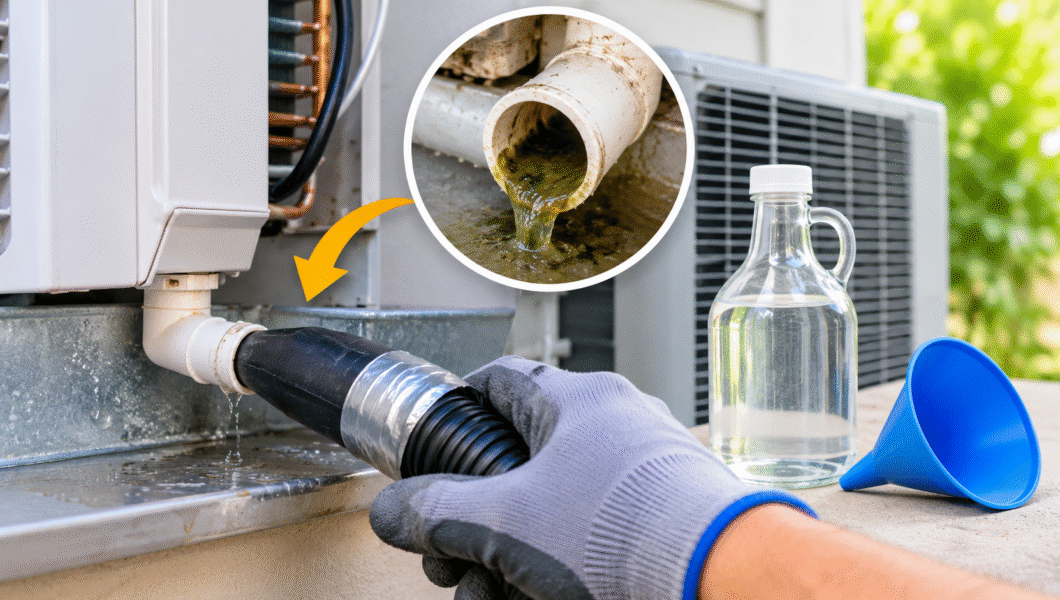
5. Use a Wet/Dry Vacuum
A wet/dry vacuum is useful for removing sludge and loose debris from the drain line.
Place the vacuum hose against the outdoor drain opening and create a secure seal if possible. Run the vacuum for about one to two minutes, following the equipment instructions.
Check the collected debris. If the vacuum removes dirt or slimy buildup, repeat the process as needed.
6. Flush the Line Carefully
If the blockage has cleared, you can flush the line with a small amount of clean water through the appropriate access point.
Some manufacturers allow distilled white vinegar for routine maintenance, while others recommend different cleaning methods. Check your owner’s manual before using vinegar or any other cleaner.
Never mix cleaning products, especially bleach and vinegar.
7. Replace the Access Cap and Test the Drainage
Replace the access cap securely and restore power only after everything is dry and properly closed.
Run the AC and check the indoor unit for leaks. After the system has operated long enough to produce condensation, check whether water is draining normally from the outdoor outlet.
If water still backs up, stop using the system and contact an HVAC technician.
How Often Should You Clean an AC Drain Line?
Regular inspection helps prevent unexpected blockages.
During the cooling season, check the drain outlet and accessible drain pan periodically. Homes in humid climates or systems with a history of clogs may need more frequent maintenance.
Follow your manufacturer’s recommended cleaning schedule rather than relying on a fixed vinegar-flushing routine.
Tips to Prevent Future AC Drain Line Clogs
A few simple habits can reduce the risk of another blockage:
- Replace air filters regularly: Clean filters help reduce dust circulating through your HVAC system.
- Inspect the drain outlet: Keep leaves, dirt, and insects away from the opening.
- Check the drain pan: Look for standing water or visible buildup.
- Schedule annual maintenance: A qualified technician can inspect the drain system and identify developing problems.
- Consider a float switch: This safety device can shut down the system when the drain pan fills with water.
Frequently Asked Questions
How do I know if my AC drain line is clogged?
Water around the indoor unit, musty odors, ceiling stains, and unexpected AC shutdowns are common warning signs.
Can I use vinegar to clean an AC drain line?
Some manufacturers allow distilled white vinegar for maintenance, but others advise against it. Always check your owner’s manual first.
Can I use bleach instead?
Avoid using bleach unless your AC manufacturer specifically approves it. It can create corrosion concerns and may be unsuitable for certain drainage systems.
Why is my AC drain line still clogged after cleaning?
The blockage may be deeper in the pipe, or there may be a damaged drain line, incorrect slope, or another drainage problem. A professional can diagnose and clear stubborn blockages.
When should I call an HVAC professional?
Contact a technician if water continues leaking, the line repeatedly clogs, the drain pan is damaged, or the blockage cannot be cleared with basic maintenance.
Final Thoughts
Cleaning an air conditioner drain line is an important part of routine home maintenance. A blocked pipe can cause water leaks, unpleasant odors, and unnecessary AC shutdowns.
Inspect the drain line regularly, use a wet/dry vacuum for suitable minor blockages, and follow your manufacturer’s cleaning recommendations. If the problem continues, professional HVAC service is the safest way to protect your cooling system and prevent costly water damage.