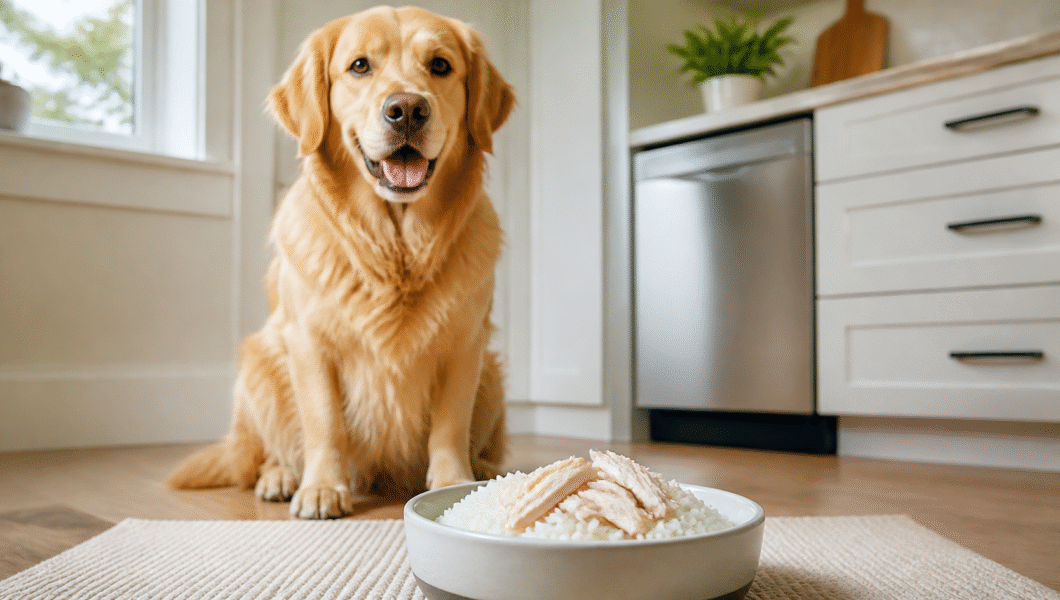
When your dog has diarrhea or an upset stomach, choosing the right food can be challenging. Plain boiled chicken and white rice are traditional short-term options because they are relatively easy to digest. However, knowing how much to serve is just as important as choosing the right ingredients.
Feeding too much at once may make digestive discomfort worse, while feeding too little may not provide enough energy. The appropriate amount depends on your dog’s weight, calorie needs, age, activity level, and health condition.
This guide explains how much chicken and rice to feed a dog, how to prepare it safely, how often to offer meals, and when veterinary care is necessary.
Is Chicken and Rice Safe for Dogs?
Plain, thoroughly cooked chicken and white rice can be suitable for some otherwise healthy dogs experiencing mild digestive upset. However, it is not the right solution for every dog or every stomach problem.
Chicken provides protein, while white rice supplies easily digestible carbohydrates. Both ingredients are relatively simple when prepared without added fats or seasonings.
Veterinarians may recommend a temporary homemade diet in selected cases of mild gastrointestinal upset.
Chicken and rice may be considered when a dog has:
- Mild diarrhea without other concerning symptoms.
- Temporary digestive discomfort.
- A reduced appetite following minor stomach upset.
- A need for a short-term, easily digestible meal recommended by a veterinarian.
Important: Chicken and rice is not a complete and balanced dog food. It lacks several essential nutrients, including appropriate amounts of calcium, vitamins, minerals, and essential fatty acids. It should never replace your dog’s regular balanced food as a long-term diet.
Veterinary therapeutic gastrointestinal diets are often a better option because they are formulated to provide complete nutrition while supporting digestive health.
The Right Chicken-to-Rice Ratio
There is no single chicken-to-rice ratio that works for every dog. Different veterinary recommendations use different proportions depending on the dog’s condition and the recipe.
A commonly used homemade bland-diet approach combines:
- Plain boiled, skinless chicken breast.
- Well-cooked white rice.
- No added salt, oil, butter, or seasoning.
Some veterinary recipes use approximately one part lean chicken to two or three parts cooked rice by volume. However, your veterinarian should confirm the appropriate recipe and proportions for your dog.
For example, a temporary mixture might contain:
- 1/2 cup cooked, shredded chicken.
- 1 cup cooked white rice.
Mix the ingredients thoroughly and serve only the amount recommended by your veterinarian.
Do not assume that increasing the rice or chicken automatically makes the meal healthier. The mixture is still nutritionally incomplete.
How Much Chicken and Rice to Feed a Dog by Weight
Your dog’s weight is an important starting point, but it does not determine an exact serving size on its own.
Two dogs weighing the same amount may have different energy requirements because of their age, activity, metabolism, body condition, and medical history.
For this reason, there is no universally reliable cup-per-pound chart for homemade chicken and rice.
General Feeding Guidance by Dog Size
| Dog Size | Recommended Approach |
|---|---|
| Under 10 lbs | Ask your veterinarian for small, carefully measured portions. |
| 10–20 lbs | Use veterinarian-approved portions and offer smaller meals. |
| 20–35 lbs | Calculate portions according to individual energy needs. |
| 35–50 lbs | Measure the prepared mixture rather than estimating by eye. |
| 50–70 lbs | Adjust the amount according to veterinary feeding instructions. |
| 70–90 lbs | Avoid using a simple weight-based formula; individual calorie needs vary. |
| Over 90 lbs | Request a specific feeding plan from your veterinarian. |
These categories are not serving-size recommendations. They explain how to approach portion planning for dogs of different sizes.
How to Determine the Right Portion
Follow these steps:
- Check your dog’s weight: Use an accurate scale or your veterinarian’s latest weight measurement.
- Consider daily calorie needs: Your veterinarian can estimate your dog’s energy requirements based on age, activity, body condition, and health.
- Confirm the recipe: Ask which chicken-to-rice proportions are appropriate.
- Measure the ingredients: Use a kitchen scale when possible to keep portions consistent.
- Monitor your dog: Watch appetite, stool quality, energy, and any signs of vomiting or discomfort.
If your dog is eating less than usual, do not simply compensate by increasing meal sizes. Contact your veterinarian if appetite remains poor.
Puppies, senior dogs, underweight dogs, and dogs with existing medical conditions need individualized feeding advice.
How Often Should You Feed Chicken and Rice?
When a veterinarian recommends a temporary bland diet, smaller, more frequent meals may be easier for a dog with digestive discomfort to tolerate.
Instead of offering one large meal, your veterinarian may recommend dividing the approved daily amount into three or four smaller meals.
Keep these points in mind:
- Start with the small amount recommended by your veterinarian.
- Allow your dog time to digest each meal.
- Avoid treats, table scraps, and fatty snacks.
- Provide access to fresh, clean drinking water.
- Monitor whether your dog keeps food and water down.
If your dog is vomiting repeatedly or cannot keep water down, do not continue experimenting with food at home. Seek veterinary attention.
Do not withhold food for a prolonged period unless your veterinarian specifically recommends it.
How Long Can a Dog Eat Chicken and Rice?
Chicken and rice should only be used as a temporary feeding option.
A homemade mixture does not provide all the nutrients dogs need for healthy muscles, bones, skin, organs, and immune function.
Even if your dog enjoys the food and appears to improve, continuing it for an extended period can cause nutritional deficiencies.
The appropriate duration depends on:
- The reason for the digestive problem.
- How quickly your dog improves.
- Whether vomiting or diarrhea continues.
- Your veterinarian’s treatment plan.
- Whether a complete therapeutic diet is more appropriate.
Do not automatically follow a fixed three-day or seven-day schedule. Ask your veterinarian when to stop the homemade diet and return to complete dog food.
If diarrhea continues for 48 hours, or your dog gets worse at any point, contact your veterinarian rather than extending the diet.
How to Prepare Chicken and Rice for Dogs
Proper preparation is important. Even simple ingredients can cause problems if they contain excessive fat, seasonings, or harmful additives.
1. Choose Plain Chicken
Use boneless, skinless chicken breast with visible fat removed.
Chicken should be thoroughly cooked and free from bones. Never feed cooked chicken bones because they can splinter and cause injuries.
2. Use White Rice
Plain white rice is generally preferred over brown rice for a temporary bland diet because it contains less fiber and is usually easier to digest.
Cook the rice in plain water until soft.
3. Cook Both Ingredients Separately
Follow these preparation steps:
- Place the chicken breast in a pot of plain water.
- Boil until the chicken is thoroughly cooked, with no raw or pink center.
- Remove the chicken and allow it to cool.
- Shred it into small, manageable pieces.
- Cook white rice separately until soft.
- Combine the ingredients using the proportions approved by your veterinarian.
- Allow the mixture to cool before serving.
4. Avoid Harmful Ingredients
Never add:
- Onion or garlic.
- Salt or seasoning mixes.
- Butter or cooking oil.
- Spicy sauces.
- Excessively fatty broth.
- Gravy or other rich toppings.
Onion and garlic are particularly dangerous because they can damage a dog’s red blood cells.
5. Store It Properly
Food safety matters when preparing homemade meals.
- Refrigerate leftovers promptly in a clean, airtight container.
- Keep the refrigerator at or below 4°C (40°F).
- Use refrigerated leftovers within 3–4 days, or freeze portions for longer storage.
- Discard food that has been left at room temperature for more than two hours.
- Reheat refrigerated portions thoroughly if needed, then cool them before serving.
Never leave prepared chicken and rice sitting in your dog’s bowl for extended periods.
Factors That Affect Feeding Portions
Weight is useful, but several other factors influence how much food a dog needs.
Age
Puppies have different nutritional requirements from adult dogs because they are growing. A homemade bland diet should not replace their regular puppy food without veterinary direction.
Senior dogs may also have different energy needs or medical conditions that affect digestion.
Activity Level
An active dog generally needs more energy than a dog with a sedentary lifestyle. However, activity level alone cannot determine the correct amount during an illness.
Existing Health Conditions
Dogs with diabetes, kidney disease, pancreatitis, food allergies, or chronic gastrointestinal problems may need specially formulated diets.
For example, dogs with pancreatitis often require carefully controlled fat intake. Ordinary chicken and rice may not be an appropriate treatment.
Individual Metabolism
Breed, body condition, muscle mass, and individual metabolism can all affect calorie requirements.
This is why a feeding plan based only on weight can be inaccurate.
How to Transition Back to Regular Dog Food
Once your dog has recovered and your veterinarian confirms that it is appropriate, gradually reintroduce its normal complete and balanced food.
A gradual transition can help reduce the chance of further digestive upset.
One possible four-day transition schedule is:
| Day | Temporary Diet | Regular Dog Food |
|---|---|---|
| Day 1 | 75% | 25% |
| Day 2 | 50% | 50% |
| Day 3 | 25% | 75% |
| Day 4 | 0% | 100% |
These percentages refer to the combined feeding plan, not necessarily equal cup measurements. Use appropriate portions for each food.
Some dogs need a slower transition, especially if they have sensitive digestion or a history of gastrointestinal problems.
If vomiting or diarrhea returns, stop progressing through the transition and contact your veterinarian for advice.
Common Chicken and Rice Feeding Mistakes
Avoid these common mistakes when preparing a temporary meal for your dog.
1. Feeding too much at once
Large meals may be difficult for a dog with digestive discomfort to tolerate. Follow the recommended serving size and meal schedule.
2. Adding seasonings
Salt, garlic, onion, butter, and sauces can make a simple meal unsafe or unsuitable.
3. Using chicken skin or fatty meat
Extra fat can worsen digestive problems and may be especially unsuitable for dogs with pancreatitis.
4. Feeding chicken and rice for too long
The mixture is not nutritionally complete. Do not use it as a permanent replacement for balanced dog food.
5. Ignoring ongoing symptoms
Persistent diarrhea, vomiting, poor appetite, or unusual behavior may indicate an underlying health problem.
6. Guessing portions from weight alone
A dog’s weight does not reveal its exact calorie requirements. Obtain a feeding plan rather than relying on a generic cup-per-pound formula.
When Should You Call a Veterinarian?
Not every digestive problem is minor. Diarrhea and vomiting can have several causes, including infections, parasites, dietary reactions, and more serious medical conditions.
Contact a veterinarian promptly if your dog experiences:
- Repeated vomiting or diarrhea.
- Blood in vomit or stool.
- Black, tarry stools.
- Unusual tiredness, weakness, or collapse.
- Refusal to eat or drink.
- A swollen or painful abdomen.
- Signs of dehydration.
- Symptoms that persist or become worse.
Seek urgent veterinary care if your dog collapses, has severe abdominal pain, cannot keep water down, or appears seriously unwell.
Puppies, senior dogs, and dogs with existing health conditions should receive veterinary advice sooner because they may be more vulnerable to complications.
Never give human anti-diarrhea or stomach medications unless a veterinarian specifically instructs you to do so.
Frequently Asked Questions
Can I feed my dog chicken and rice every day?
No. Chicken and rice does not provide complete nutrition. It may be used temporarily when recommended by a veterinarian, but dogs need a nutritionally balanced diet for everyday feeding.
Can puppies eat chicken and rice?
Puppies can eat plain cooked chicken and rice in certain circumstances, but they have specific nutritional requirements for growth. Do not use a homemade bland diet without veterinary guidance. Contact your veterinarian promptly if a puppy develops diarrhea or vomiting.
Is brown rice okay instead of white rice?
Brown rice is not automatically harmful to dogs, but white rice is generally preferred for temporary bland diets because it contains less fiber and is easier to digest for many dogs.
Can I use canned or rotisserie chicken?
Plain, freshly cooked chicken is generally the better option. Canned chicken may contain added sodium, while rotisserie chicken can contain excess fat, seasonings, onion, or garlic. Always check ingredients and avoid seasoned products.
How much chicken and rice should I feed a dog with diarrhea?
There is no universally correct amount based only on body weight. The appropriate portion depends on your dog’s calorie needs, health, and the recipe recommended by your veterinarian. Begin with the approved small serving and monitor your dog’s response.
Can chicken and rice stop diarrhea in dogs?
It may help some otherwise healthy dogs with mild digestive upset, but it does not treat every cause of diarrhea. Persistent or severe symptoms require veterinary assessment.
Should I use chicken broth in my dog’s rice?
Plain water is the safest choice. Some commercial broths contain onion, garlic, high sodium, or other ingredients unsuitable for dogs. Avoid them unless your veterinarian approves a specific product.
Conclusion
Chicken and rice can be a useful temporary feeding option for some dogs experiencing mild digestive upset. However, the right amount depends on more than body weight.
Use plain, thoroughly cooked chicken and white rice, follow your veterinarian’s recommended proportions, offer appropriately sized meals, and provide fresh drinking water.
Most importantly, remember that homemade chicken and rice is not a complete and balanced diet. Do not rely on it for long-term feeding or use it to manage serious digestive symptoms without professional advice.
If your dog continues to experience vomiting, diarrhea, poor appetite, or unusual tiredness, contact your veterinarian to identify the underlying problem and choose the right treatment.