Gum on carpet is one of those small disasters that feels bigger than it is. It sticks to the fibers, spreads if you pull at it, and picks up dirt until it turns into a grey lump. The good news is that gum is surprisingly easy to remove once you know the trick. Most methods use things you already have at home, and none of them need a professional cleaner. This guide covers the best ways to get gum out of carpet, step by step, along with what to avoid so you don’t damage the fibers.
Why Gum Is So Hard to Remove
Chewing gum is made from a synthetic rubber-like base that stays soft and tacky at room temperature. When it lands on carpet, it wraps around the fibers and sinks into the pile. Pulling it straight off stretches the gum and drags fibers with it, leaving a sticky smear behind.
The trick is to change the gum’s state. Cold makes it hard and brittle so it snaps away. Certain oils and solvents break down its stickiness so it slides off. Every method below uses one of those two ideas.
Quick Comparison of Methods
| Method | Best for | What you need | Time |
| Ice or freezing | Fresh or old gum on most carpets | Ice cubes, plastic bag | 10–15 minutes |
| Freeze spray | Quick, mess-free removal | Canned compressed air or freezing spray | 5 minutes |
| Peanut butter or oil | Gum deeply worked into fibers | Peanut butter, vegetable oil | 15–20 minutes |
| White vinegar | Stubborn residue | Warm white vinegar, cloth | 10–15 minutes |
| Rubbing alcohol | Leftover sticky spots | Isopropyl alcohol, cloth | 5–10 minutes |
Before You Start
Gather a few basics: a dull butter knife or spoon, a small bowl, clean white cloths, a toothbrush, and a bit of dish soap. Always test any product on a hidden spot of carpet first, such as inside a closet, and wait a few minutes to check for color changes.
Also know your carpet. Synthetic fibers such as nylon and polyester handle most methods well. Wool and natural fibers are more delicate, so avoid strong solvents and stick with ice or a gentle cleaner.
Method 1: Ice (Freezing the Gum)
This is the safest and most popular method, and it works on most carpet types.
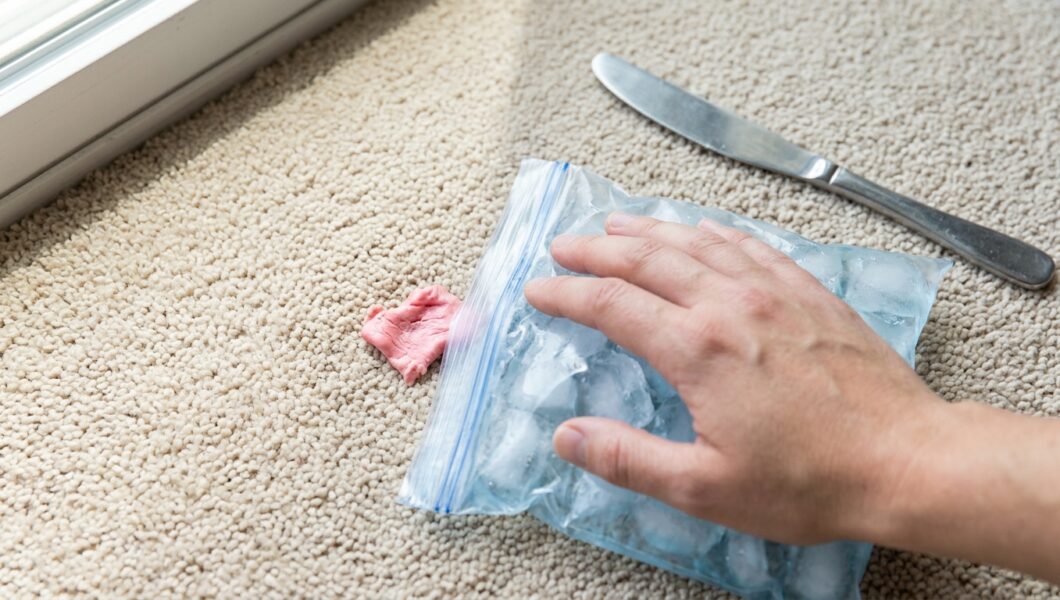
- Fill a plastic bag with ice
A zip-top bag works well so the carpet stays dry.
- Place it on the gum
Hold it there for 10 to 15 minutes, until the gum is hard and no longer tacky.
- Lift the gum
Use a dull knife or the edge of a spoon to pry it up gently, working from the outside in.
- Crack it away
Hard gum should break into pieces. If it softens, apply more ice.
- Remove the leftover bits
Use a clean cloth to dab any remaining sticky spots.
Method 2: Freeze Spray
If you have a can of compressed air, turn it upside down and spray it on the gum. The cold liquid freezes the gum within seconds. A product made for freezing gum works the same way. Once frozen, break it up with a spoon and lift it out. This is quick and leaves no residue, though you should ventilate the room and keep the spray away from your skin.
Method 3: Peanut Butter or Oil
Oil breaks down the gum’s stickiness. Smooth peanut butter, vegetable oil, or olive oil all work, and this method suits gum that’s deeply worked into the carpet.
- Dab a small amount of peanut butter or oil onto the gum.
- Work it in with a dull knife or an old toothbrush for a few minutes until the gum softens and loosens.
- Peel and lift the gum away.
- Blot the area with a clean cloth.
- Clean up the oily residue using a few drops of dish soap in warm water, then blot with a damp cloth and rinse.
Oil can leave a mark if not fully removed, so be thorough with the soap step.
Method 4: White Vinegar
Warm white vinegar softens gum and cuts through sticky residue.
- Warm a small amount of vinegar in the microwave for about 20 seconds. It should be warm, not boiling.
- Dab it onto the gum with a cloth or toothbrush.
- Wait a minute or two, then scrub gently and lift the softened gum.
- Blot with clean water and a dry towel.
Method 5: Rubbing Alcohol
For small sticky leftovers, rubbing alcohol works well. Dampen a clean white cloth with isopropyl alcohol and press it onto the spot. Blot rather than rub, working from the outside toward the center so you don’t spread the stain. Let the area dry and vacuum afterward. Use sparingly on wool and natural fibers.
Final Cleanup
After the gum is gone, clean the area to remove any residue.
- Mix a few drops of dish soap with a cup of warm water.
- Dab the spot with a clean cloth, blotting rather than rubbing.
- Rinse by blotting with plain water.
- Press a dry towel on top to soak up moisture.
- Let it air dry, then fluff the fibers with your fingers or a vacuum.
Things to Avoid
- Pulling hard
It stretches the gum and damages fibers.
- Using strong solvents
Acetone and nail polish remover can melt synthetic carpet and strip color.
- Rubbing
It pushes the gum deeper and spreads the stain.
- Skipping the patch test
Some products discolor carpet.
Safety Precautions
Keep rubbing alcohol away from heat, flames, and children, and ventilate the room when using it. Never mix cleaning chemicals, and be careful with warm vinegar, since hot liquids can burn.
Frequently Asked Questions
What is the fastest way to get gum out of carpet?
Freezing it with ice or a freeze spray, then lifting it away with a dull knife.
Does peanut butter really remove gum?
Yes. The oil breaks down the gum’s stickiness so it loosens from the fibers.
How do I remove old, hardened gum?
Freeze it first, break off what you can, then use vinegar or alcohol on the remaining residue.
The Bottom Line
To get gum out of carpet, harden it with ice, lift it off with a dull knife, and clean any leftover residue with warm vinegar, rubbing alcohol, or a little oil followed by dish soap. Test first, blot instead of rubbing, and keep the carpet from getting too wet. With a little patience, the gum will come out and your carpet will look as good as new.